The coccygeus muscle
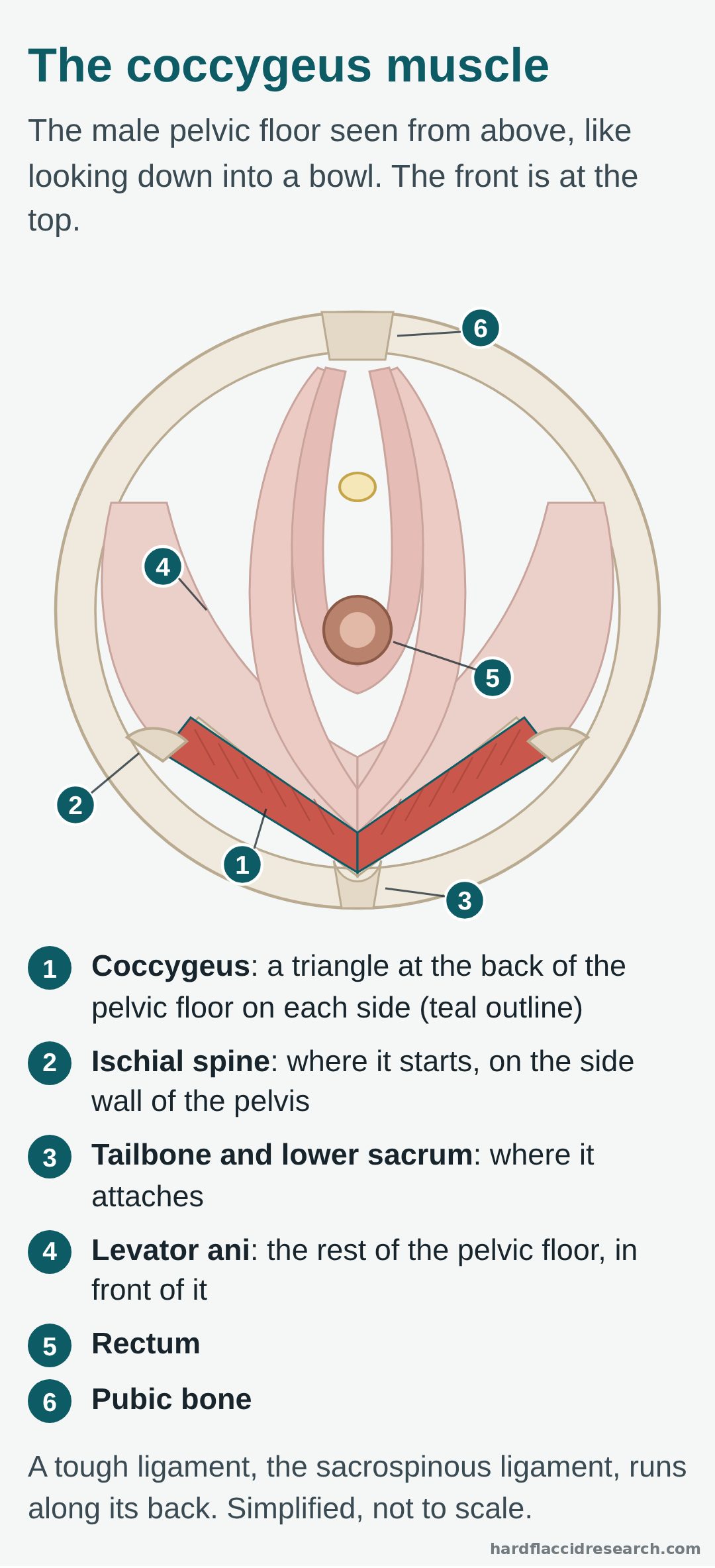
The coccygeus fills the back of the pelvic floor on each side, between the ischial spine and the tailbone. Simplified, not to scale.
What this illustration shows
The male pelvic floor seen from above, like looking down into a bowl, with the coccygeus highlighted and numbered markers: 1 the coccygeus muscle, a triangle at the back on each side; 2 the ischial spine, where it starts; 3 the tailbone and lower sacrum, where it attaches; 4 the levator ani muscle in front of it; 5 the rectum; 6 the pubic bone at the front.
A picture to explain, not a diagnosis. The drawing is simplified and not to scale. If something has changed or worries you, see a doctor.
Where it's explained
Using this illustration
This illustration belongs to Hard Flaccid Research. To use it in a publication, a class or a talk, see For press and researchers. Please cite it like this:
Hard Flaccid Research. (2026). The coccygeus muscle [Medical illustration]. https://hardflaccidresearch.com/illustrations/coccygeus-muscle-pelvic-floor