What biofeedback shows
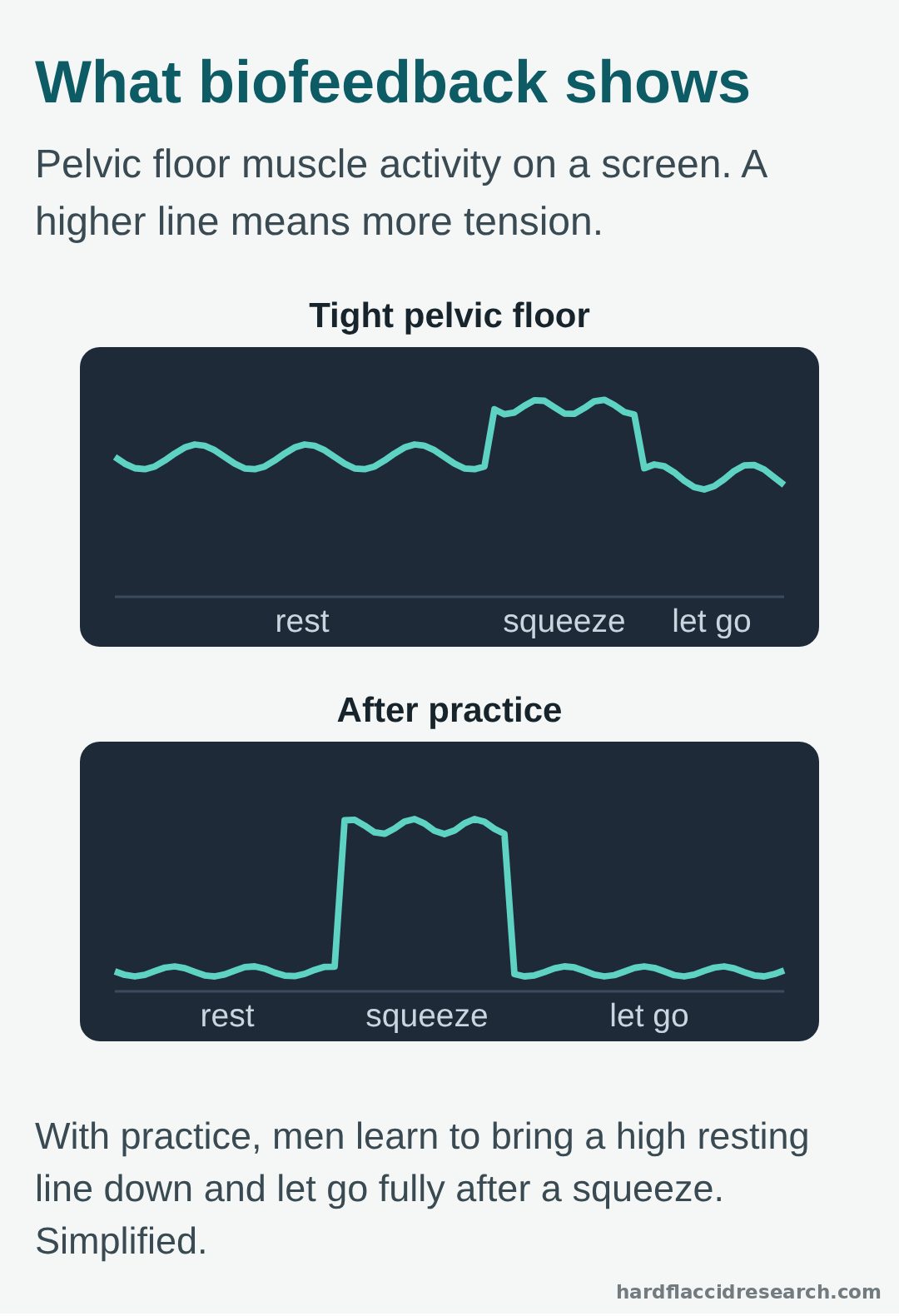
On the screen, a tight pelvic floor shows as a line that stays high. With practice, men learn to bring it back down. Simplified.
What this illustration shows
Two biofeedback screens, one above the other. Top, tight pelvic floor: a line that stays high at rest and barely drops when the man tries to relax. Bottom, after practice: a line that sits low at rest, rises with a squeeze and drops back fully when he lets go. Labels mark rest, squeeze and let go.
A picture to explain, not a diagnosis. The drawing is simplified and not to scale. If something has changed or worries you, see a doctor.
Where it's explained
Using this illustration
This illustration belongs to Hard Flaccid Research. To use it in a publication, a class or a talk, see For press and researchers. Please cite it like this:
Hard Flaccid Research. (2026). What biofeedback shows [Medical illustration]. https://hardflaccidresearch.com/illustrations/pelvic-floor-biofeedback-screen