The penis at rest: what hard flaccid looks like
Why an hourglass dent may show with hard flaccid
Two ideas doctors discuss for why a dent may show with hard flaccid, and scar tissue, the other cause a urologist looks for.
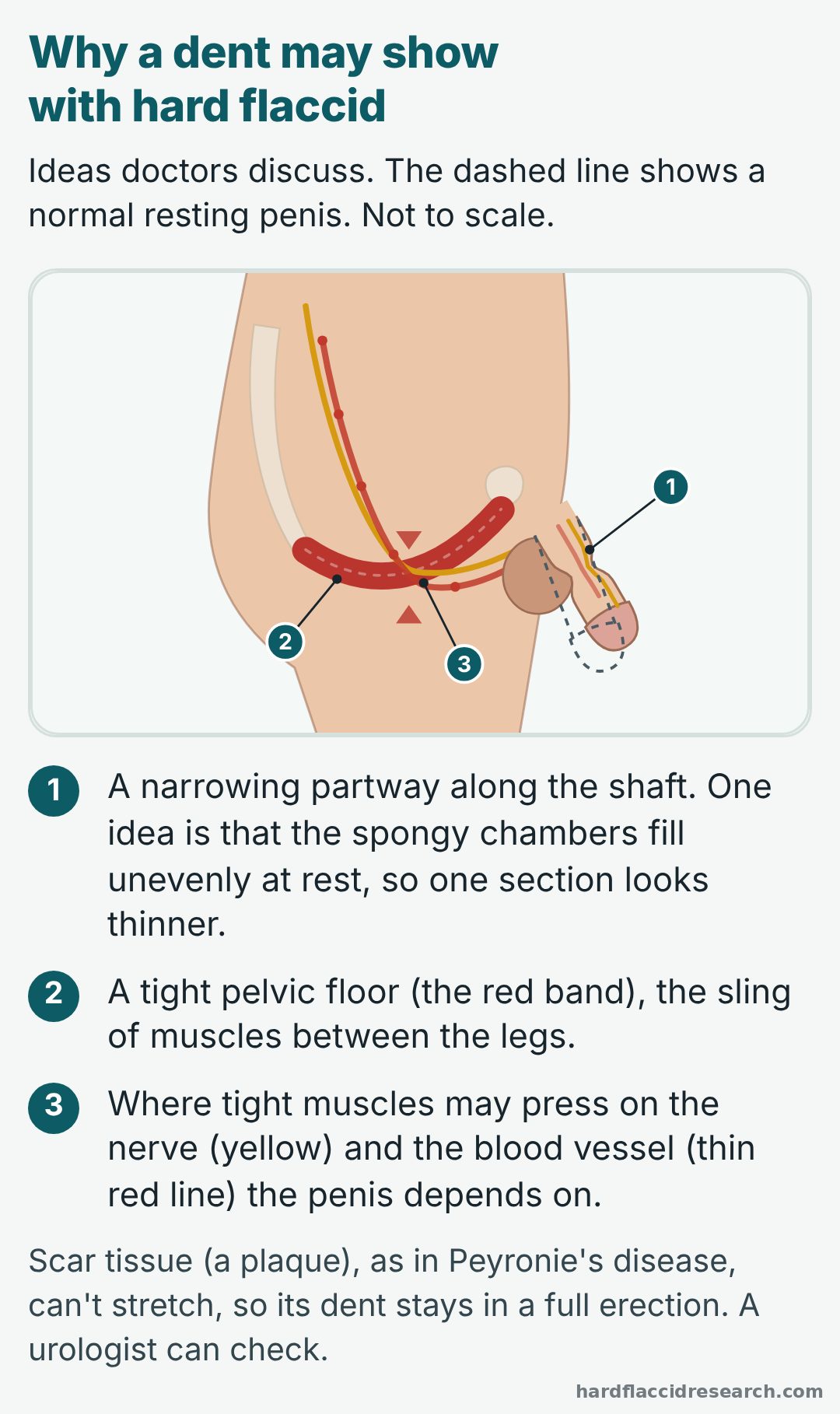
What this illustration shows
Why a dent may show with hard flaccid. Ideas doctors discuss. The dashed line shows a normal resting penis. Not to scale. Side-view drawing of tight pelvic floor muscles, a nerve, a blood vessel and a firm resting penis with a narrowing partway along the shaft, and three numbered markers: 1, a narrowing partway along the shaft, where one idea is that the spongy chambers fill unevenly at rest, so one section looks thinner; 2, a tight pelvic floor (the red band), the sling of muscles between the legs; 3, where tight muscles may press on the nerve (yellow) and the blood vessel (thin red line) the penis depends on. Foot: scar tissue (a plaque), as in Peyronie's disease, can't stretch, so its dent stays in a full erection. A urologist can check.
A picture to explain, not a diagnosis. The drawing is simplified and not to scale. If something has changed or worries you, see a doctor.
Where it's explained
Using this illustration
This illustration belongs to Hard Flaccid Research. To use it in a publication, a class or a talk, see For press and researchers. Please cite it like this:
Hard Flaccid Research. (2026). Why an hourglass dent may show with hard flaccid [Medical illustration]. https://hardflaccidresearch.com/illustrations/hourglass-dent-causes
More illustrations: The penis at rest: what hard flaccid looks like
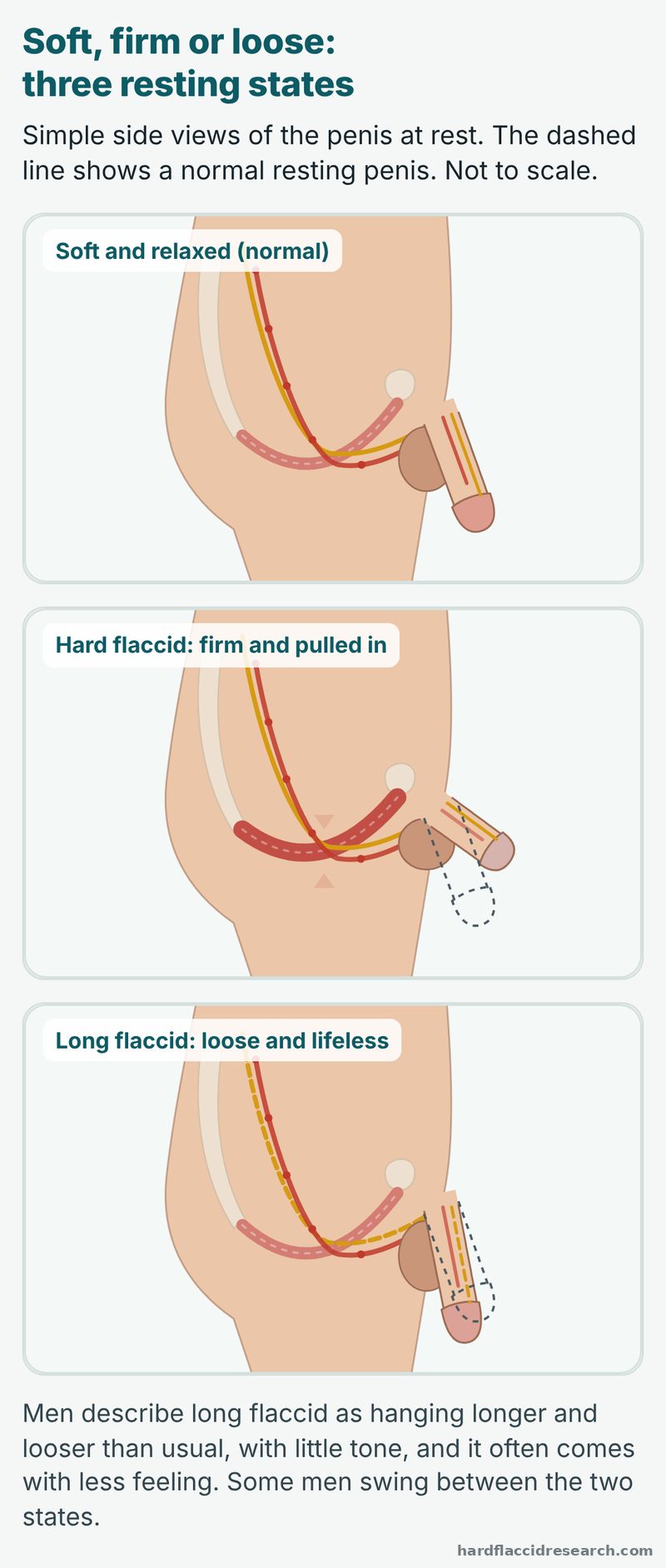 Soft, firm or loose: three resting states of the penis
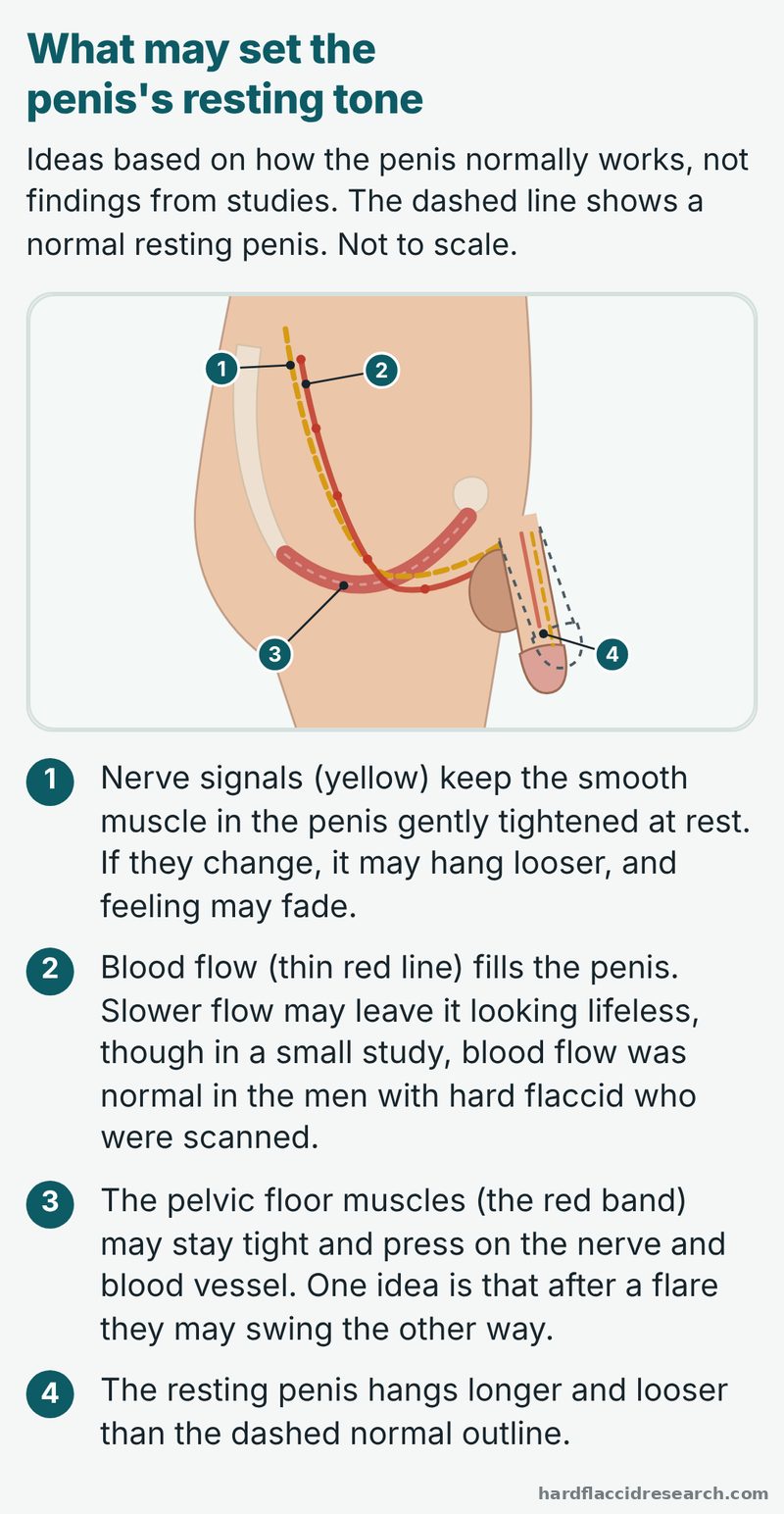 What may set how the penis rests: nerves, blood flow and the pelvic floor
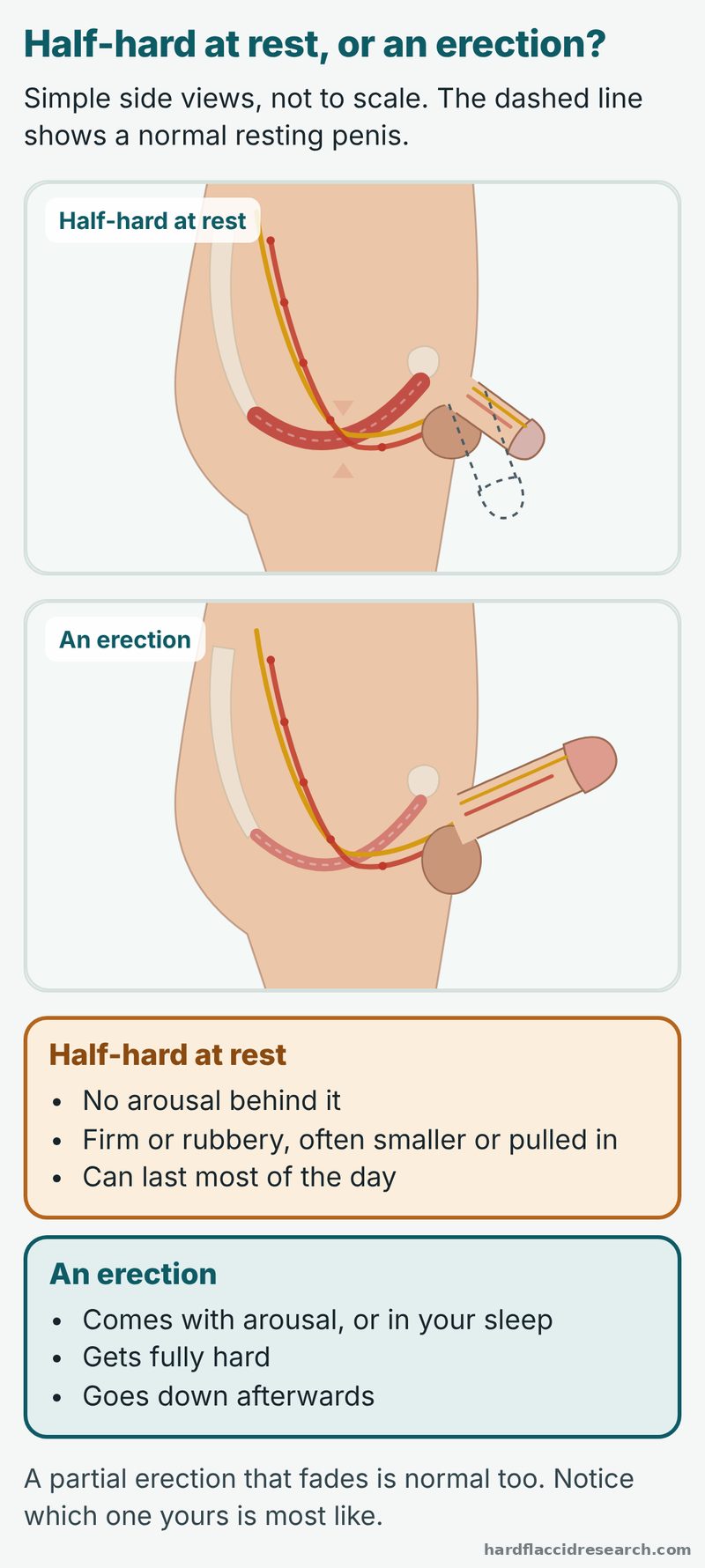 Half-hard at rest, or an erection?
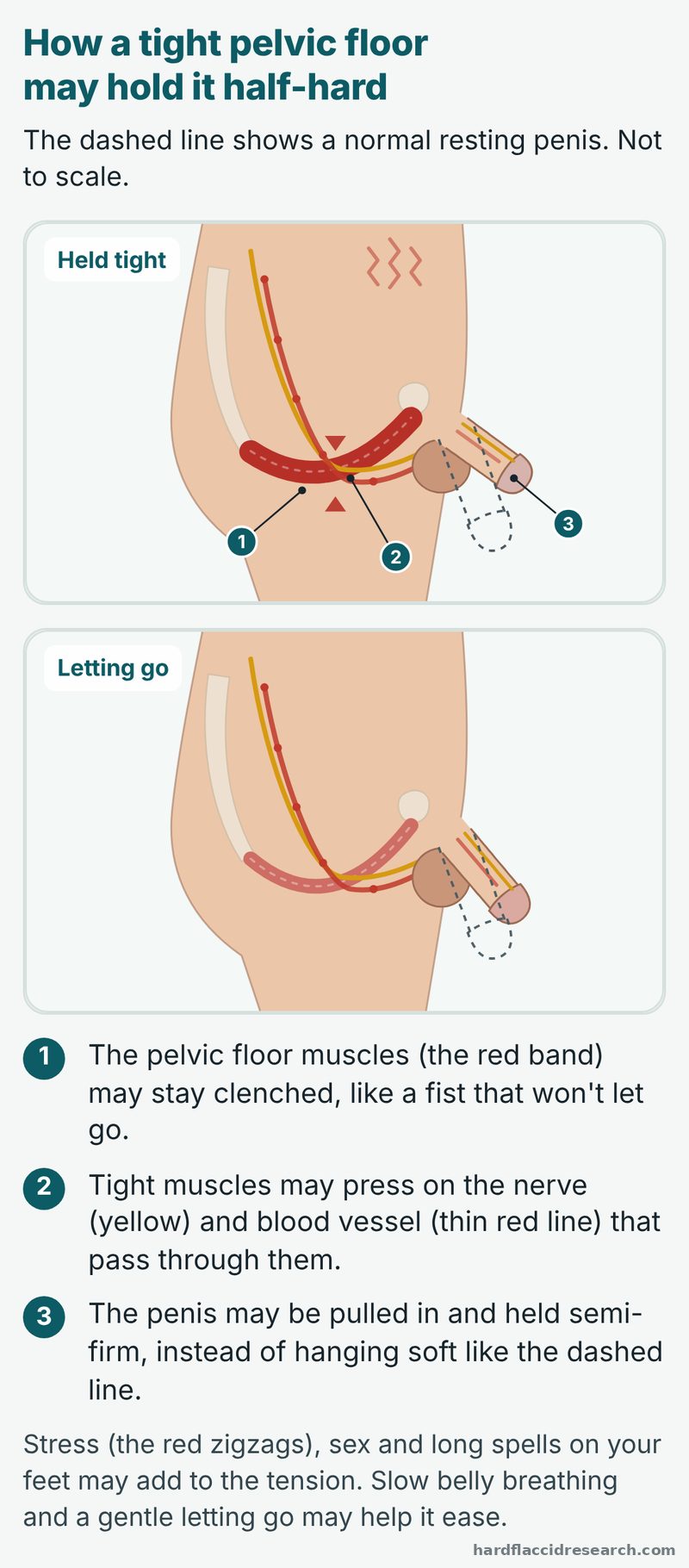 How a tight pelvic floor may hold the penis half-hard
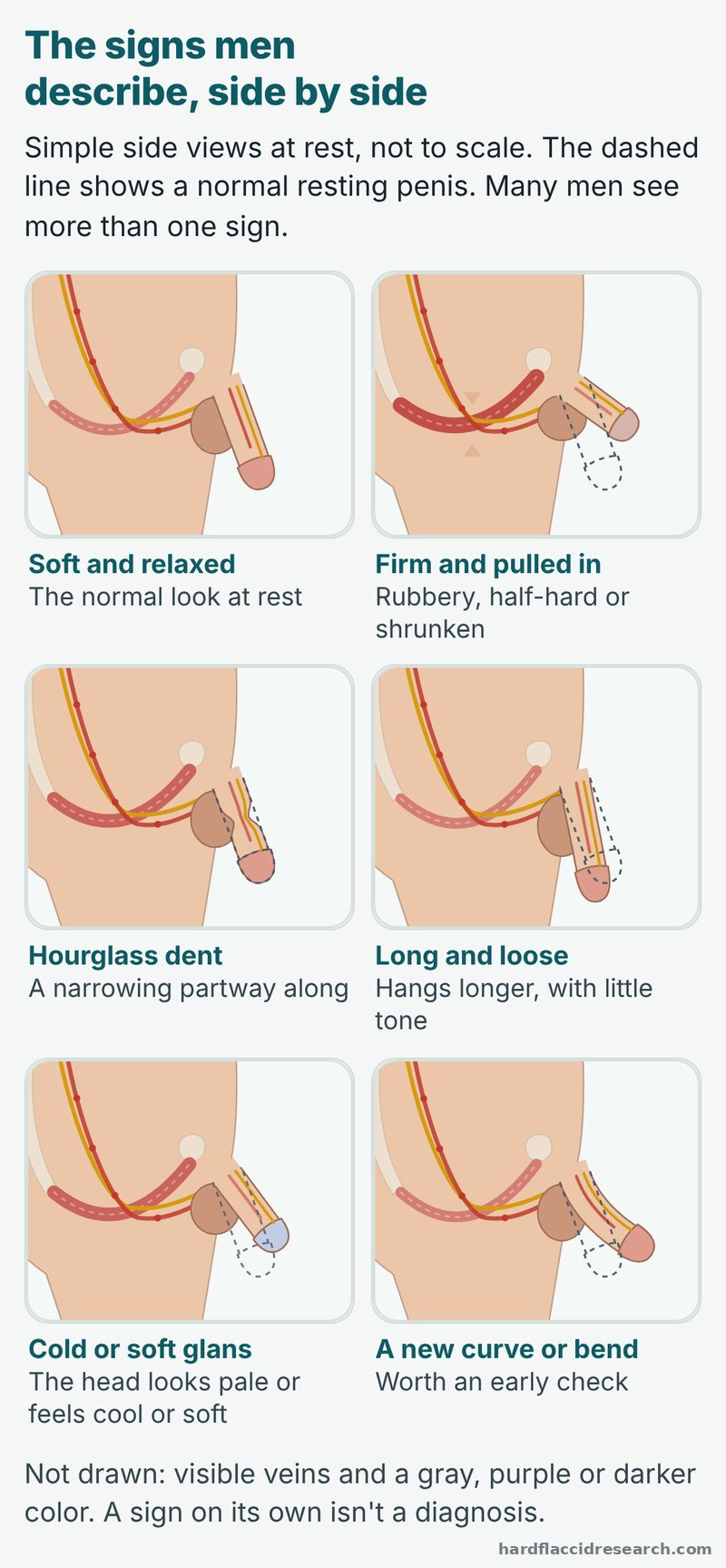 The signs of hard flaccid men describe, side by side
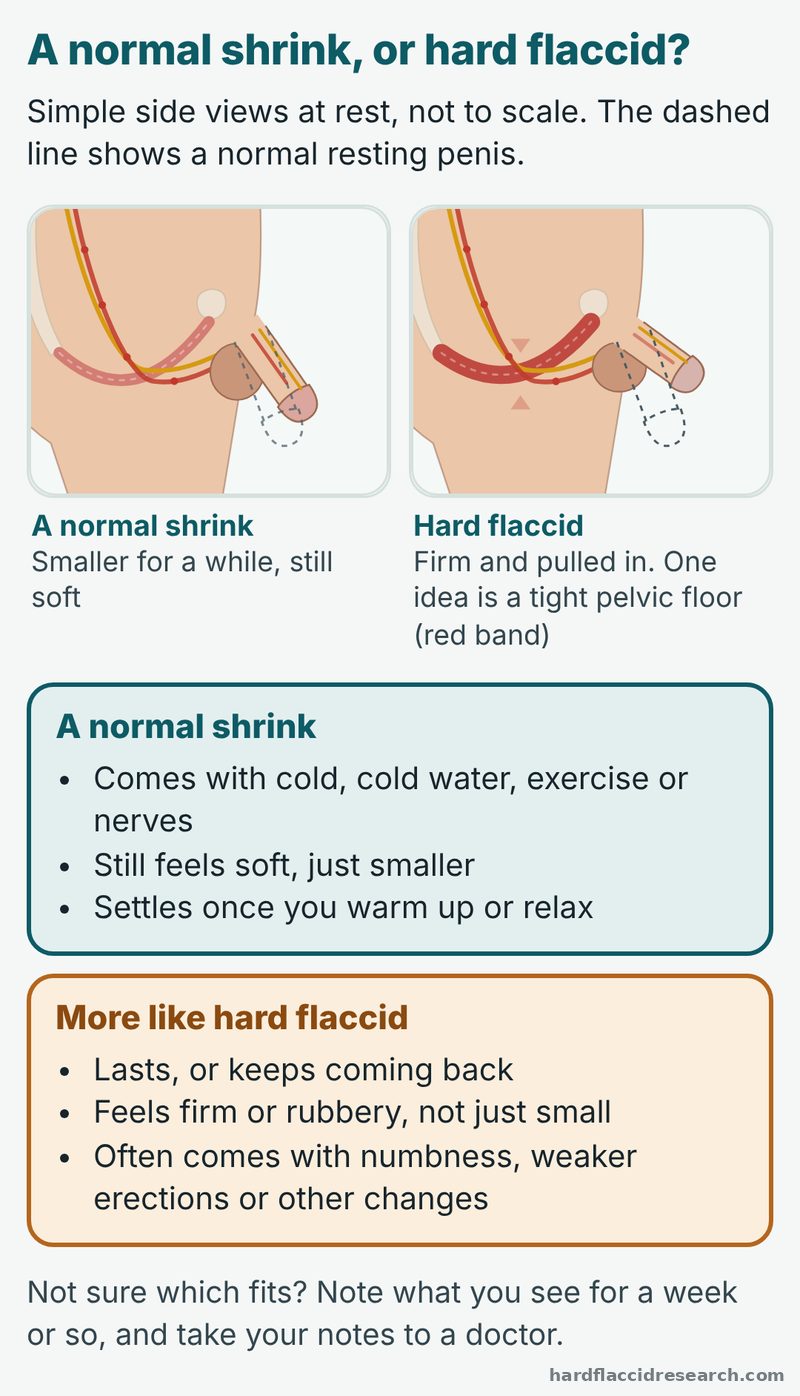 A normal shrink, or hard flaccid?