Medical illustrations of hard flaccid syndrome and the male pelvis
Simple side-view drawings of the pelvic floor muscles, the pudendal nerve, blood flow and the penis, from our articles. Each one opens on its own page, with what it shows and where it's explained.
113 illustrations. Pictures to explain, not a diagnosis: the drawings are simplified and not to scale.
The penis at rest: what hard flaccid looks like
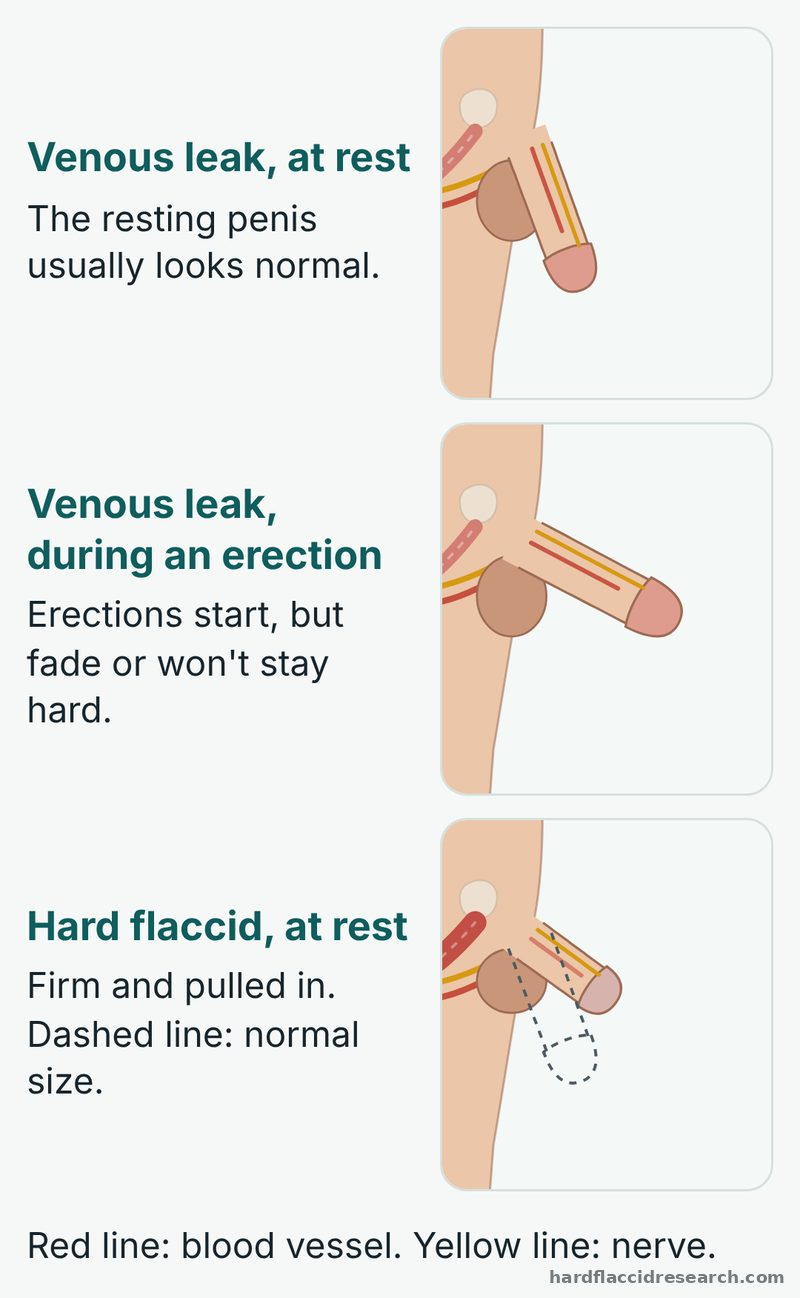
How the resting penis may look and feel with hard flaccid, next to normal, and other changes men describe.
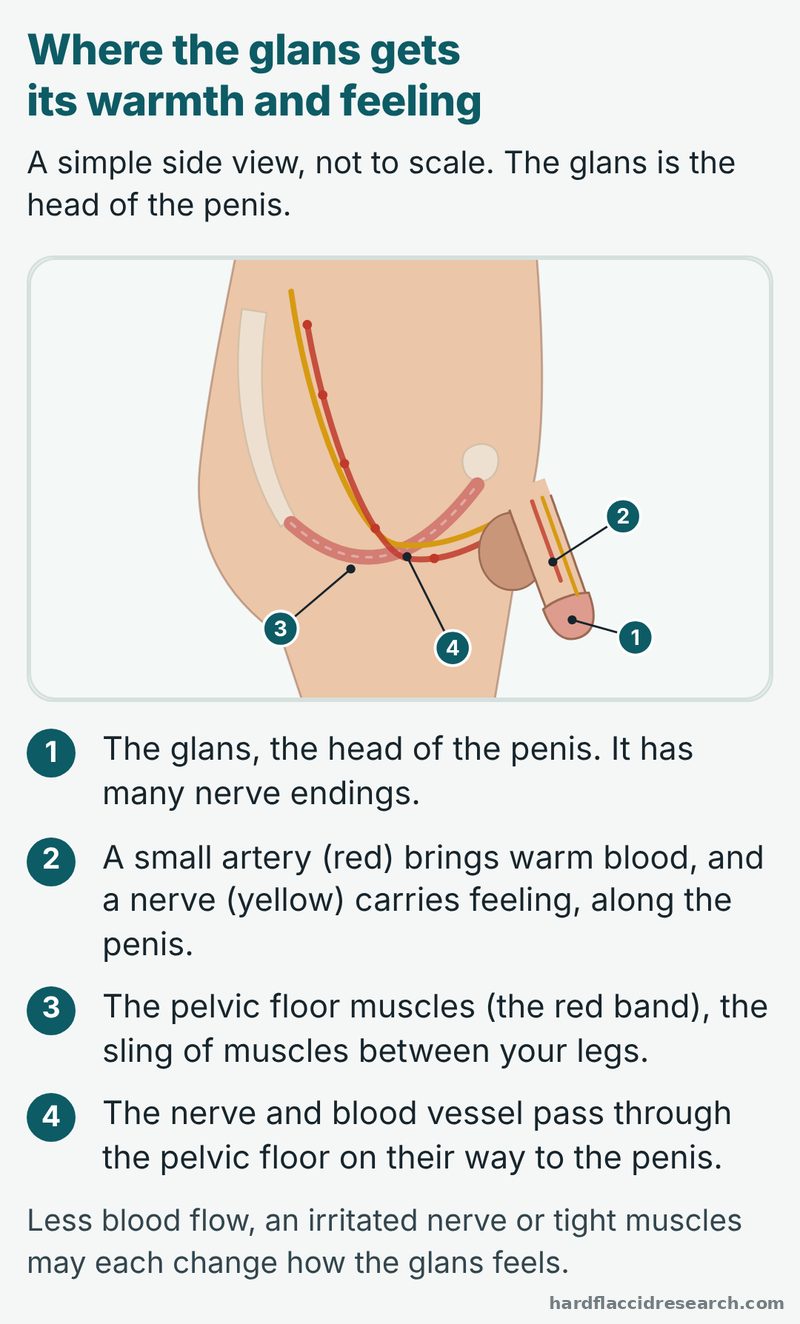 Where the glans gets its warmth and feeling
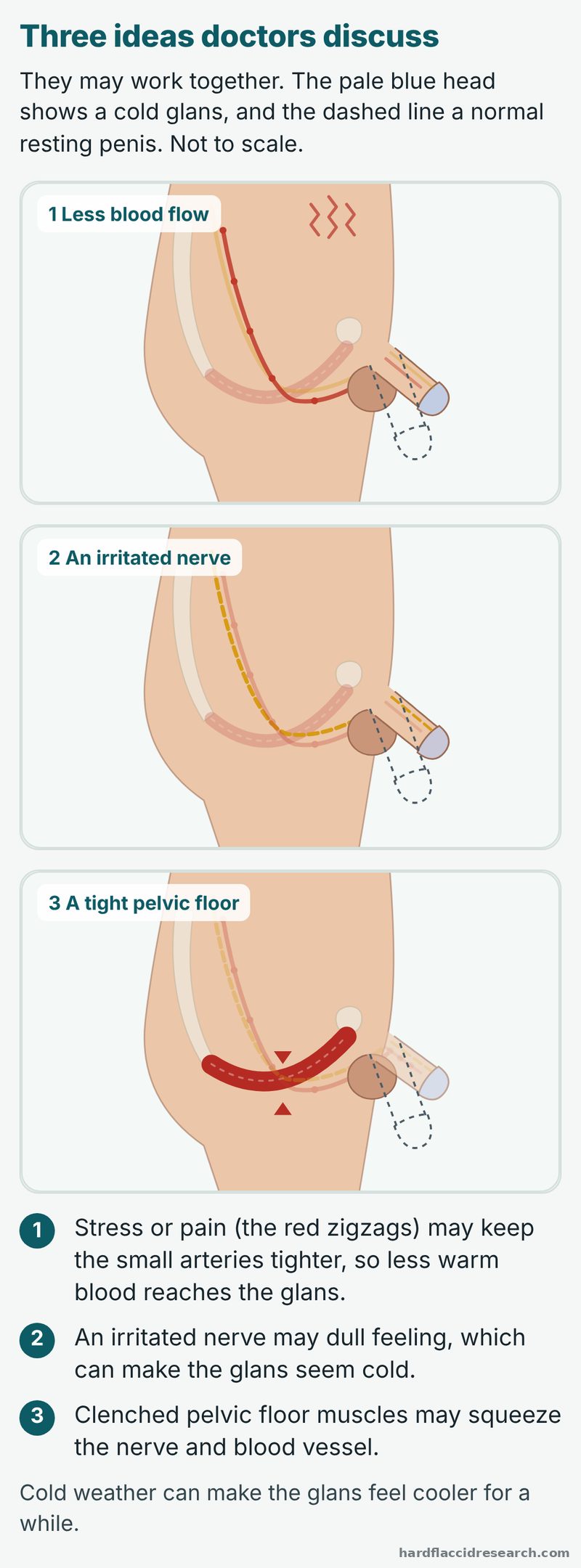 Why the glans may feel cold or soft: three ideas doctors discuss
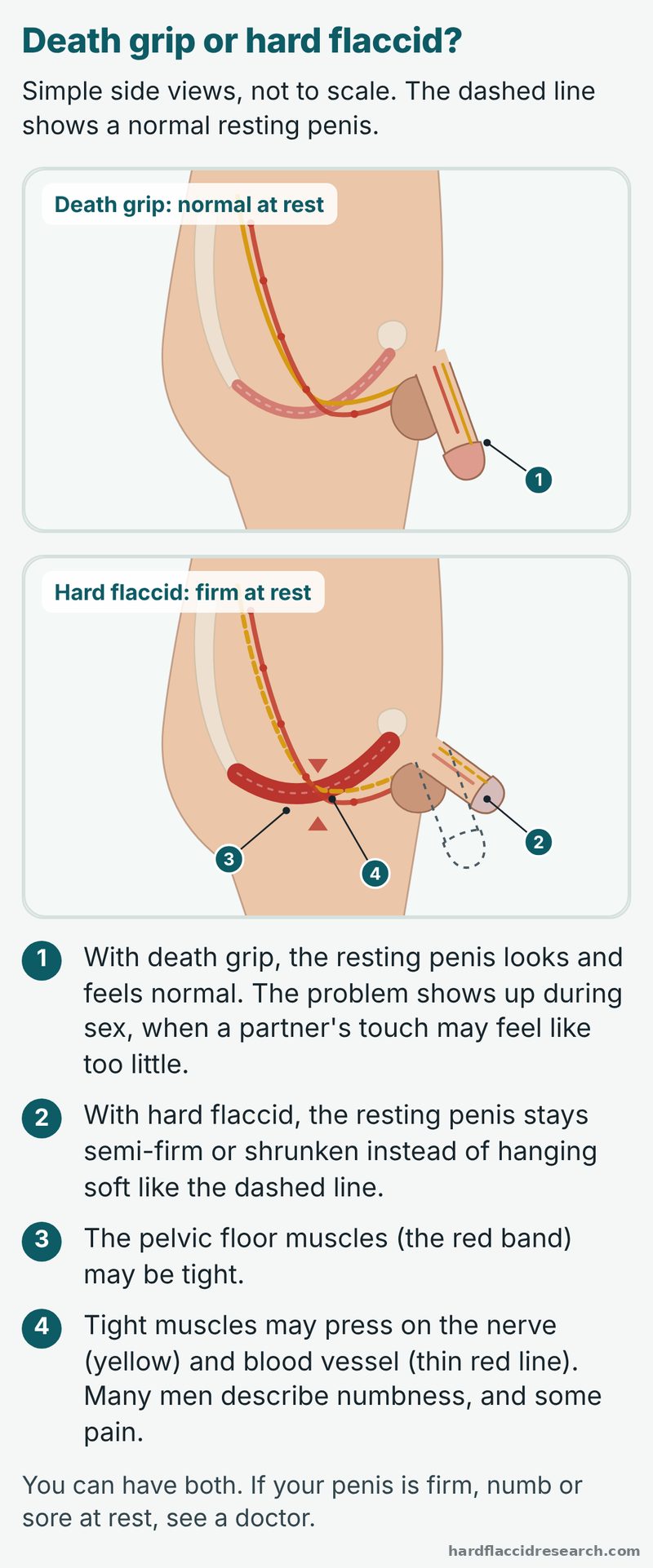 Death grip or hard flaccid? How the penis looks at rest
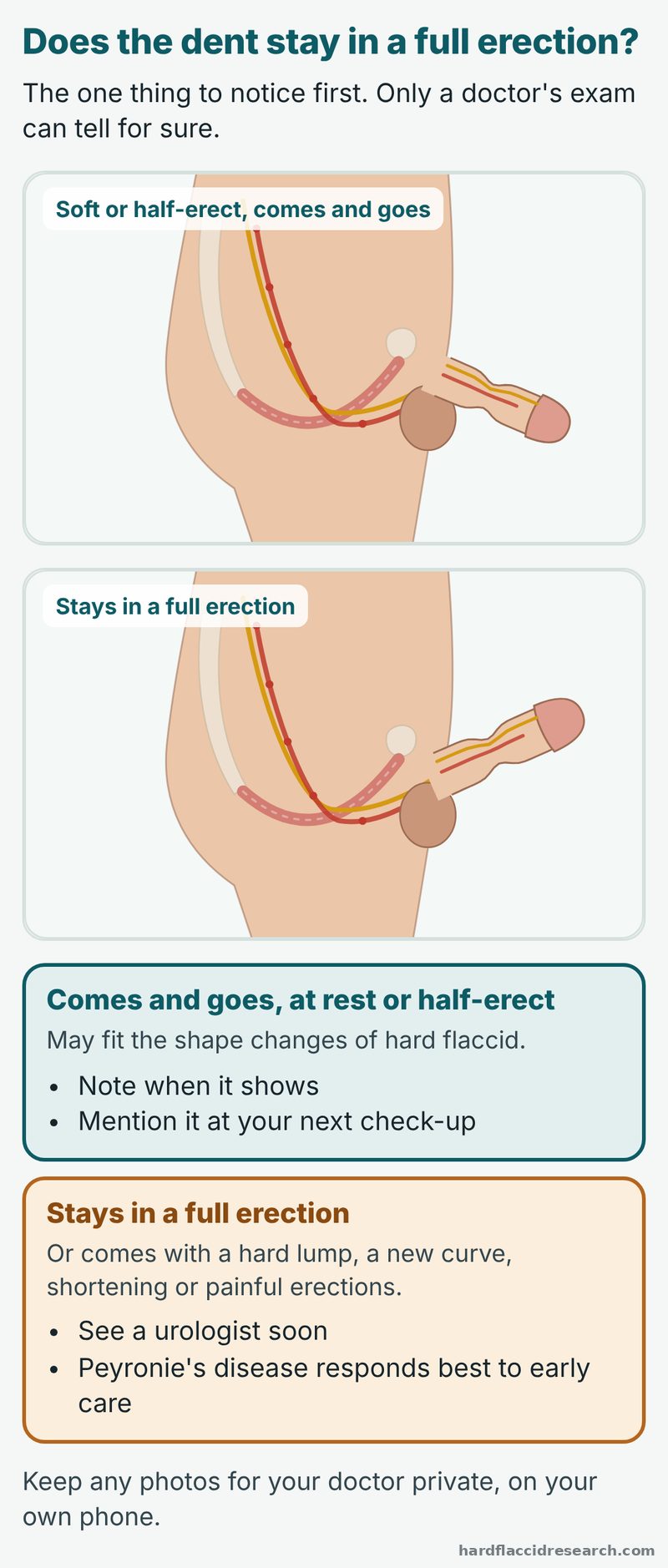 Does an hourglass dent stay in a full erection?
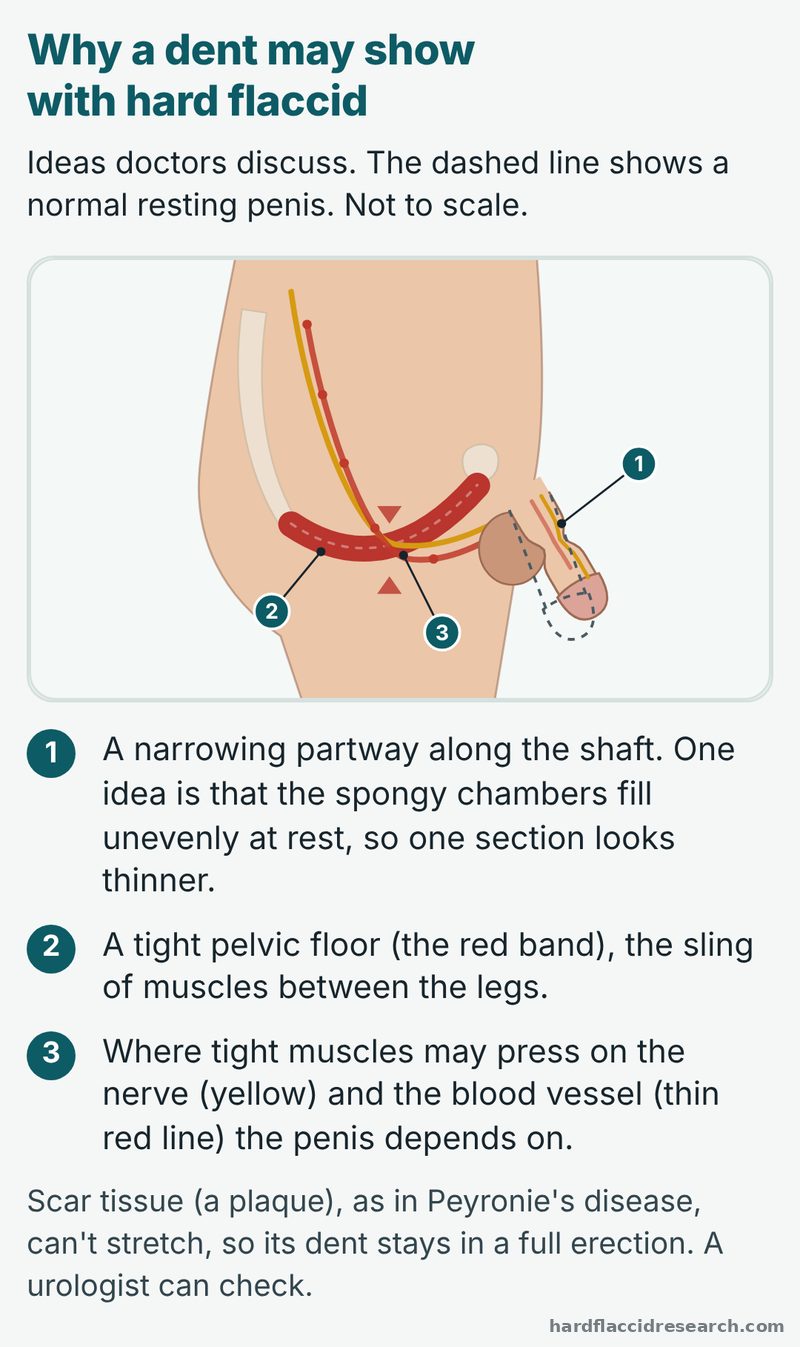 Why an hourglass dent may show with hard flaccid
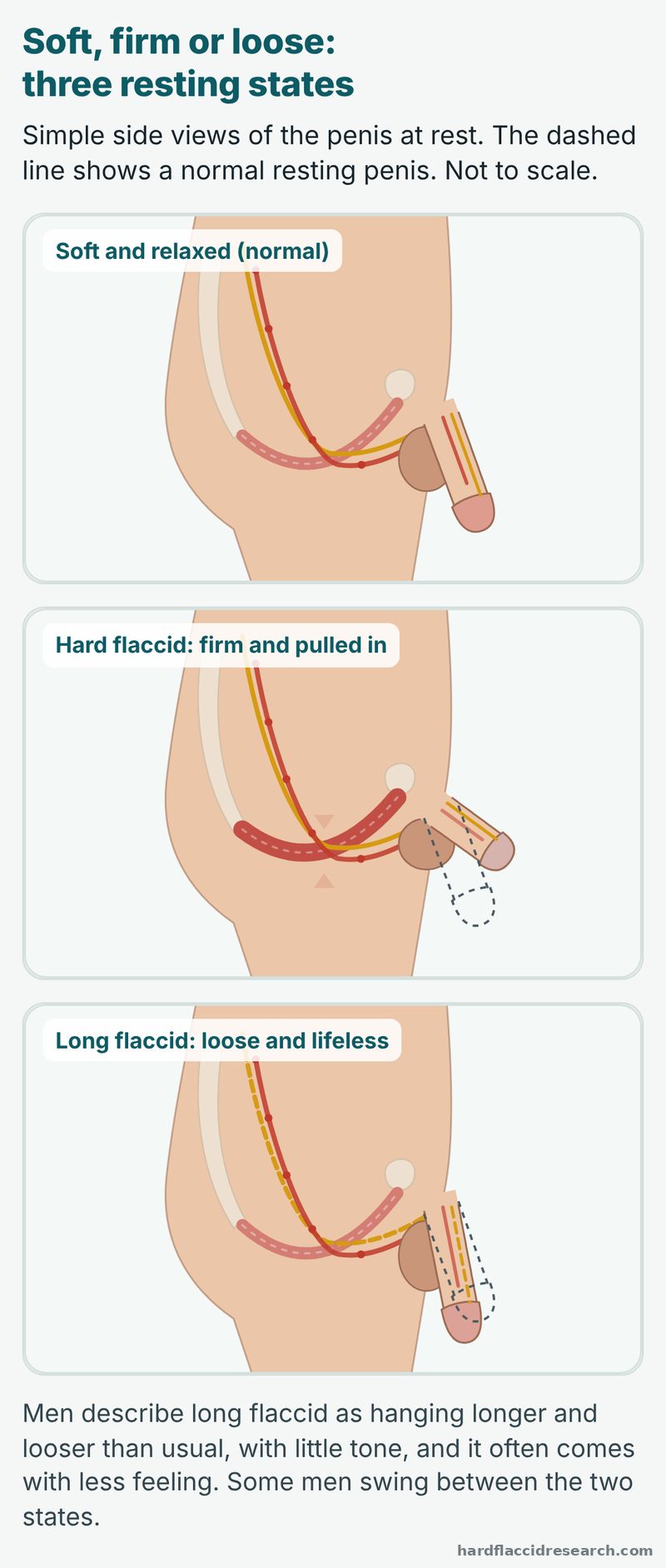 Soft, firm or loose: three resting states of the penis
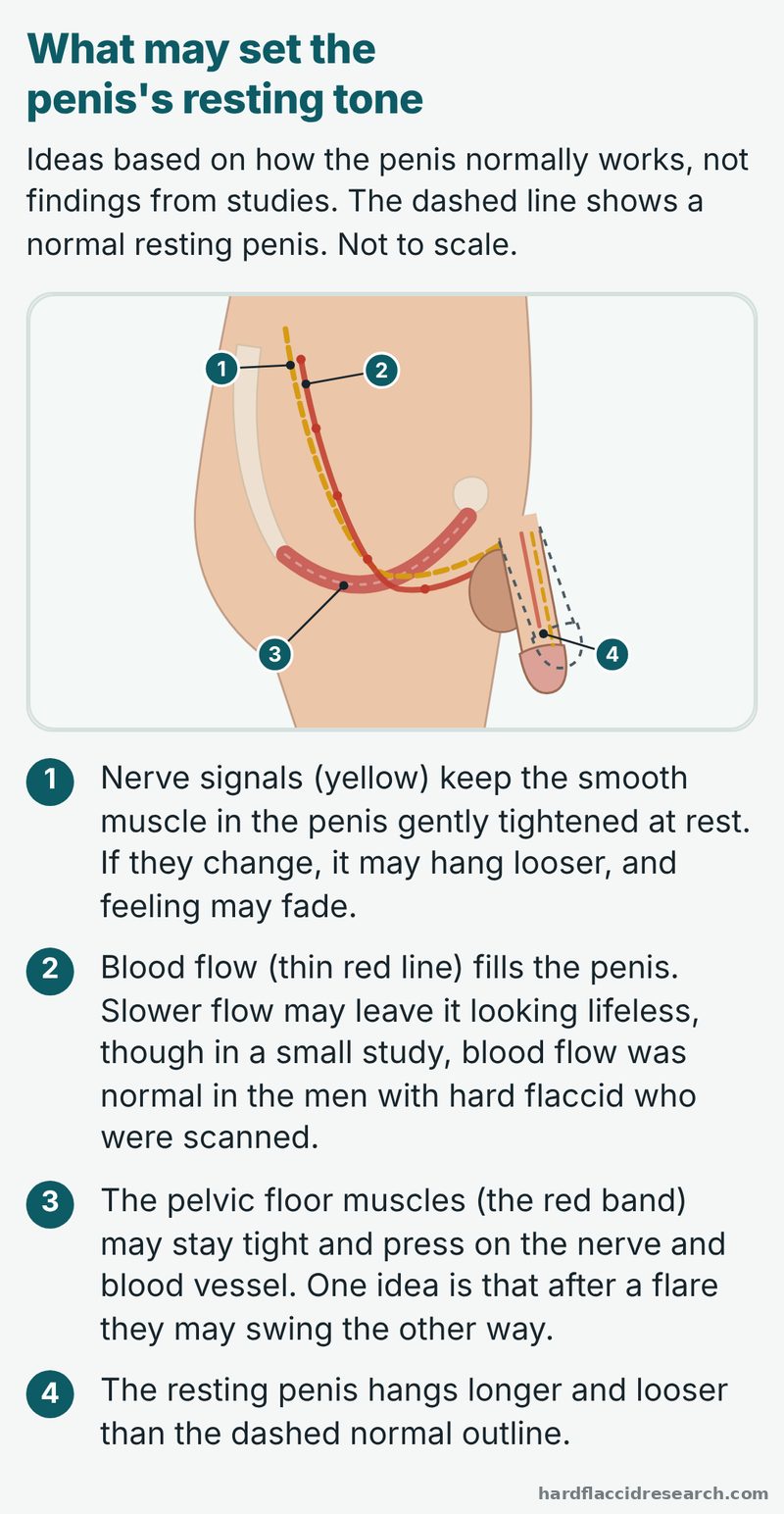 What may set how the penis rests: nerves, blood flow and the pelvic floor
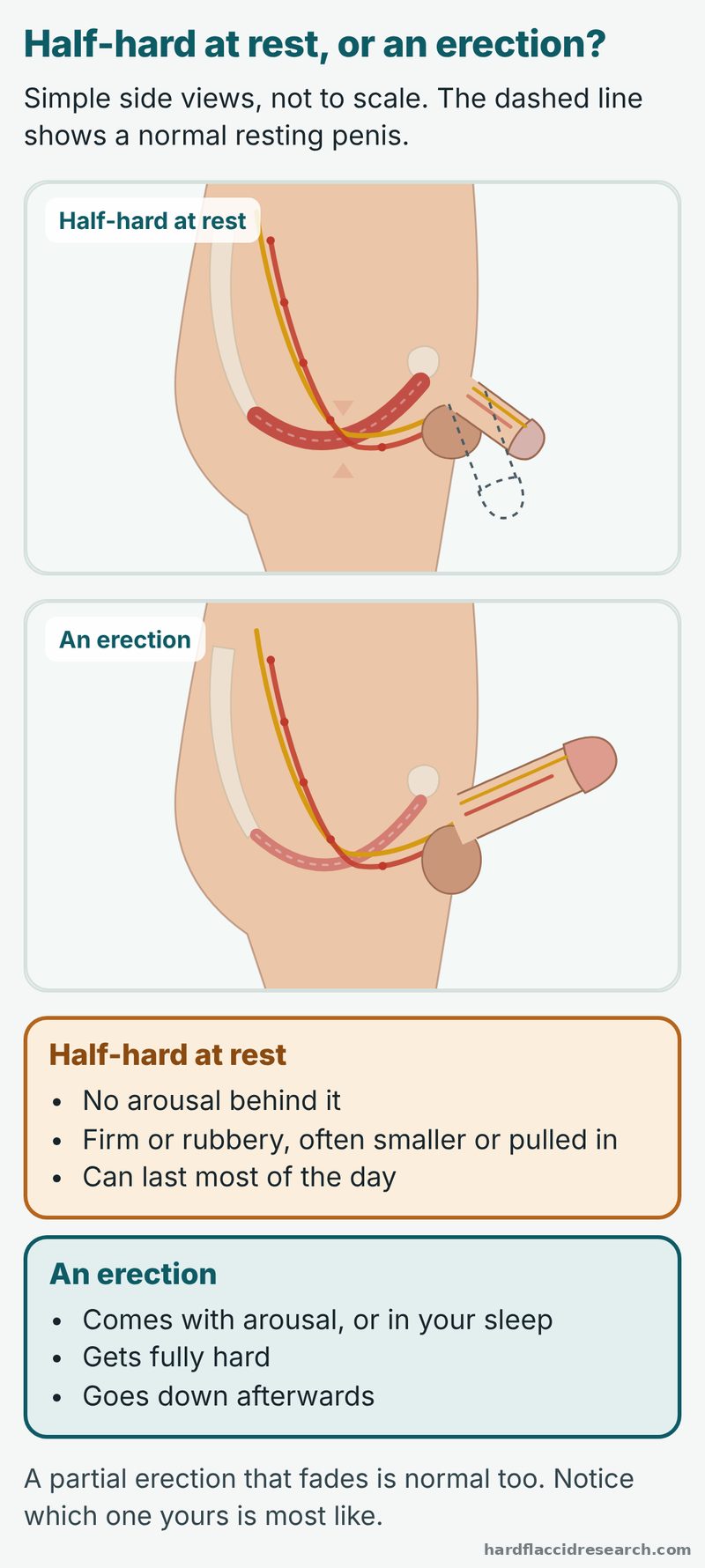 Half-hard at rest, or an erection?
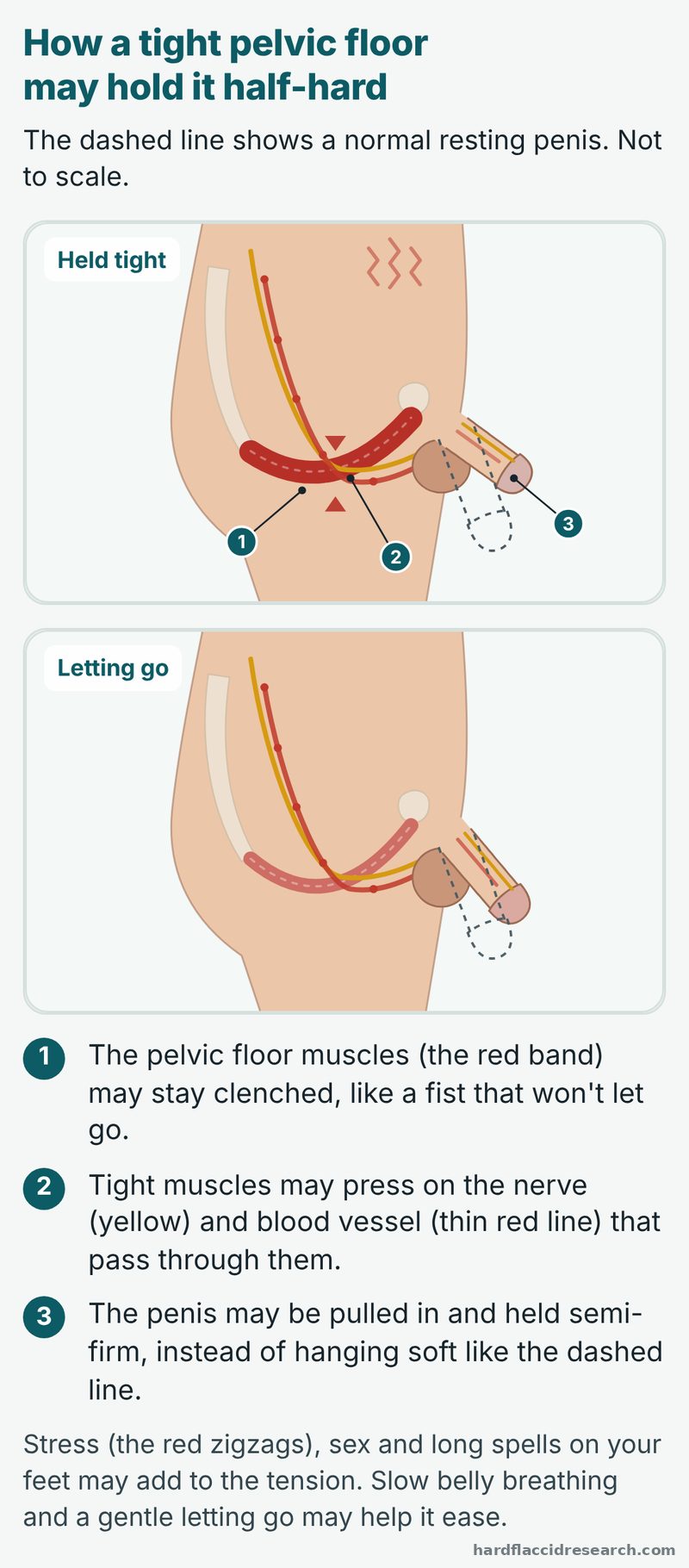 How a tight pelvic floor may hold the penis half-hard
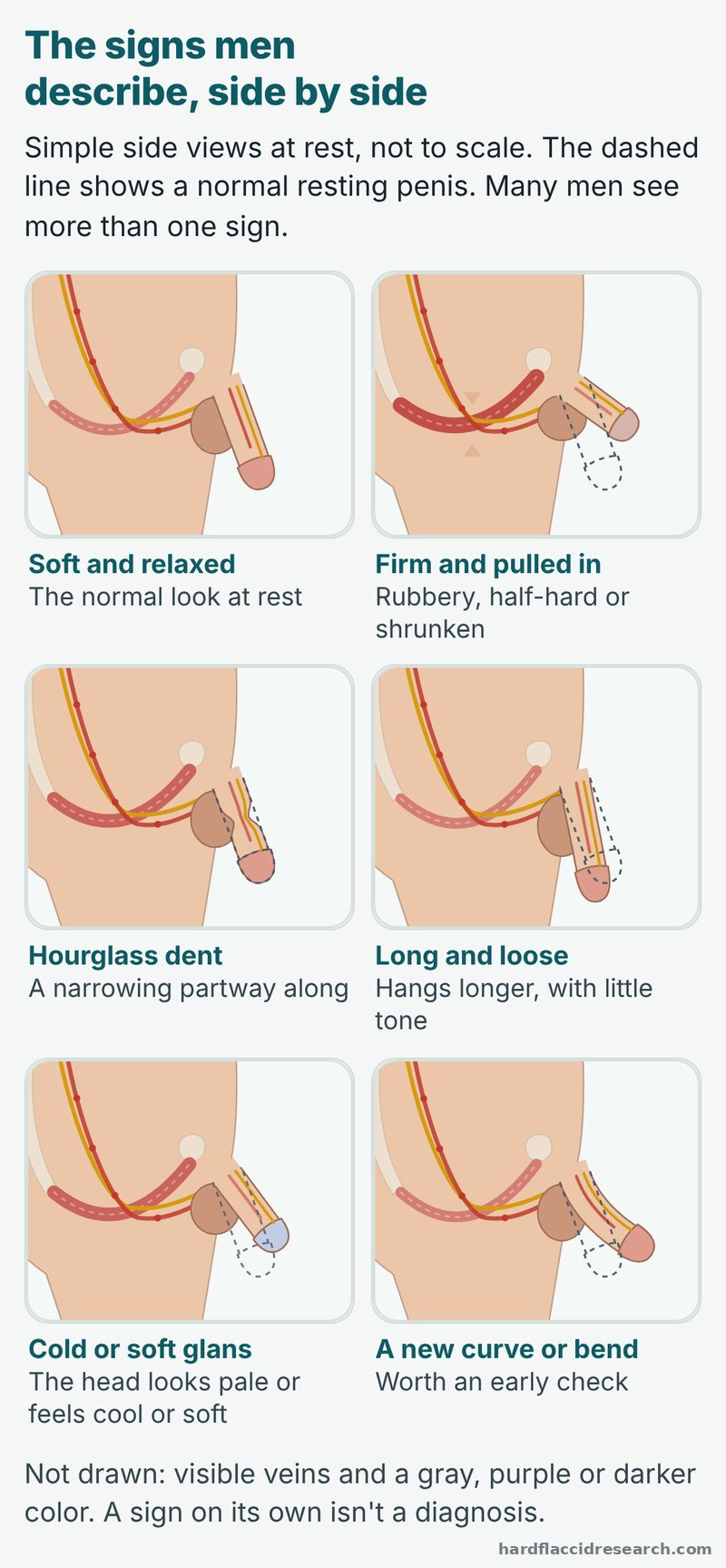 The signs of hard flaccid men describe, side by side
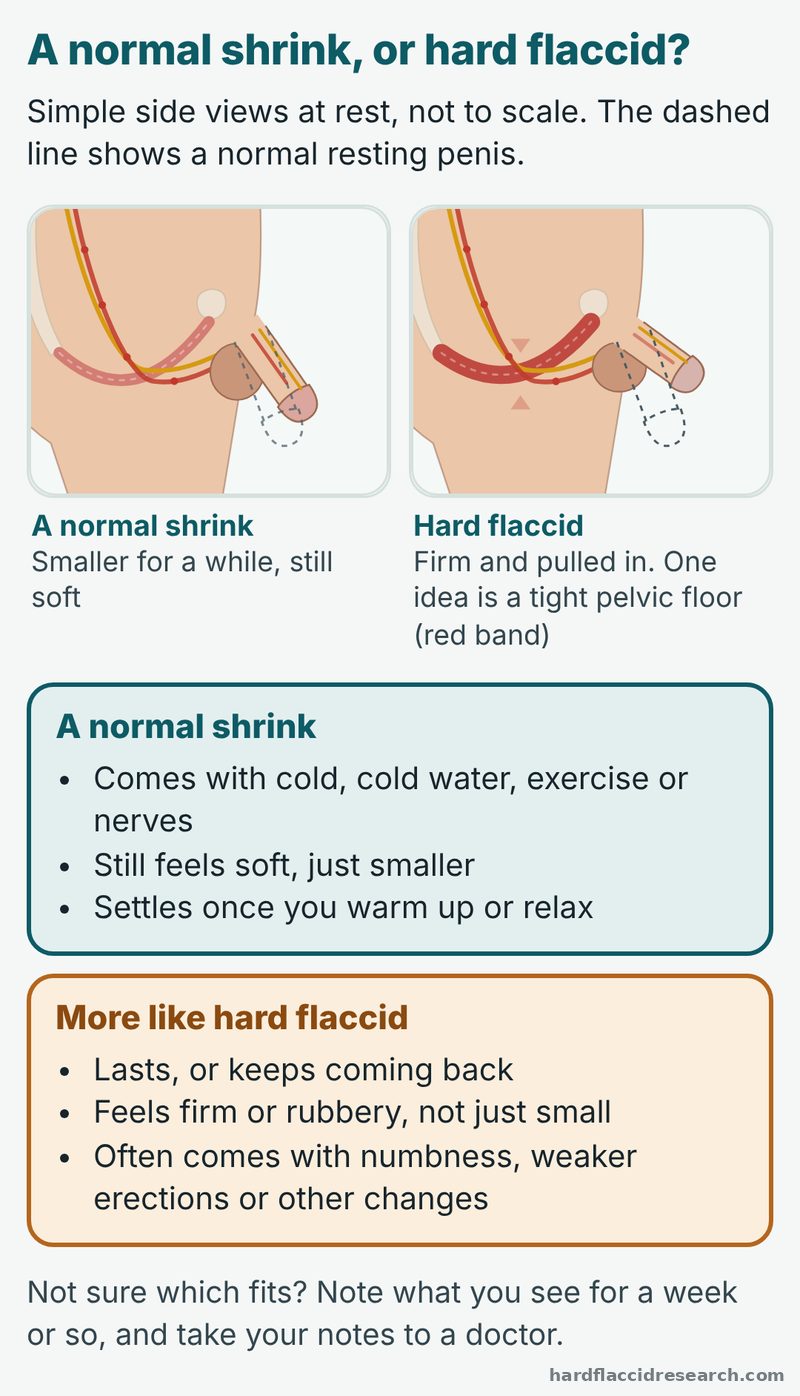 A normal shrink, or hard flaccid?
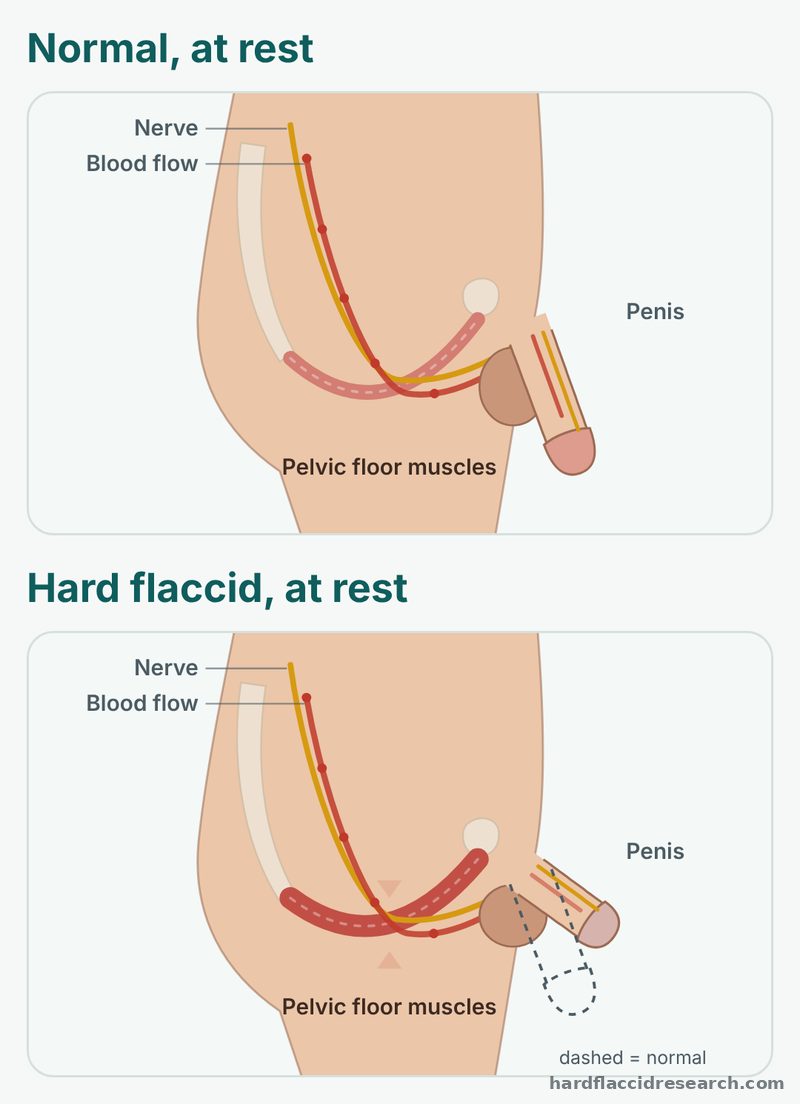 Normal penis vs hard flaccid at rest
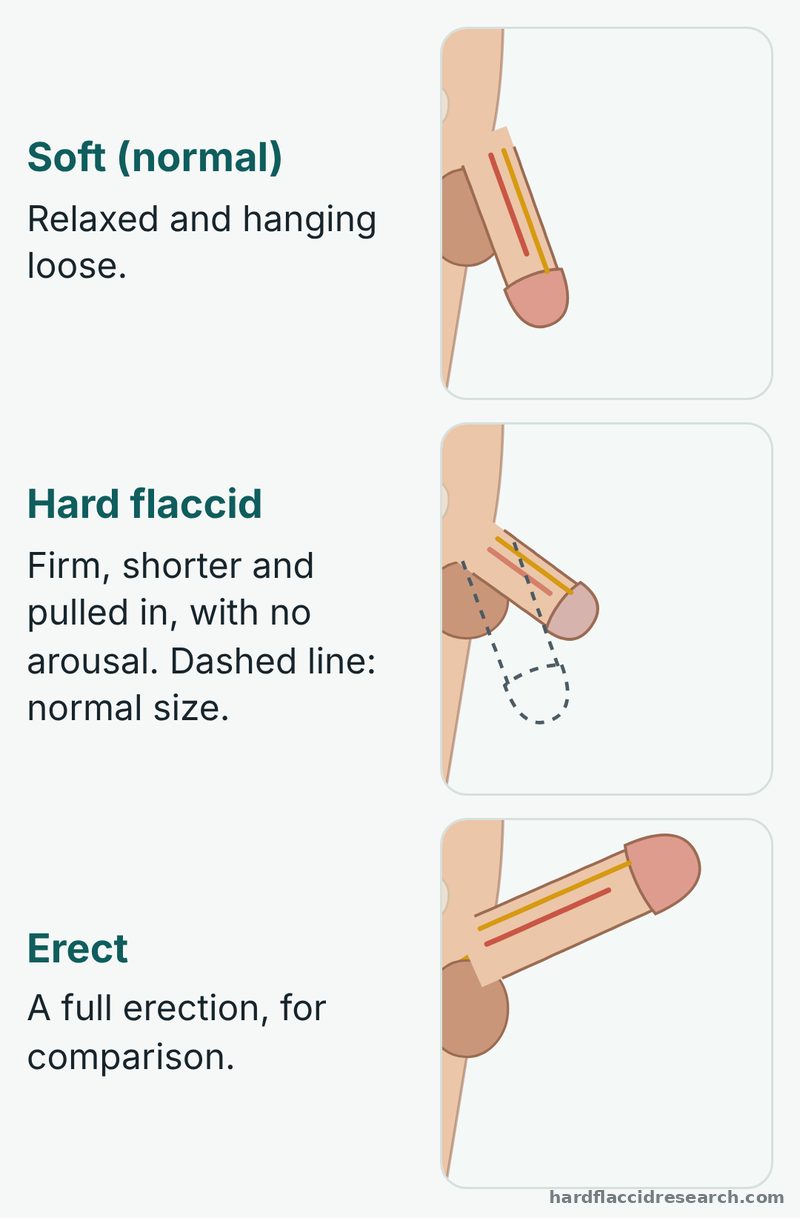 Soft, hard flaccid and erect, side by side
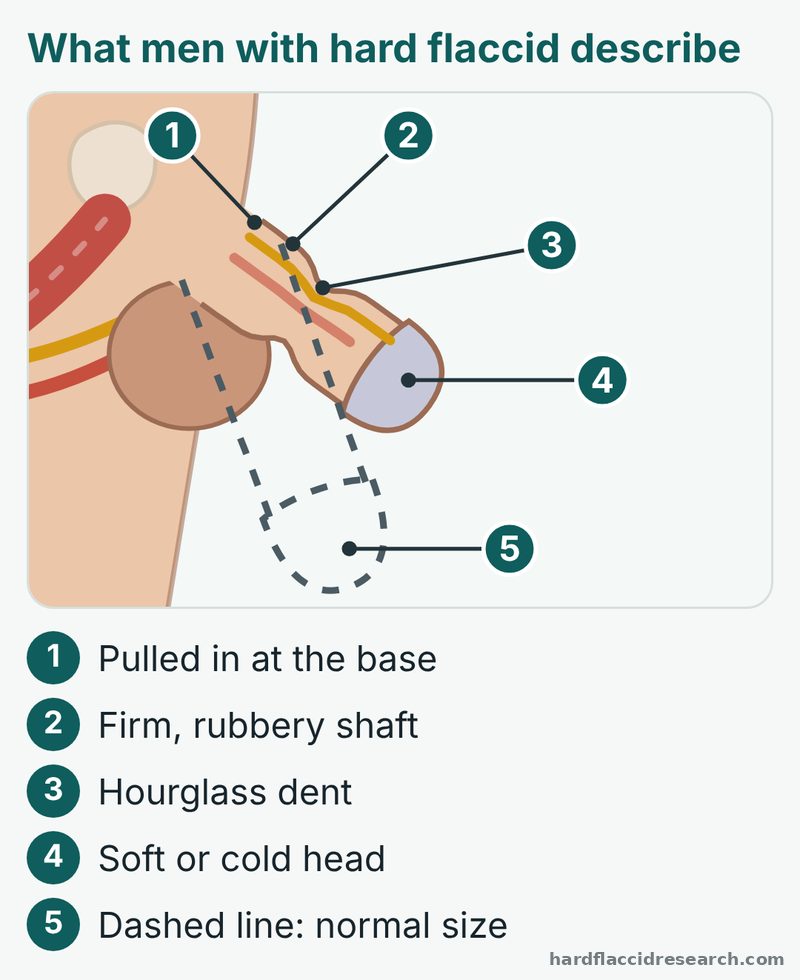 Hard flaccid syndrome: a labelled diagram of what men describe
The pelvic floor muscles
The sling of muscles between your legs, which doctors think may stay tight in hard flaccid, and what may help it let go.
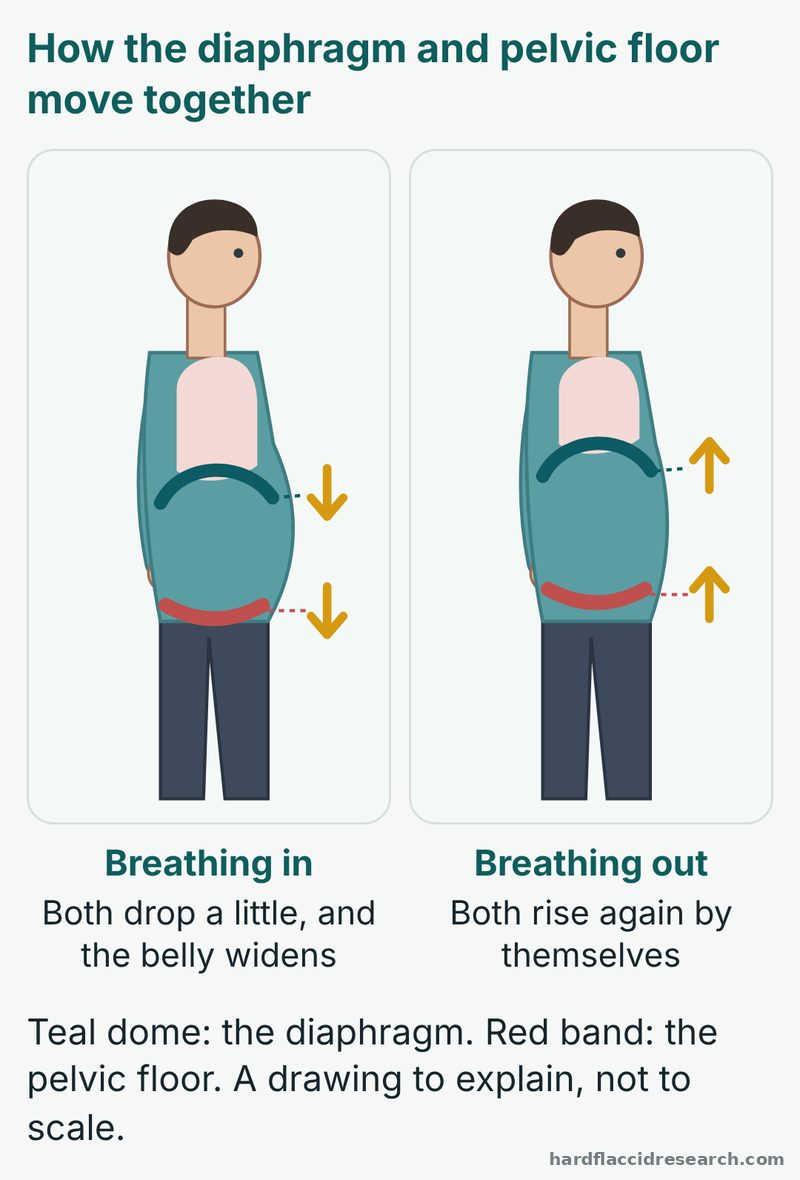 How the diaphragm and pelvic floor move together when you breathe
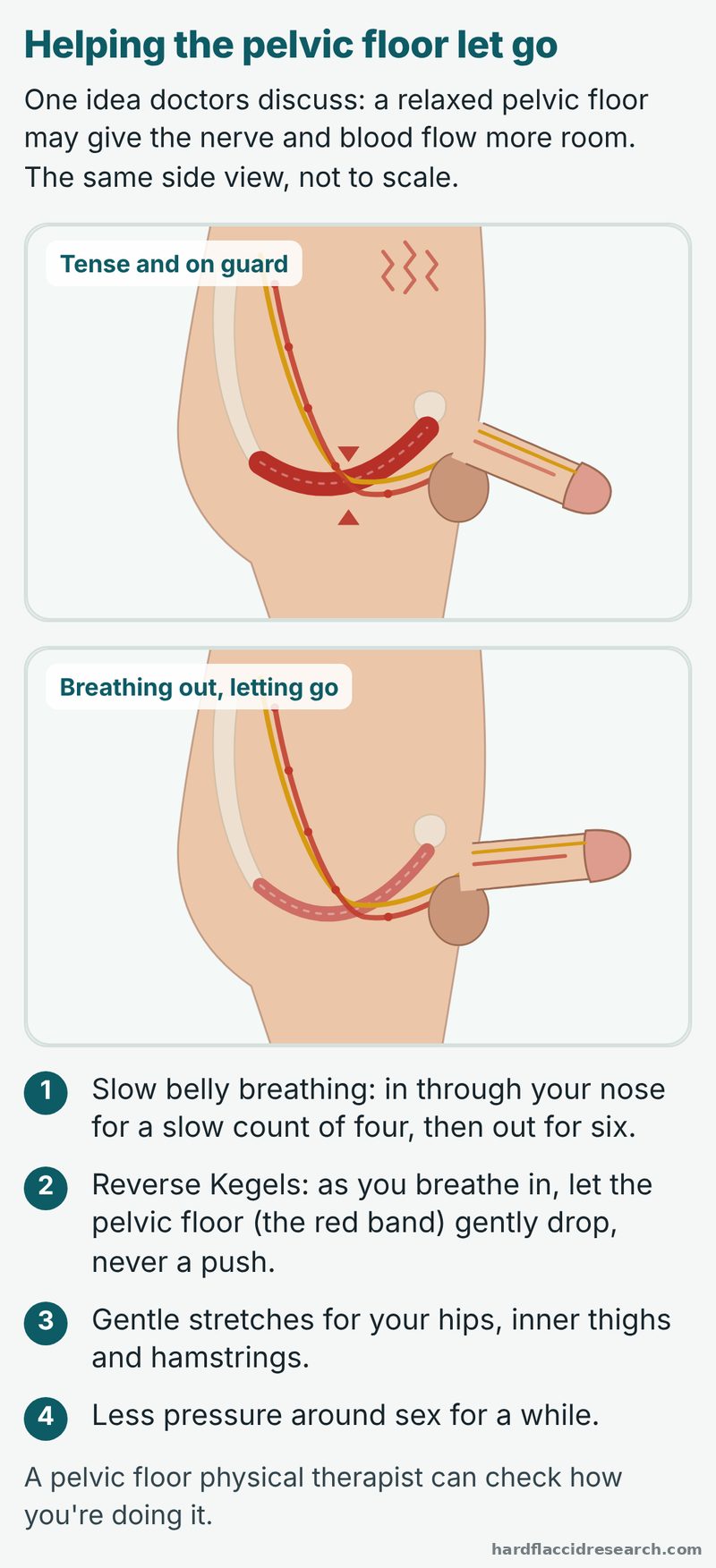
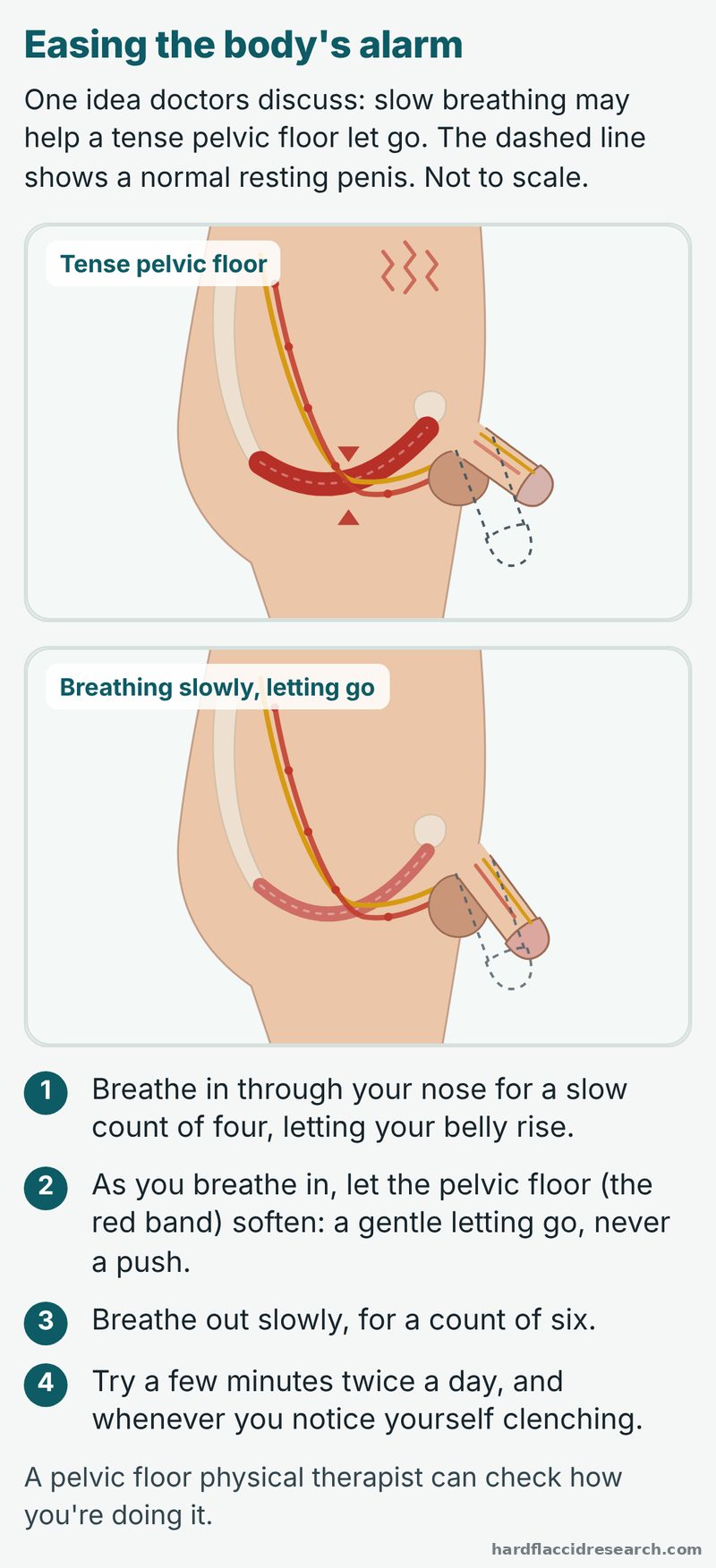 How slow belly breathing may help a tense pelvic floor let go
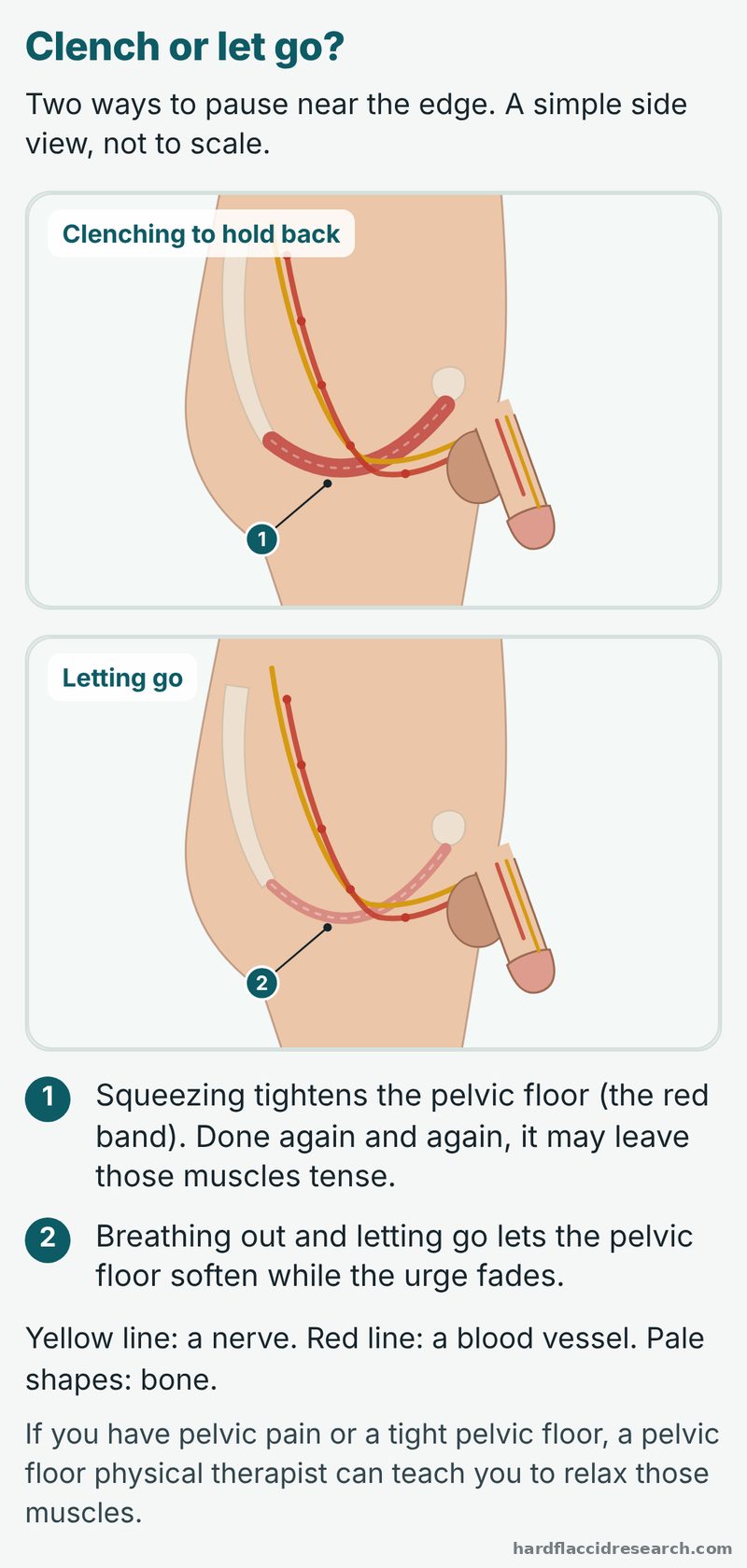 Edging: clenching to hold back, or letting go
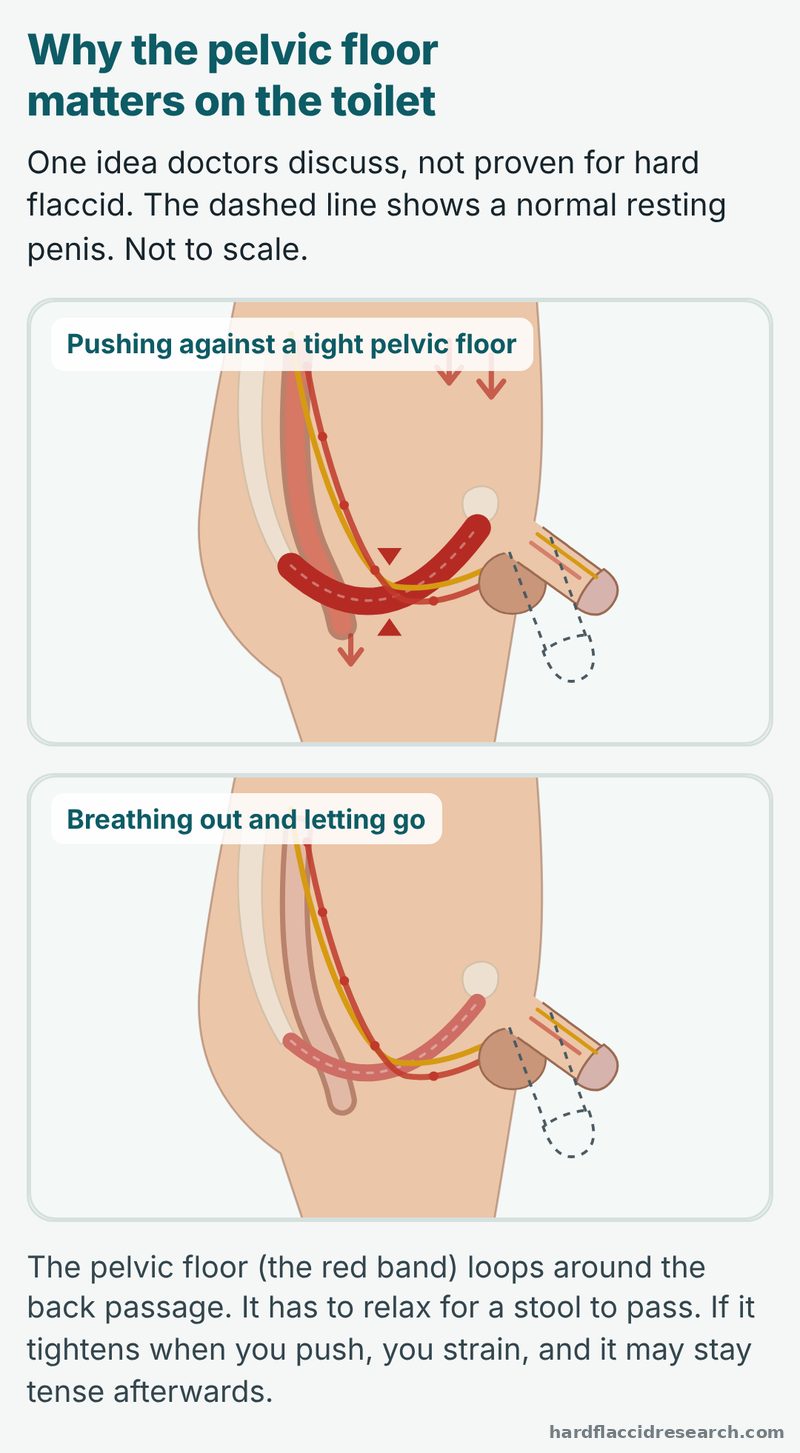 Why the pelvic floor matters on the toilet
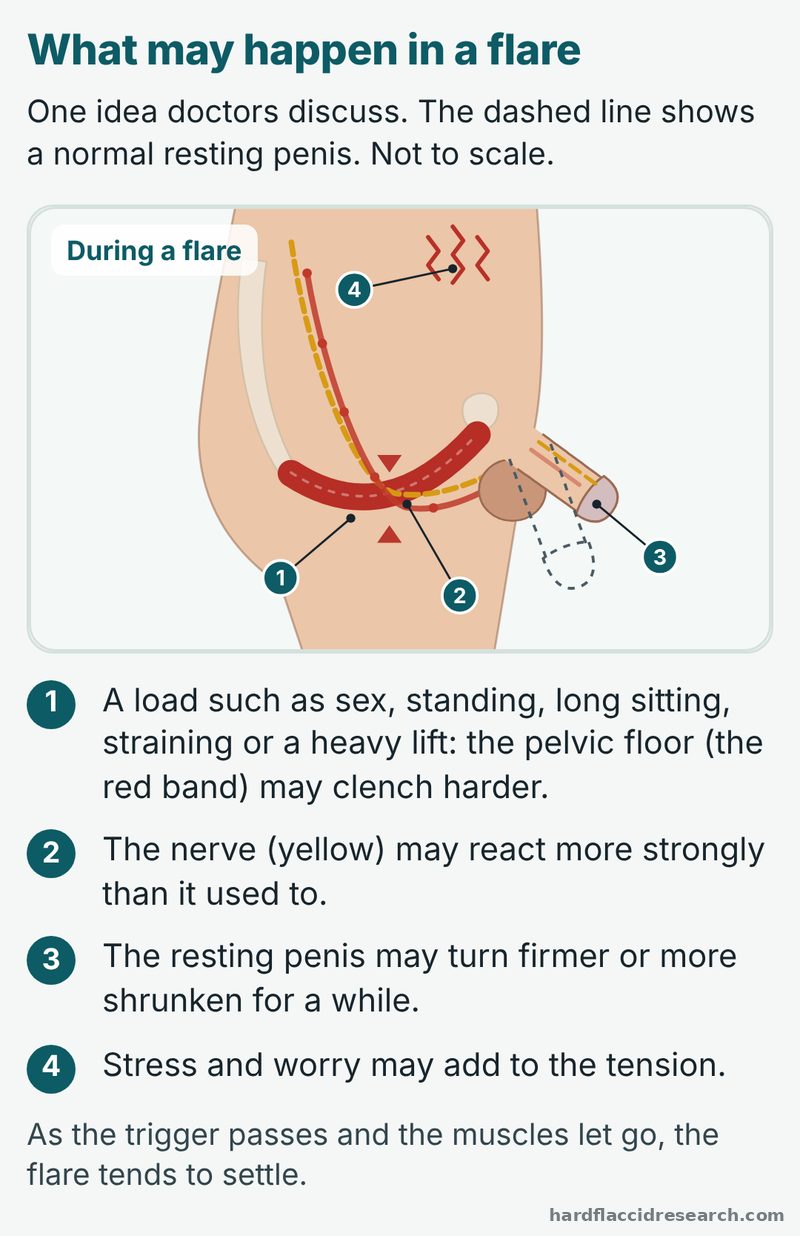 What may happen in a hard flaccid flare-up
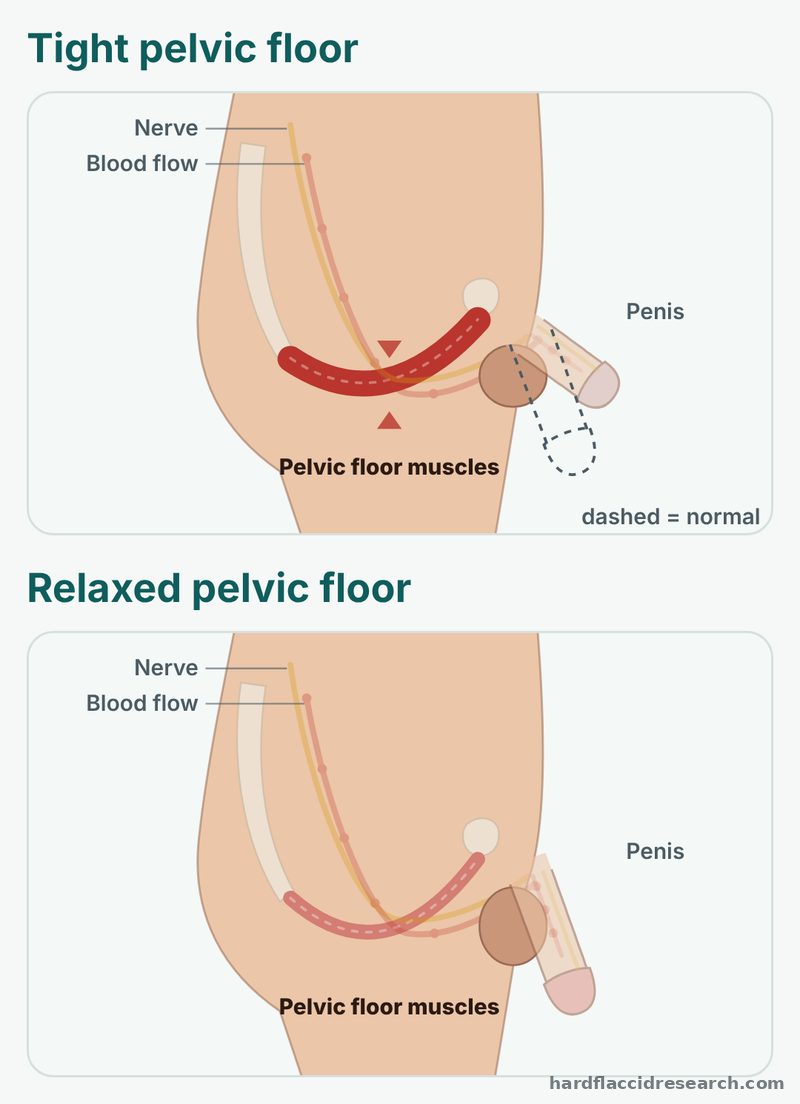 A tight pelvic floor and a relaxed pelvic floor, side by side
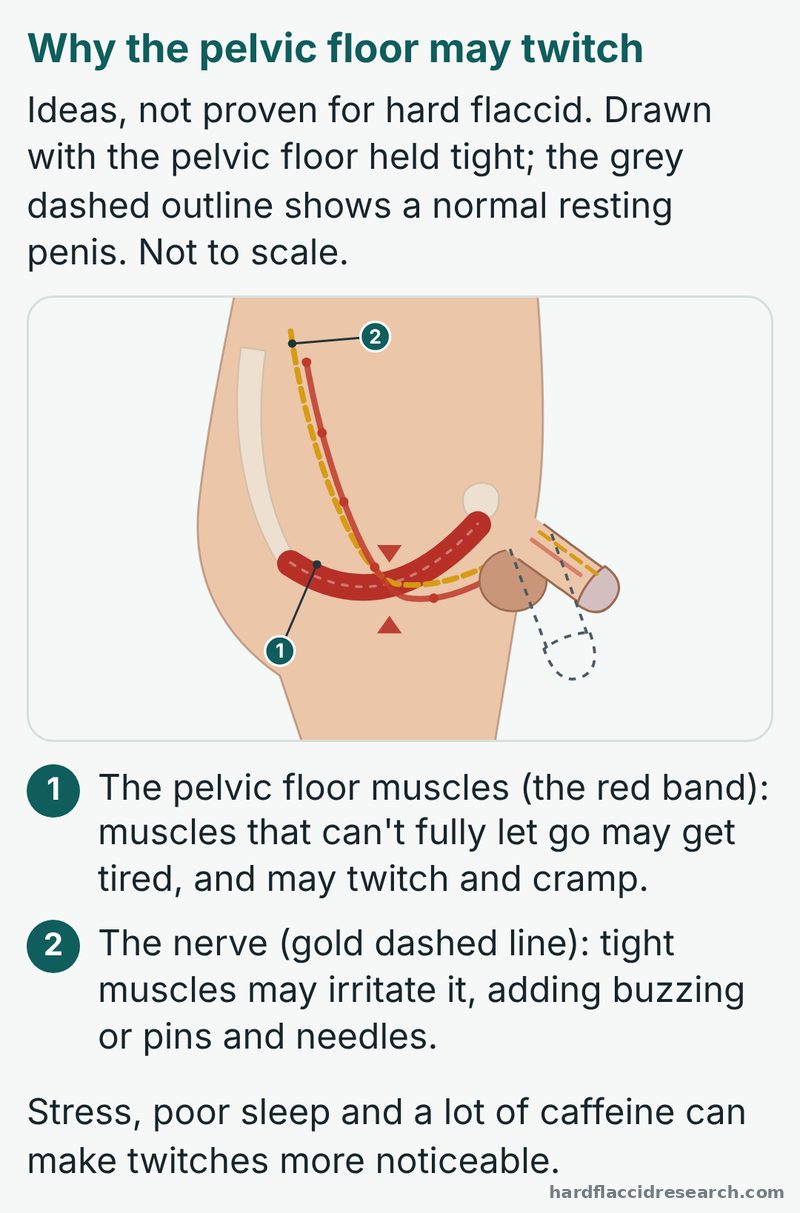 Why the pelvic floor may twitch
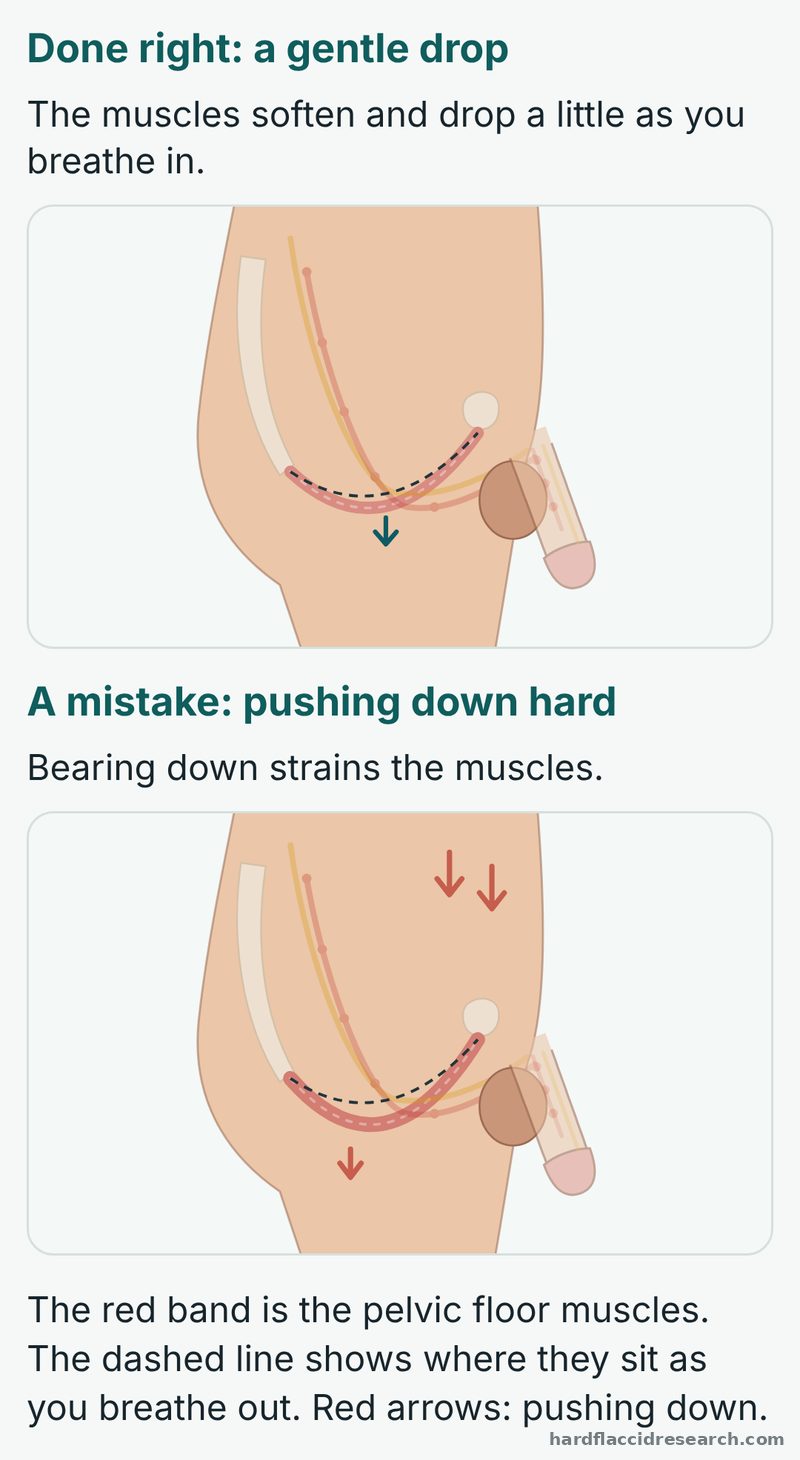 A reverse Kegel: a gentle drop, not a push
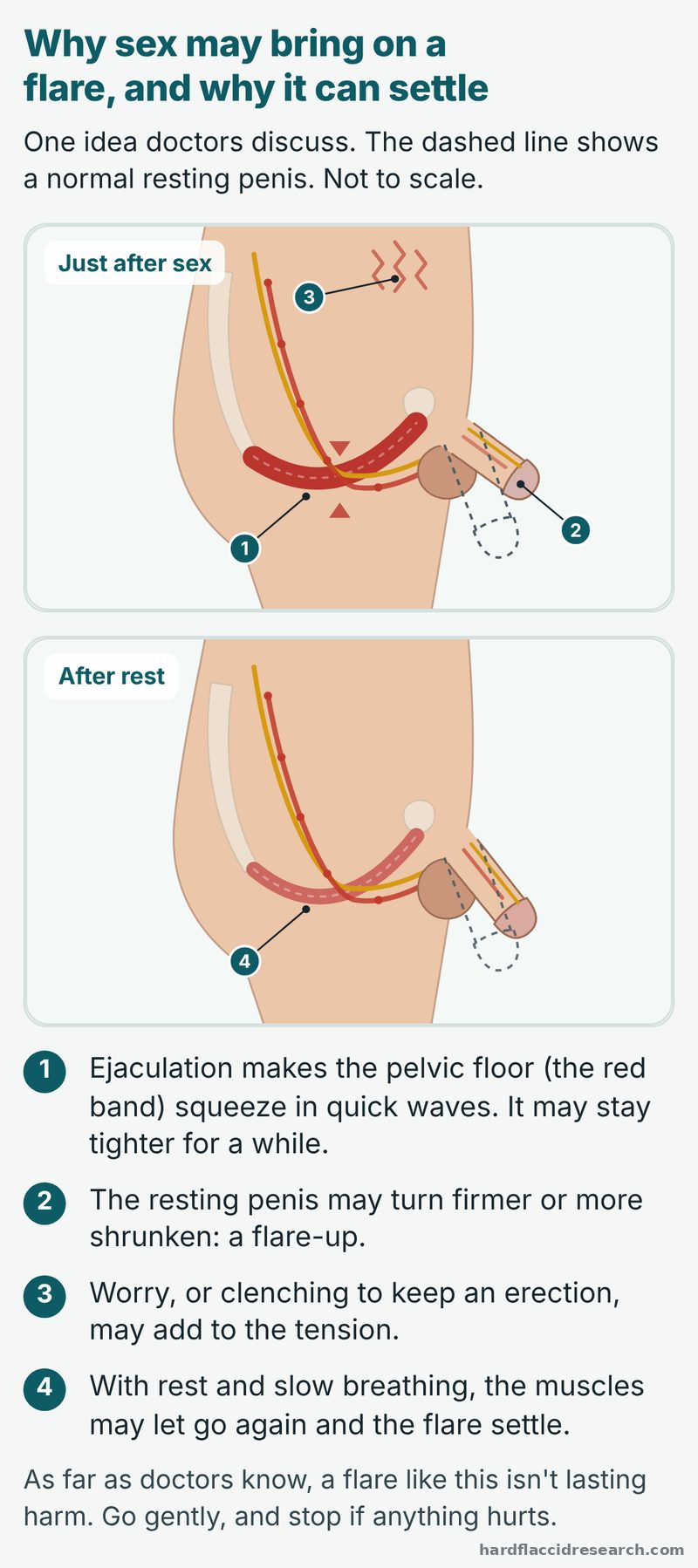 Why sex may bring on a flare, and why it can settle
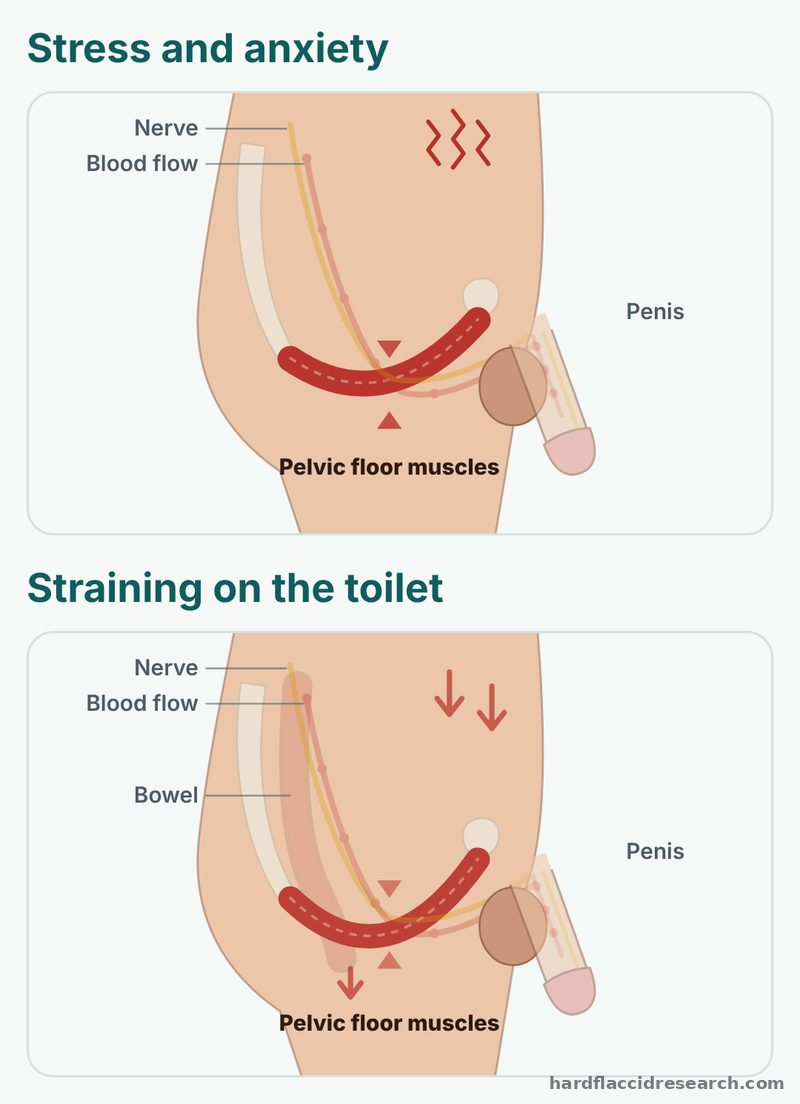 What can keep the pelvic floor clenched: stress and straining
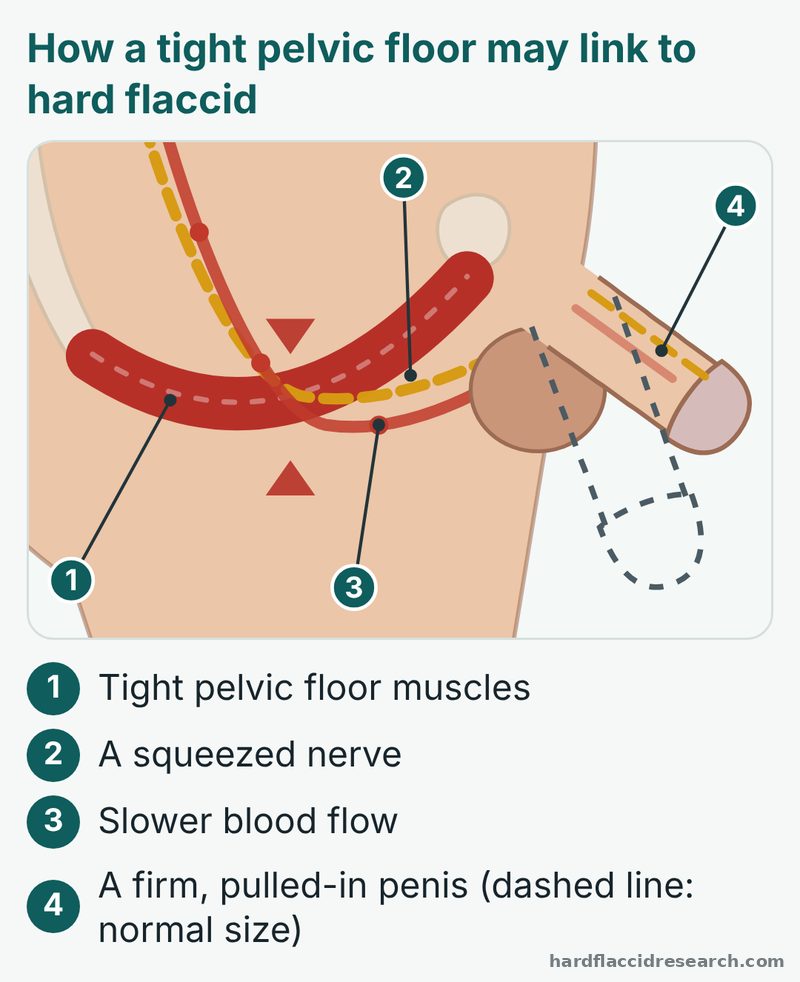 How a tight pelvic floor may link to hard flaccid
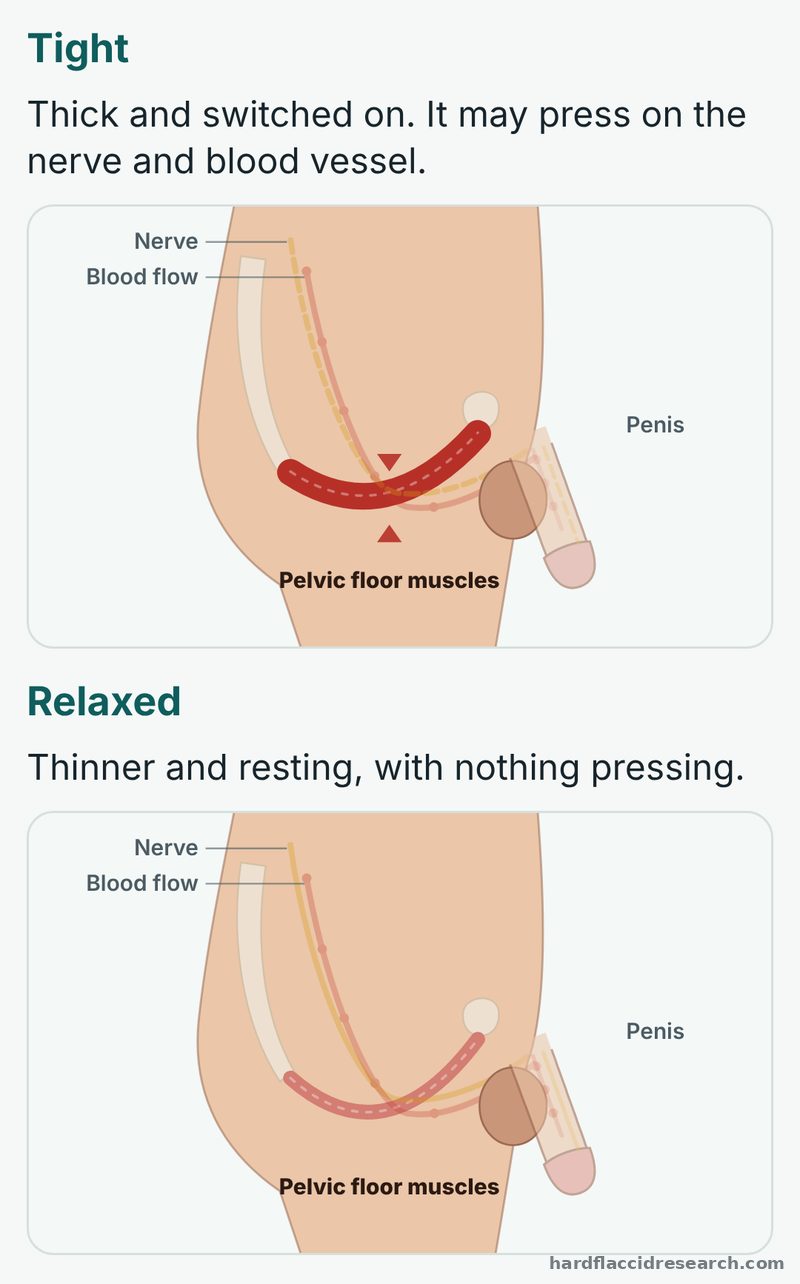 From tight to relaxed: the goal of pelvic floor relaxation
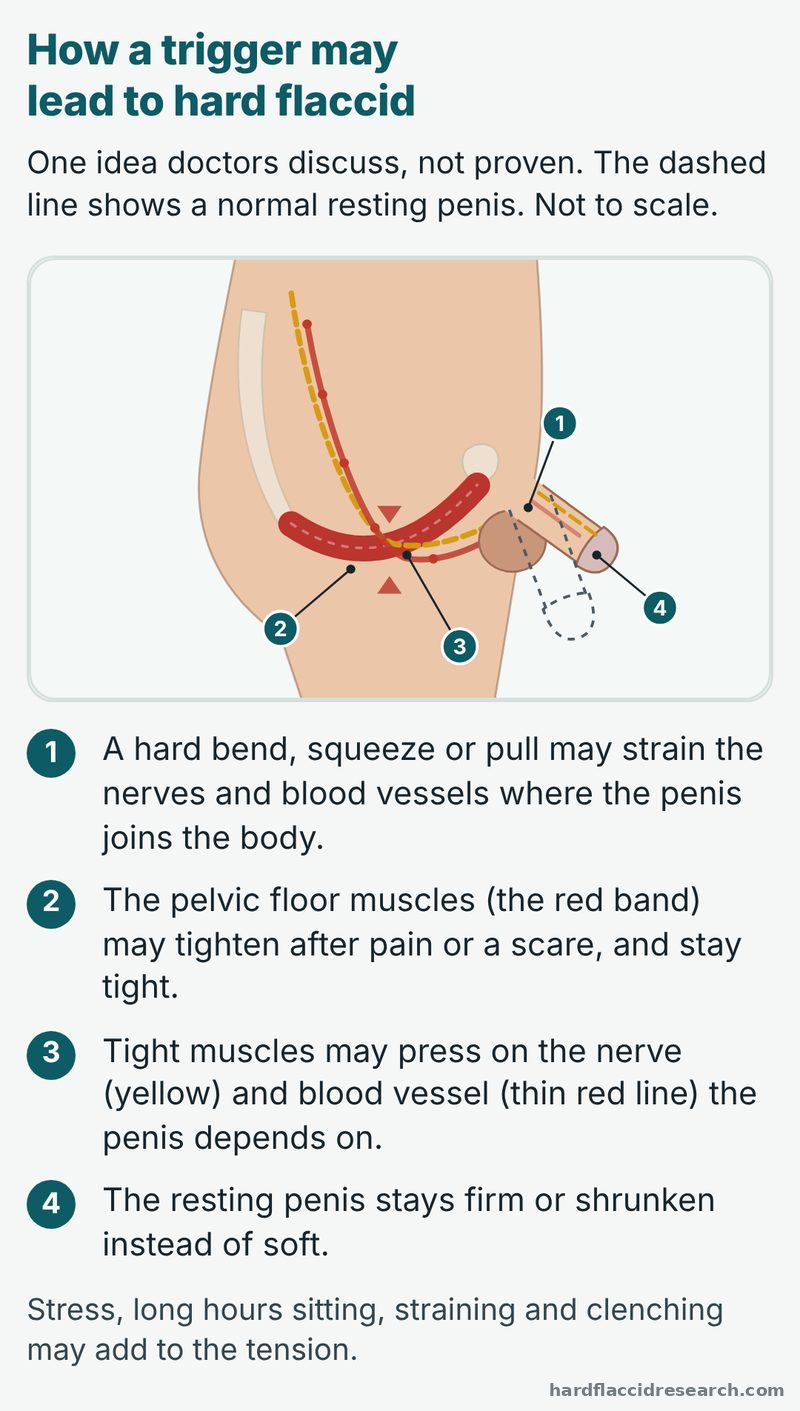 How a trigger may lead to hard flaccid
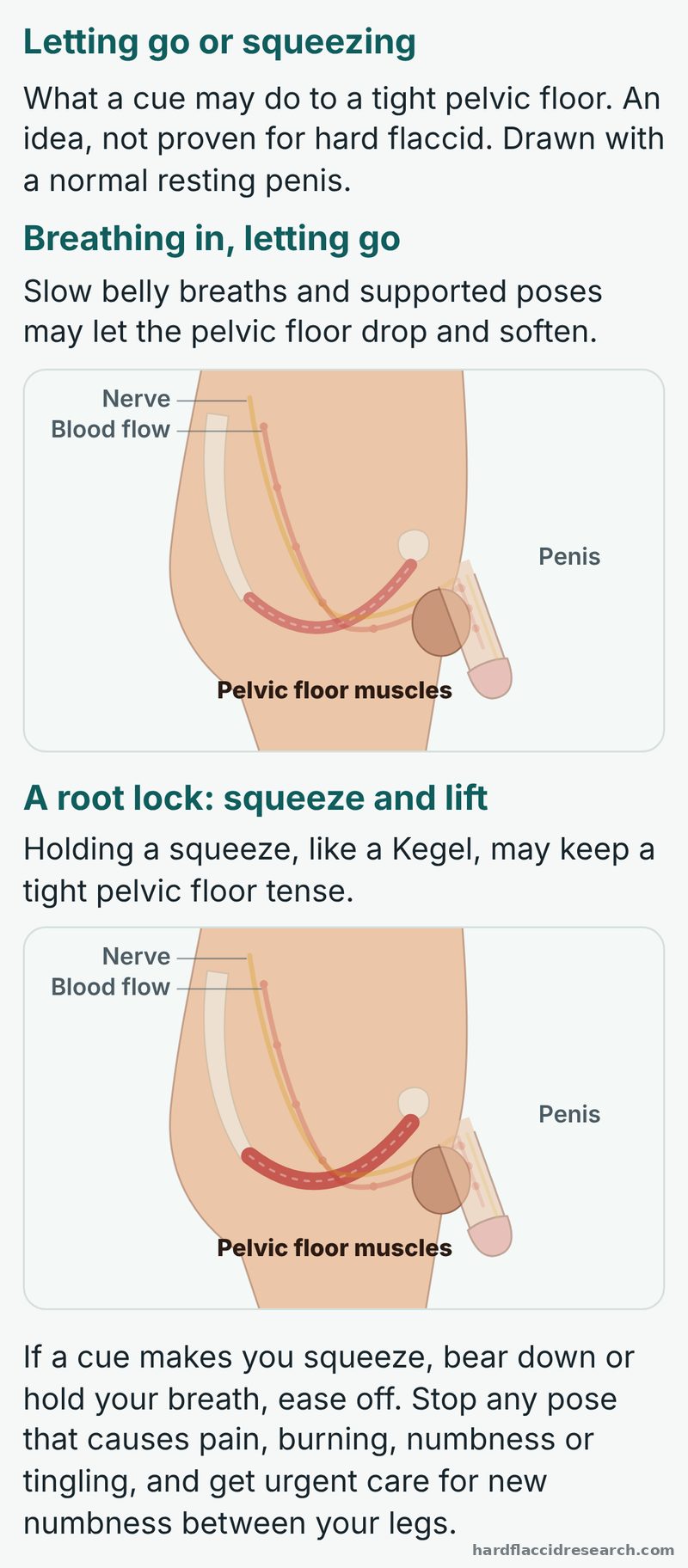 What a yoga cue may do to a tight pelvic floor
The pudendal nerve and other nerves
Where the main nerve between the legs runs, what can press on it, and how stress may act on the body.
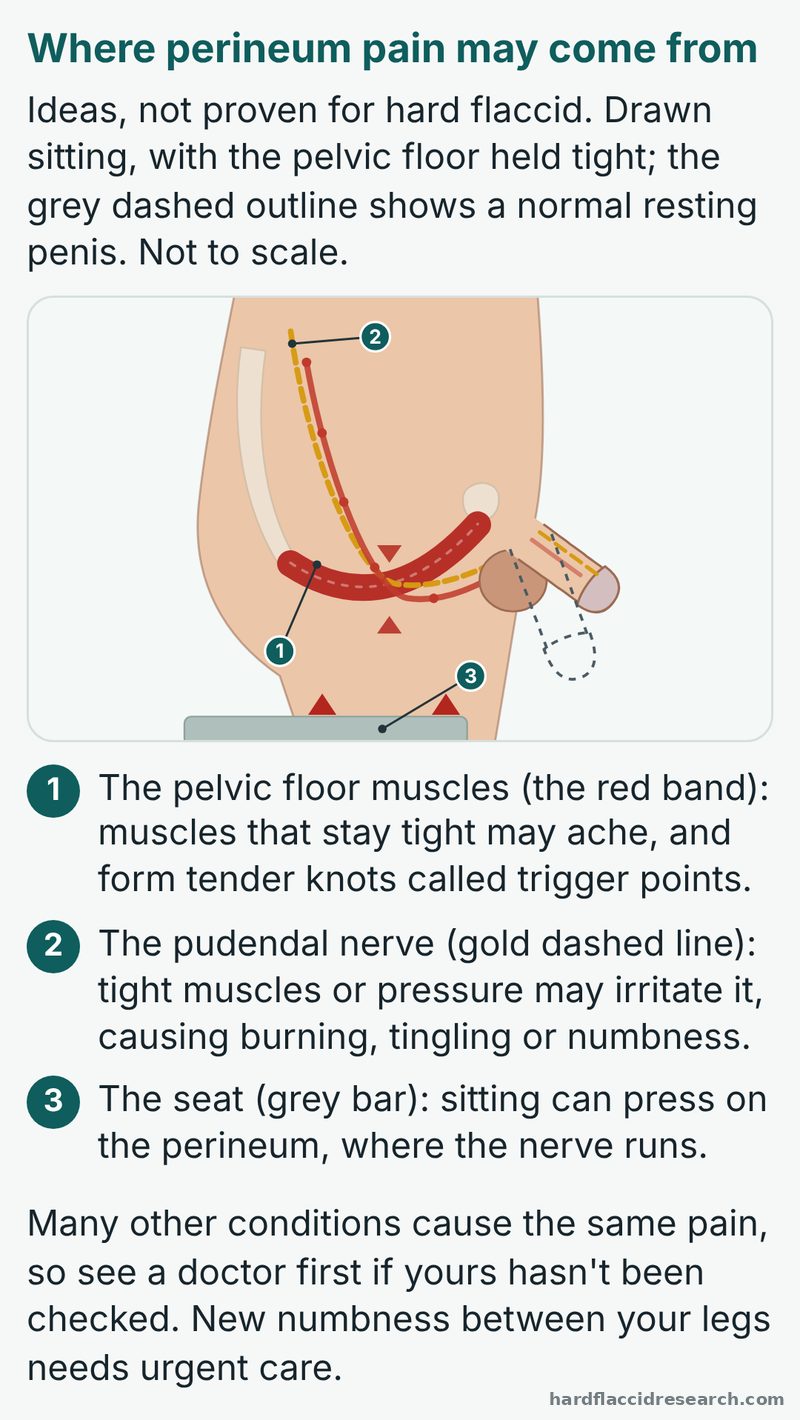 Where perineum pain may come from: muscles, a nerve or sitting
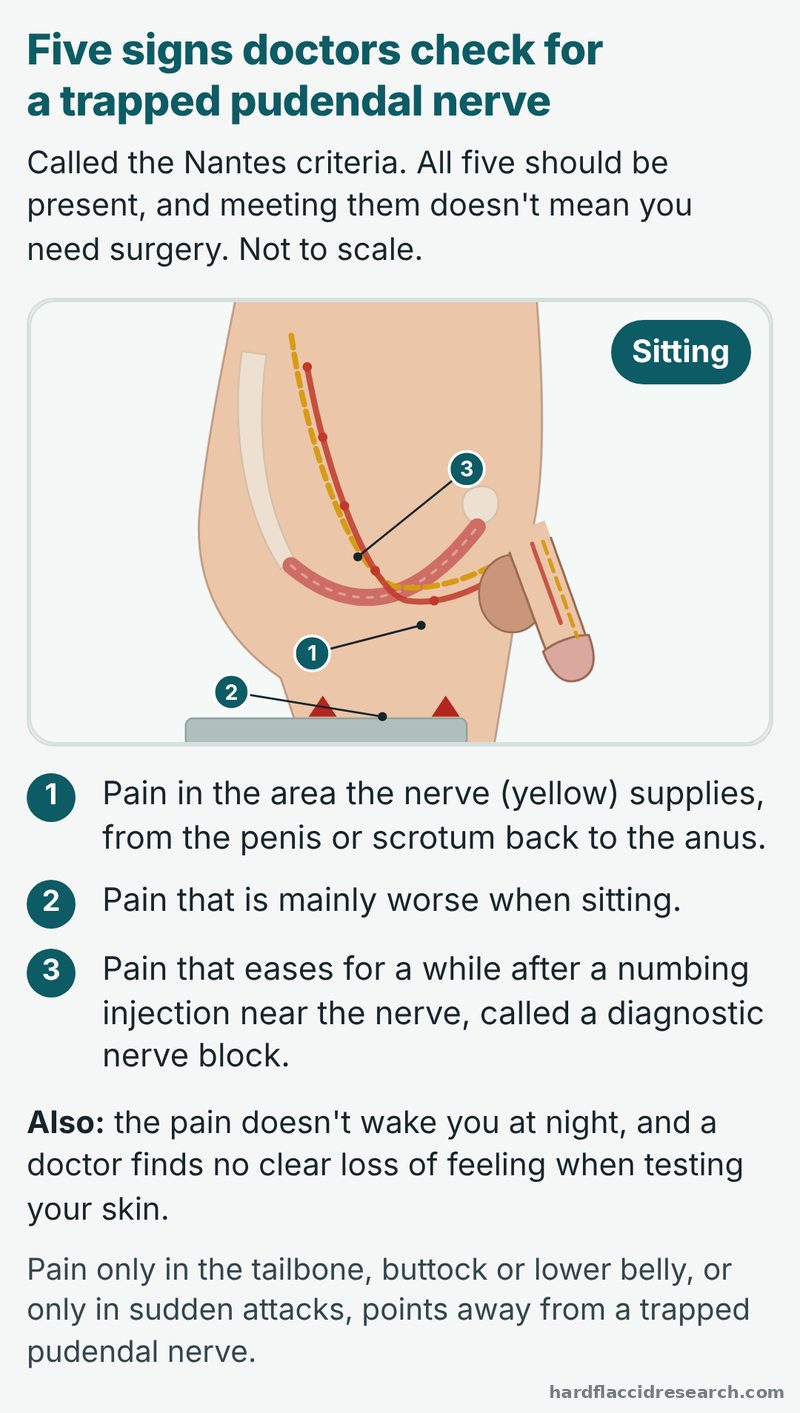 Five signs doctors check for a trapped pudendal nerve
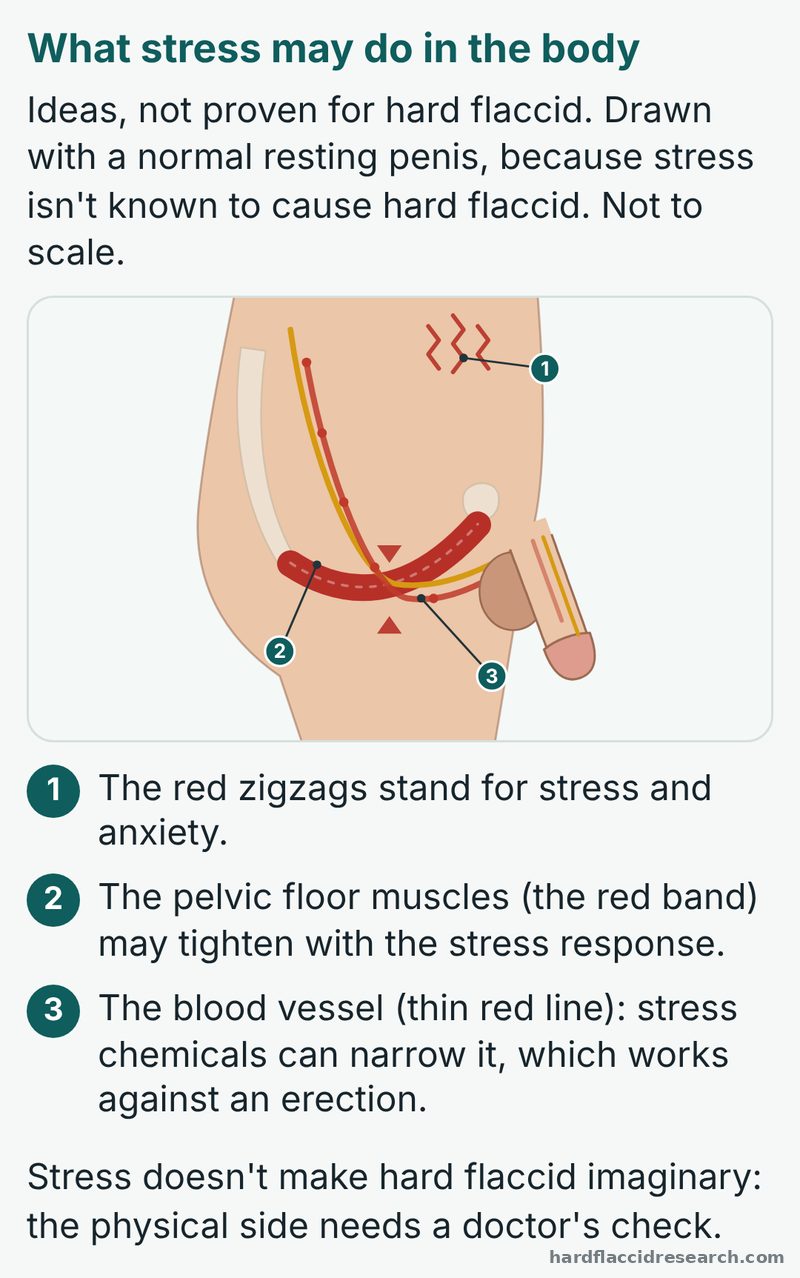 What stress may do in the body: the pelvic floor and blood vessels
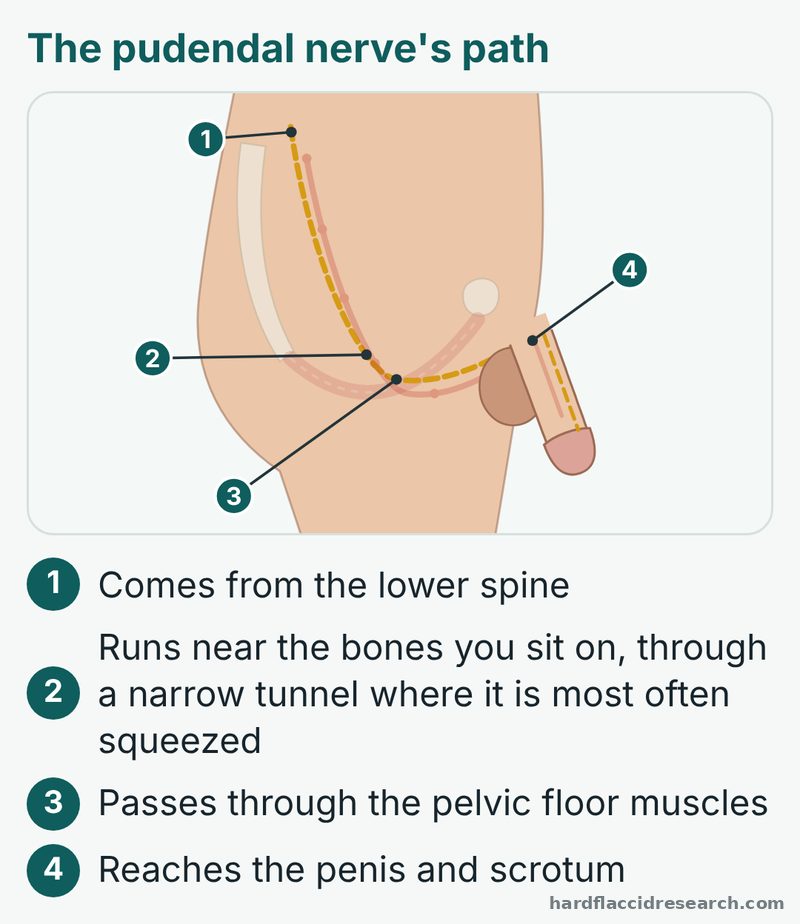 The pudendal nerve’s path
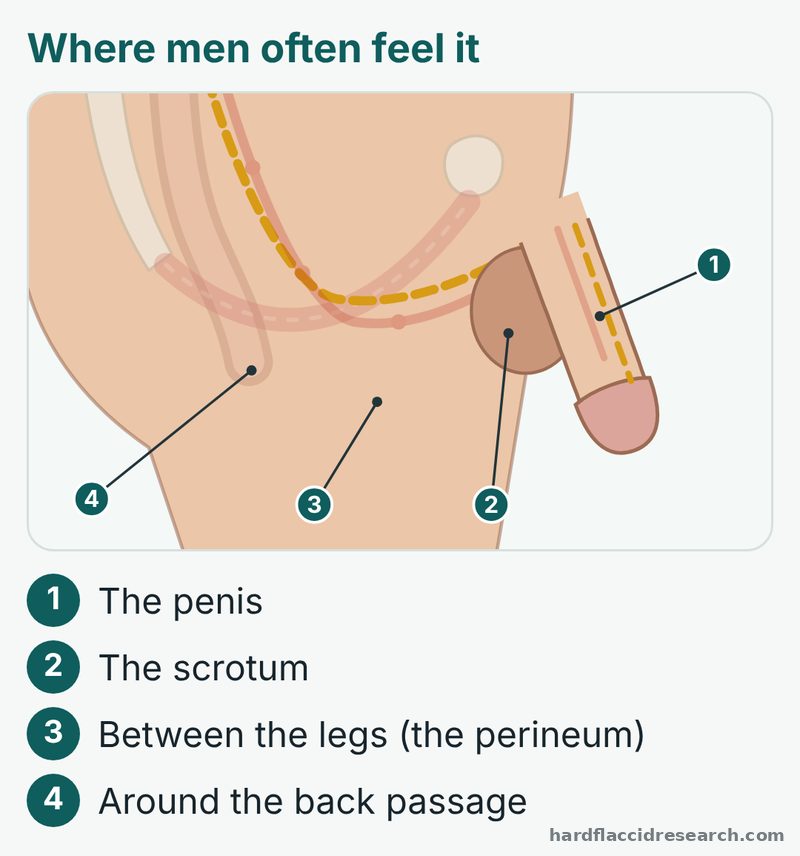 Where pudendal nerve pain is often felt
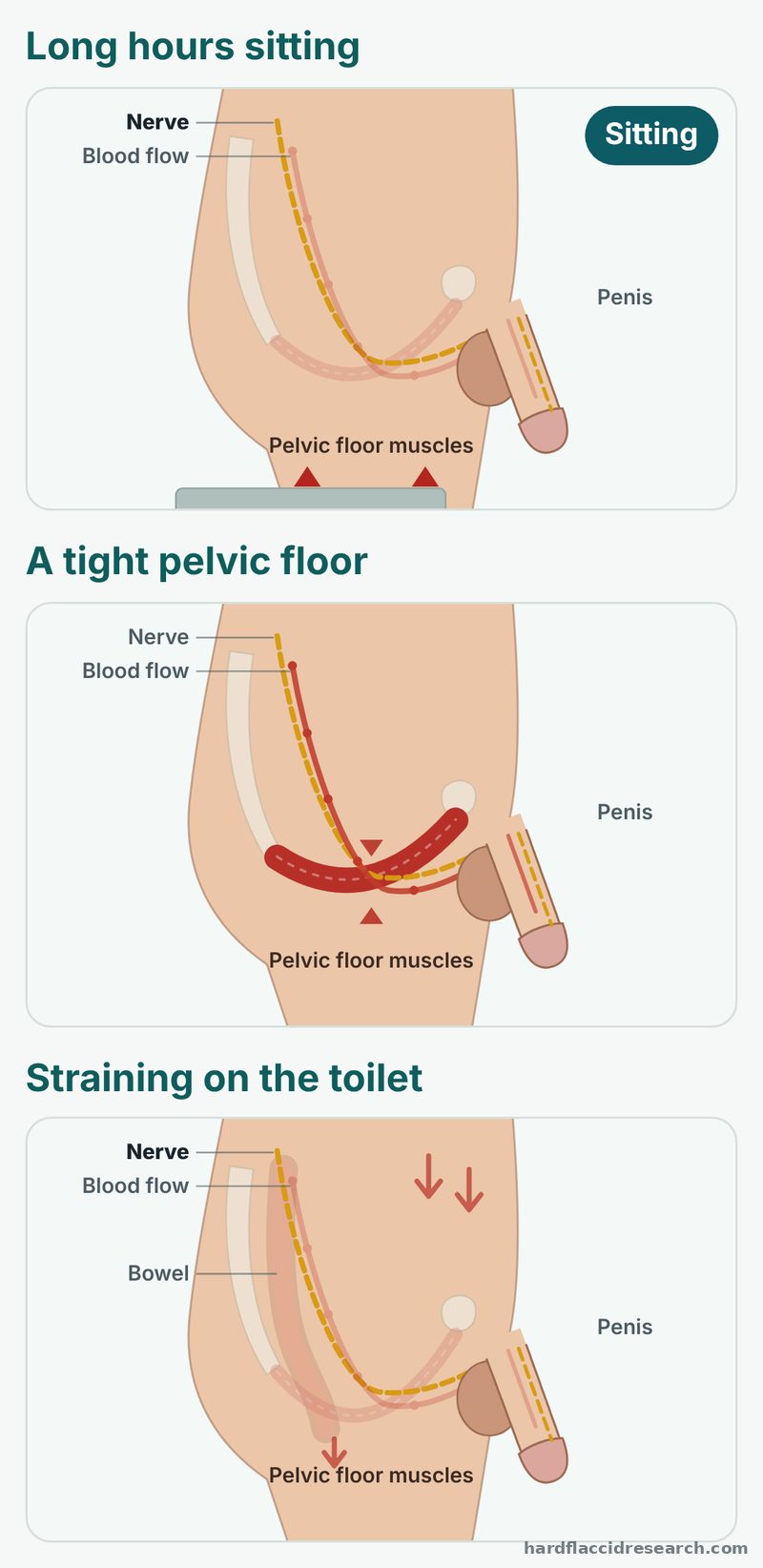 What can press on or stretch the pudendal nerve
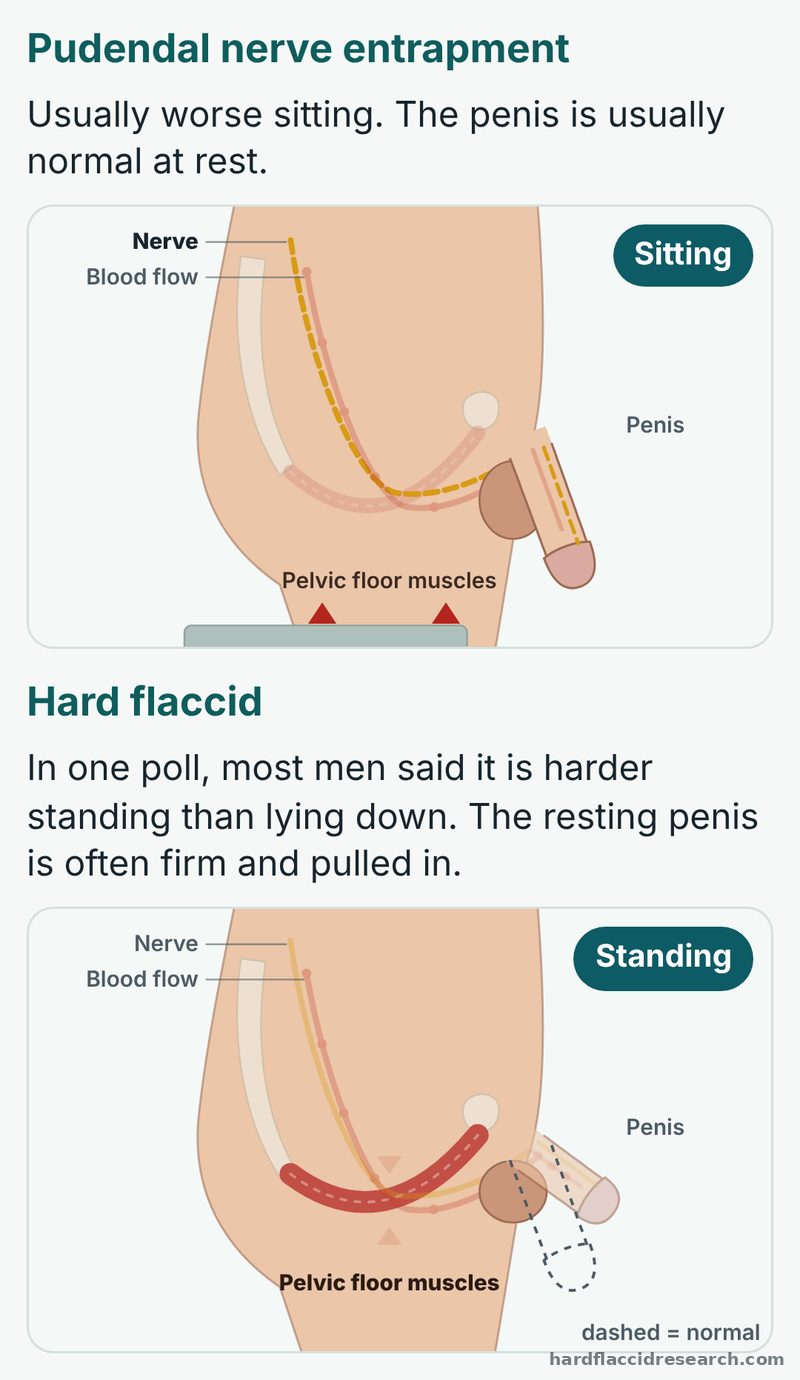 Pudendal nerve entrapment or hard flaccid: sitting or standing?
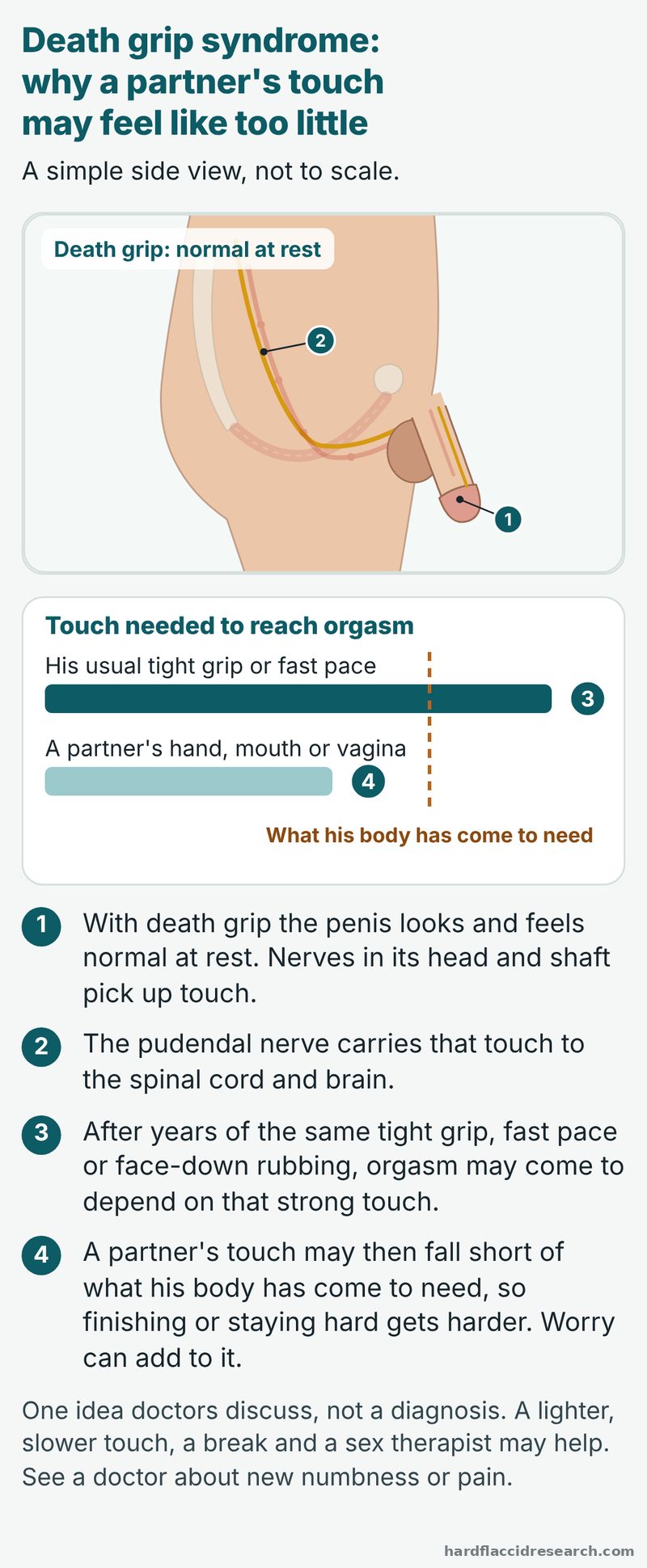 Death grip syndrome: why a partner's touch may feel like too little
Blood flow and erections
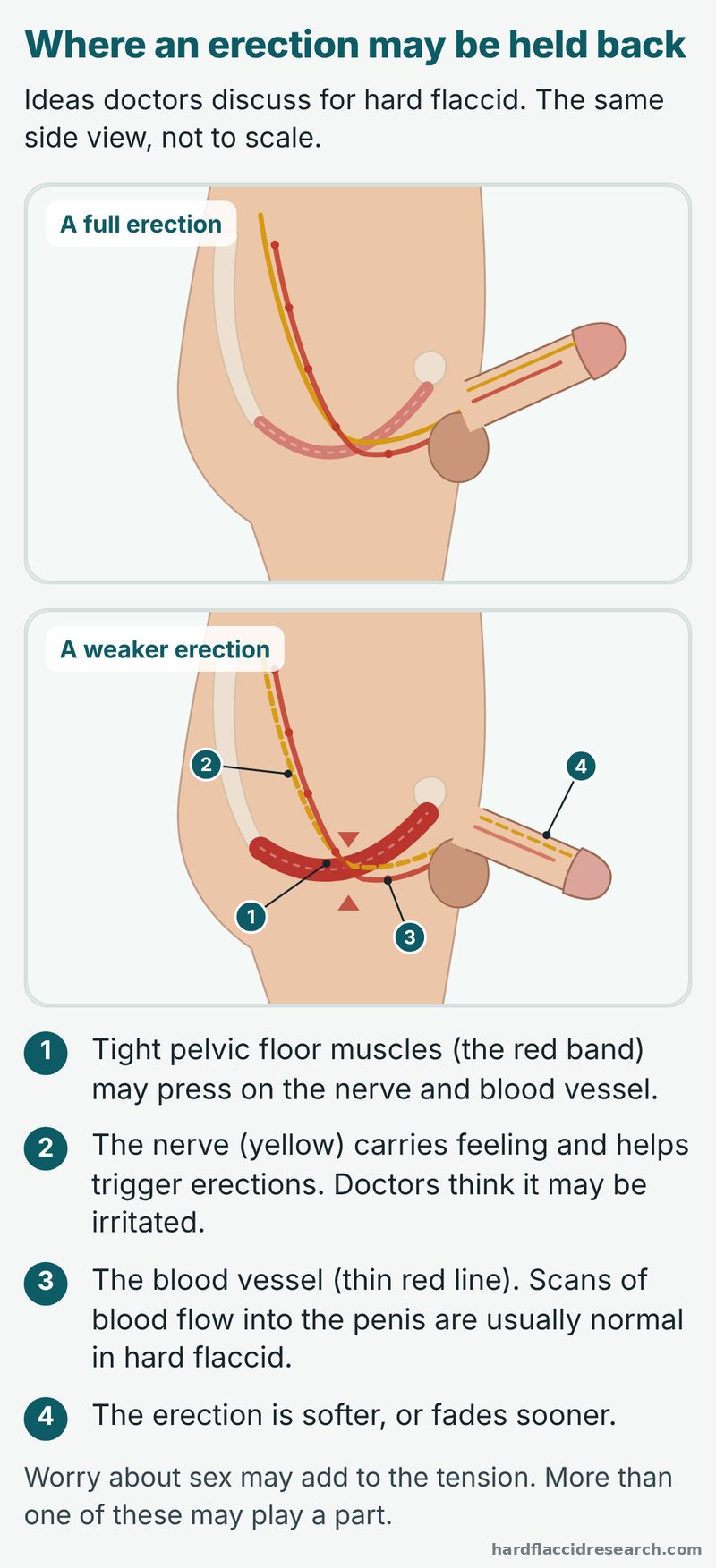
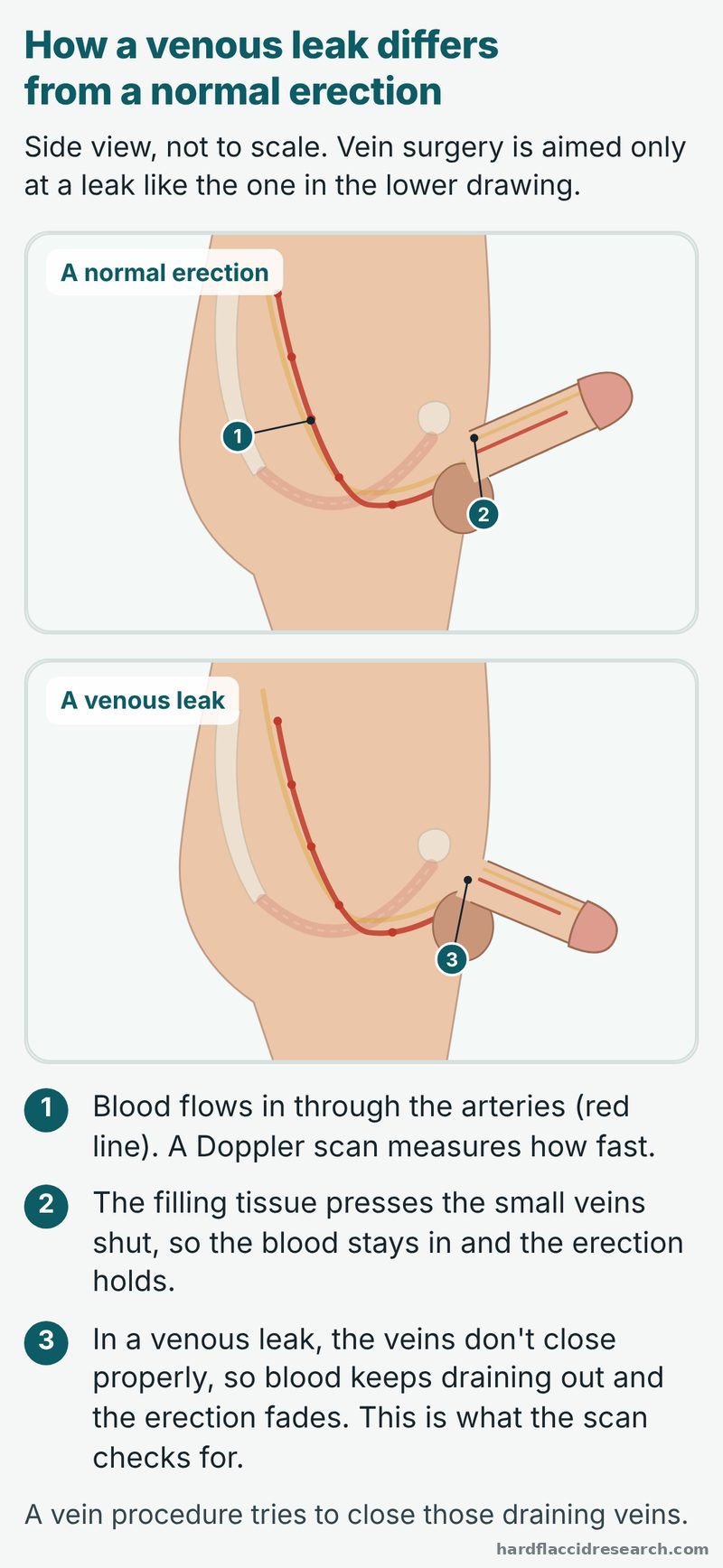
How blood flows in and out of the penis, and where an erection may be held back.
What each treatment acts on
Medicines, injections and procedures, each drawn on the part it acts on, and what it doesn’t reach.
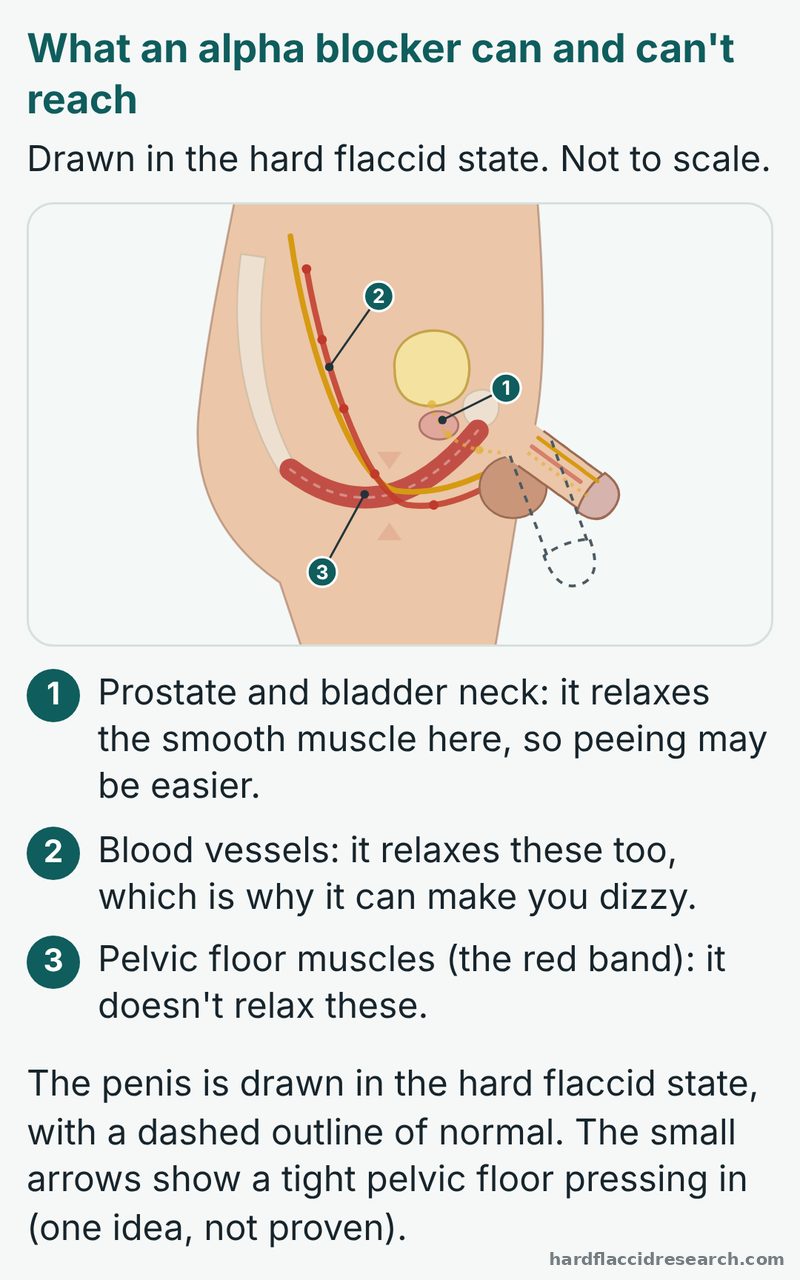 What an alpha blocker can and can’t reach
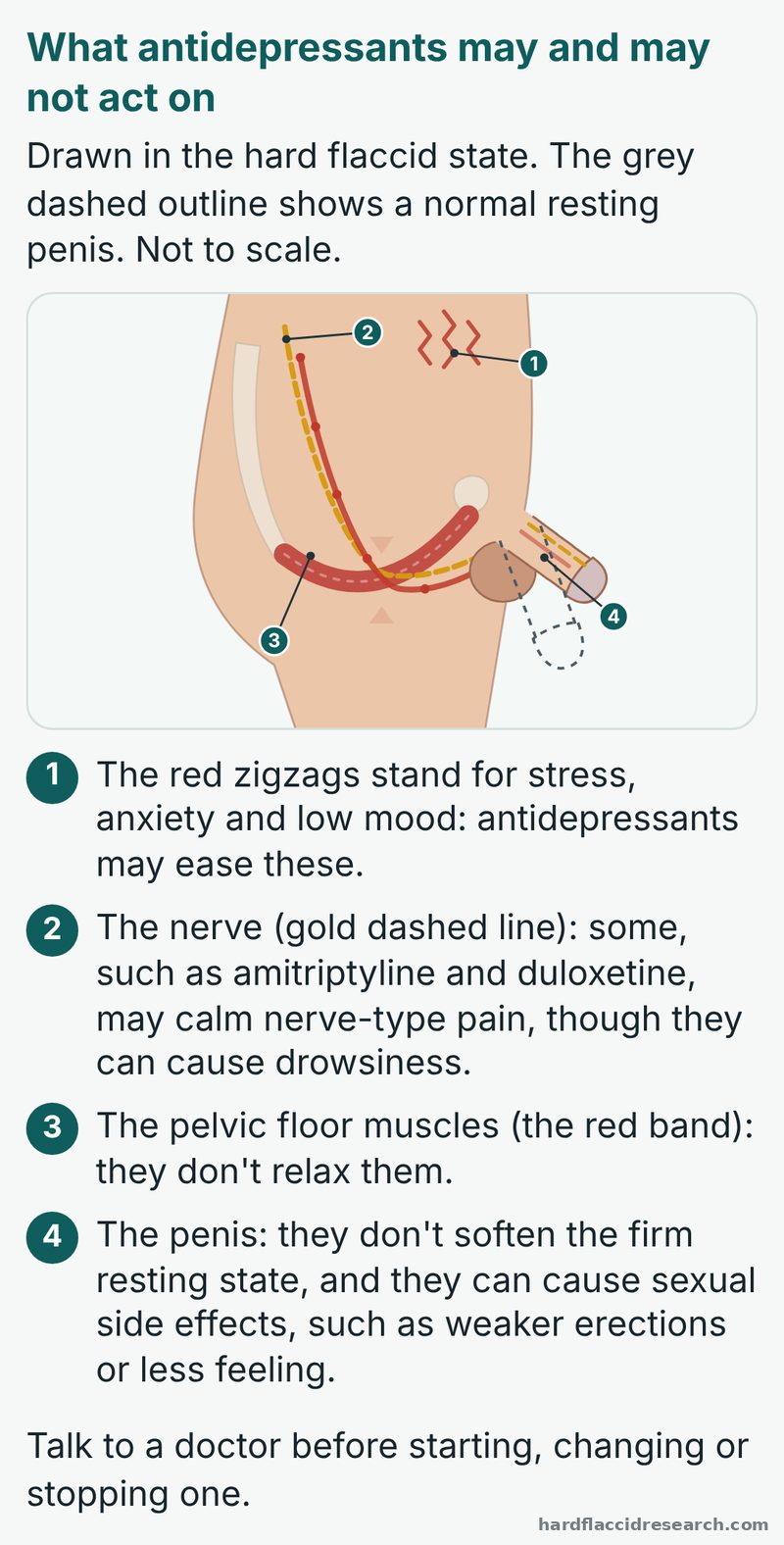 What antidepressants may and may not act on
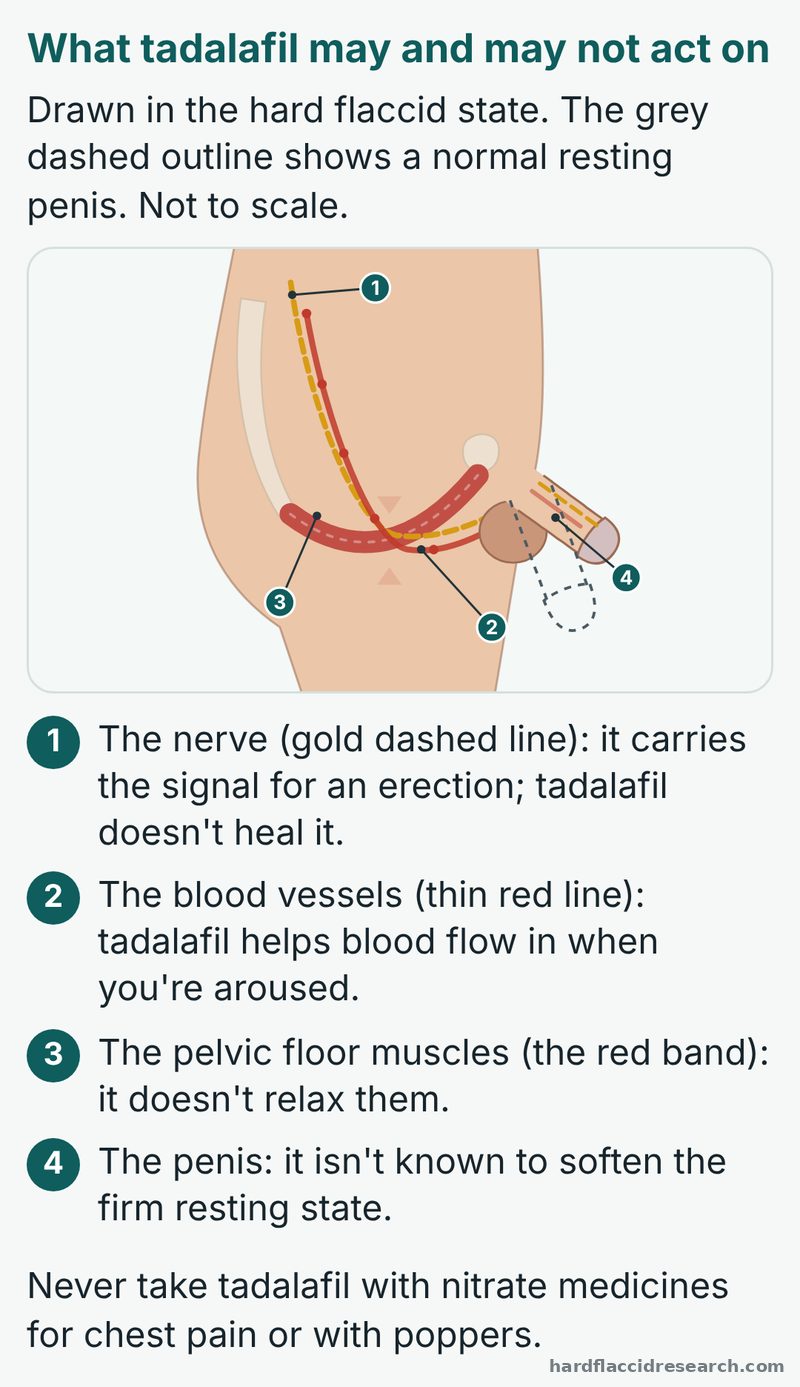 What tadalafil (Cialis) may and may not act on
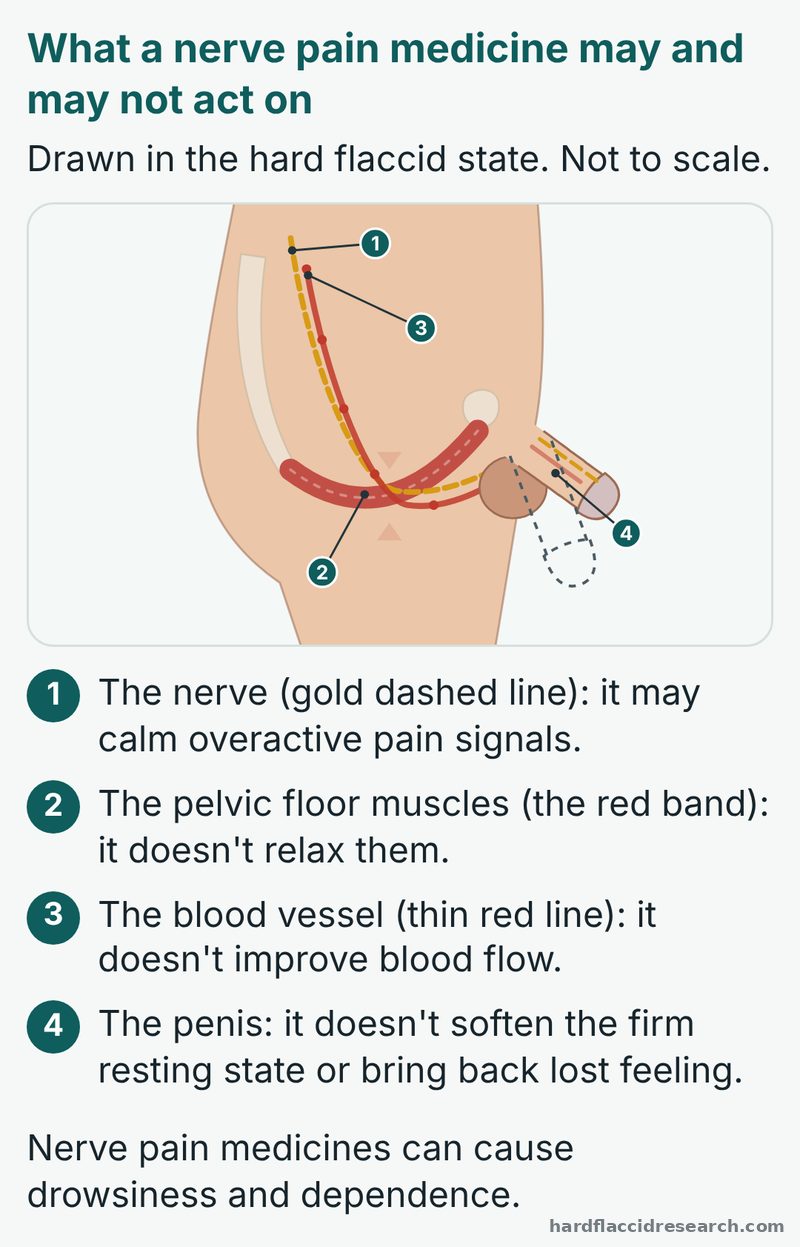 What nerve pain medicines such as gabapentin may and may not act on
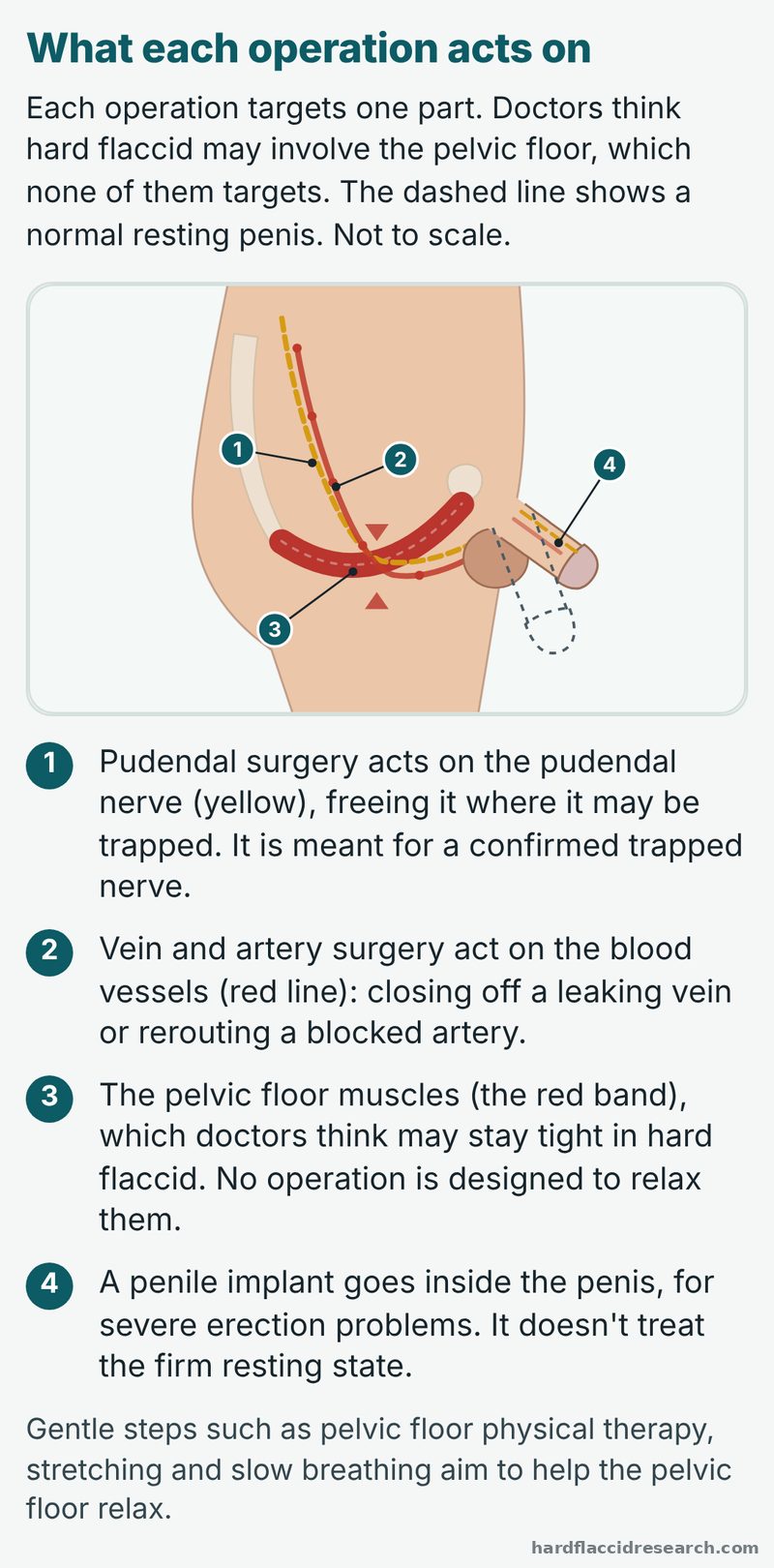 What each operation acts on
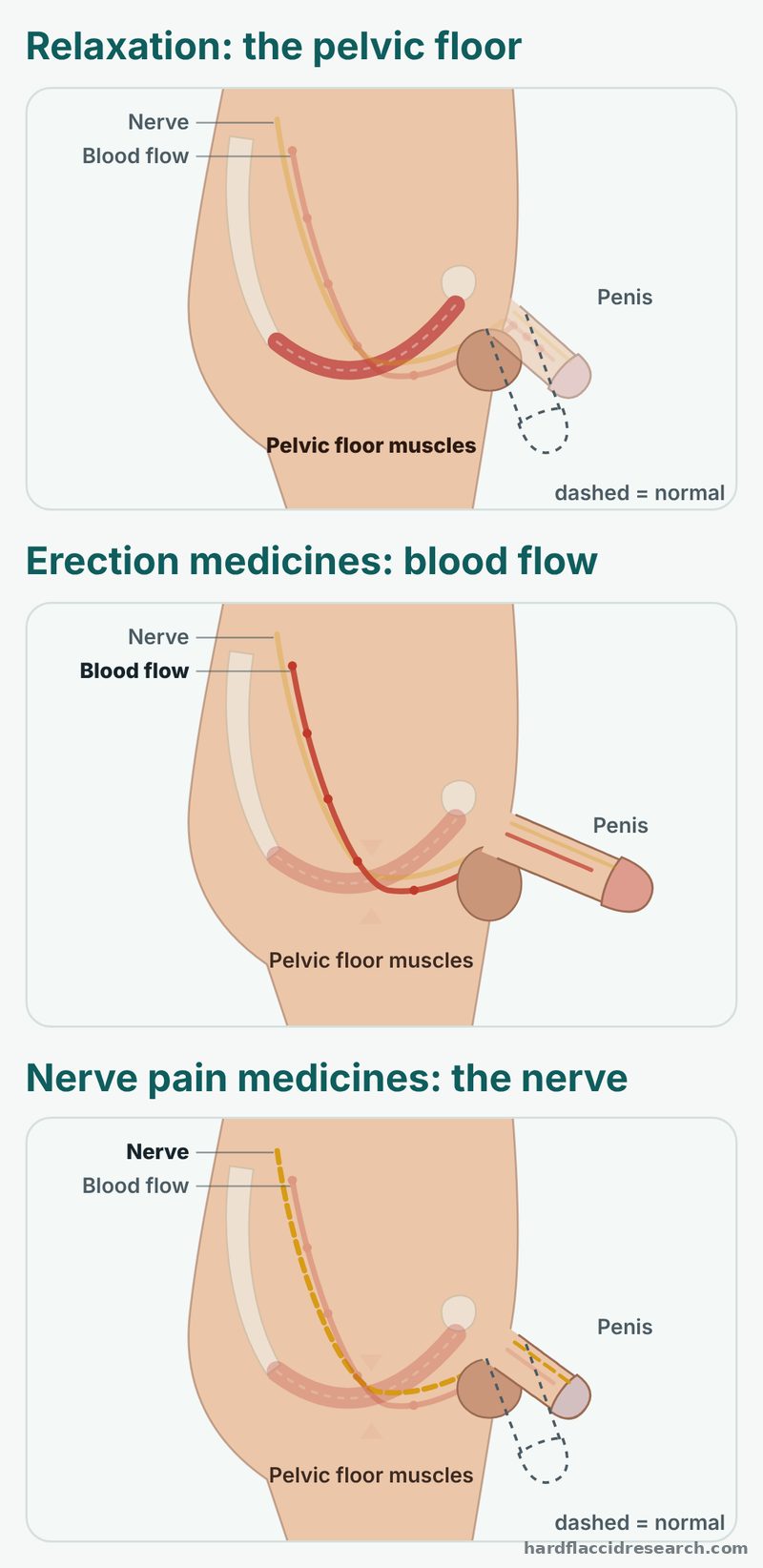 What each hard flaccid treatment acts on
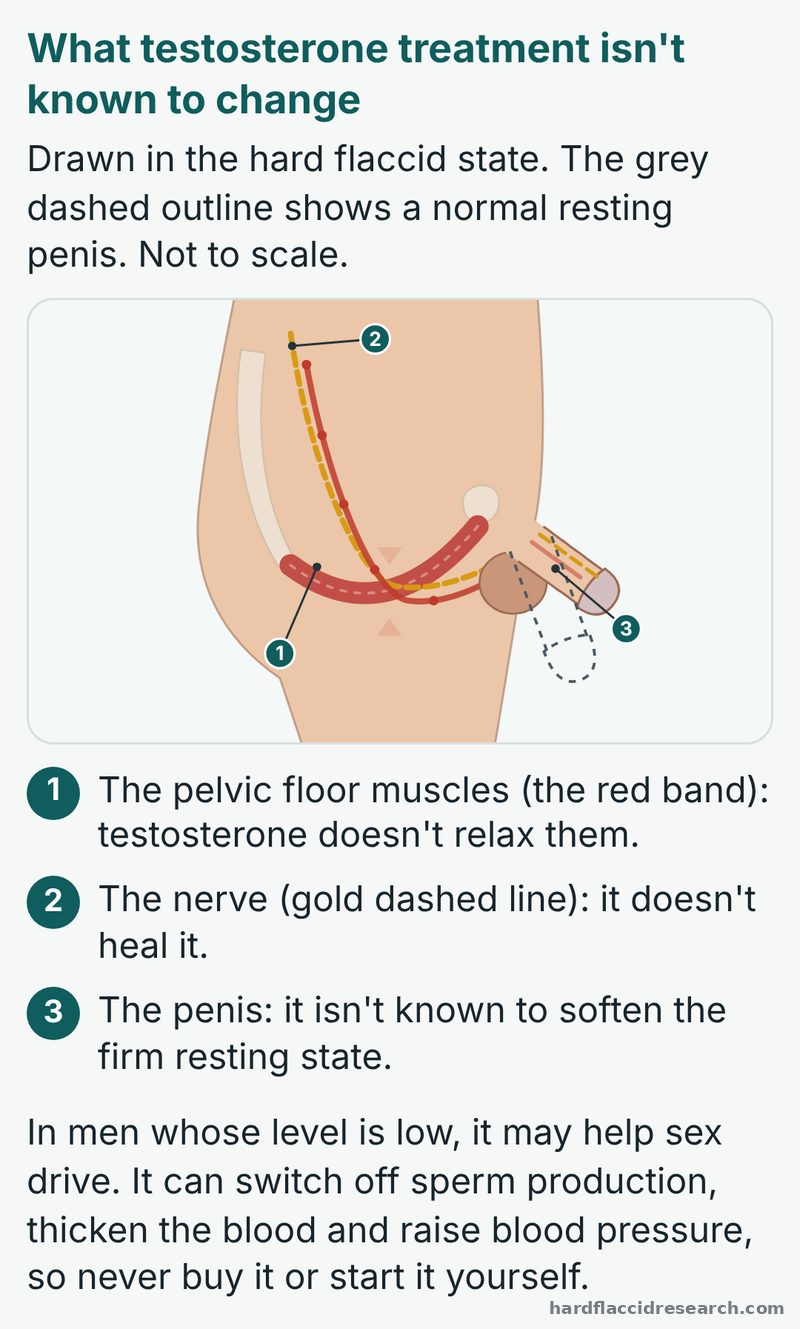 What testosterone treatment isn’t known to change
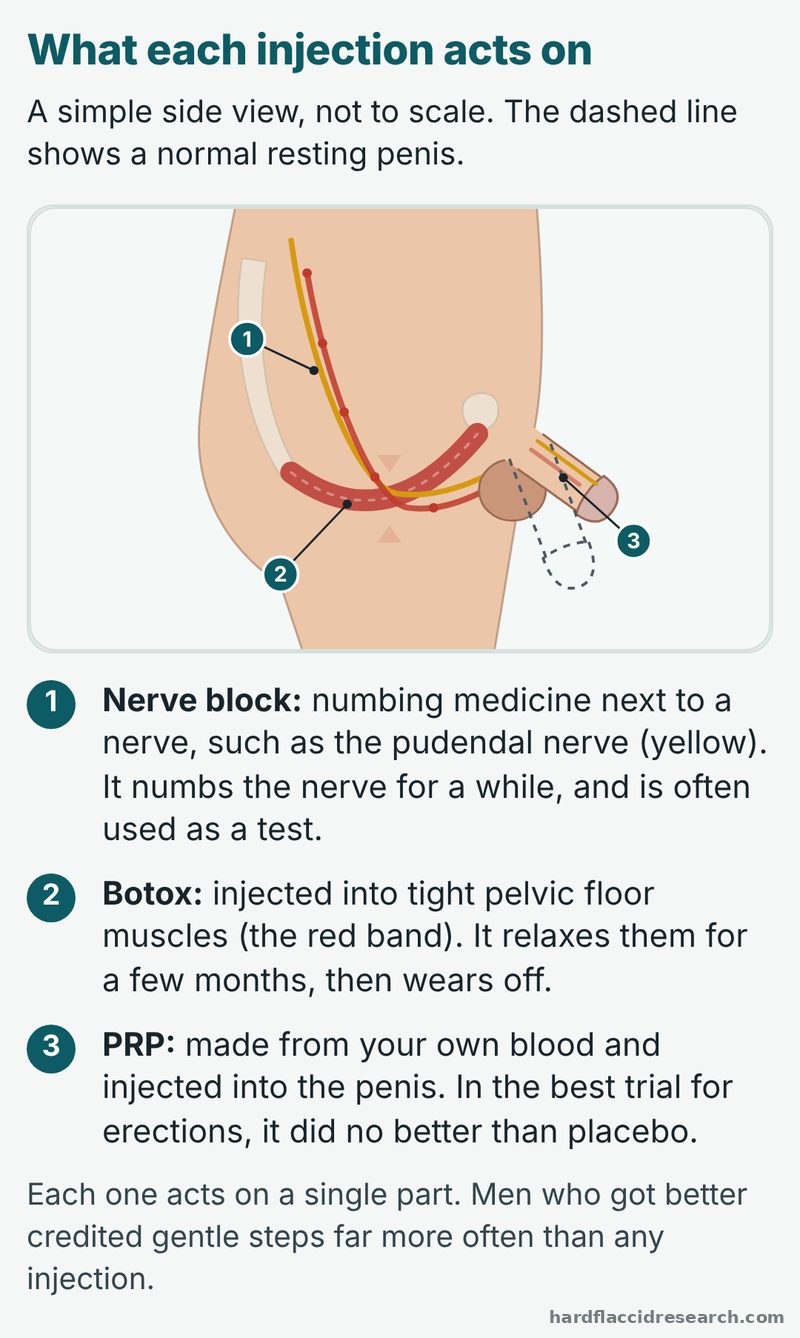 What nerve blocks, Botox and PRP injections act on
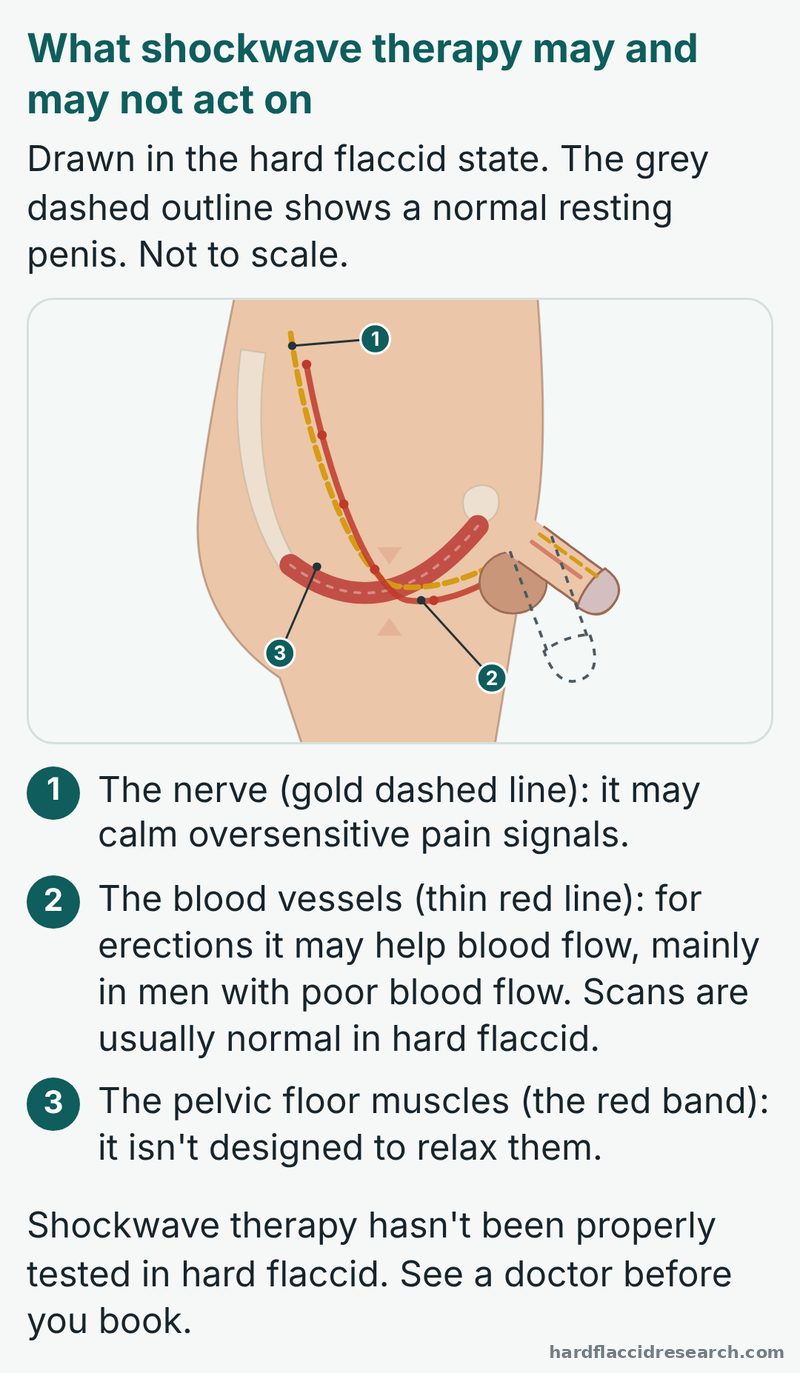 What shockwave therapy may and may not act on
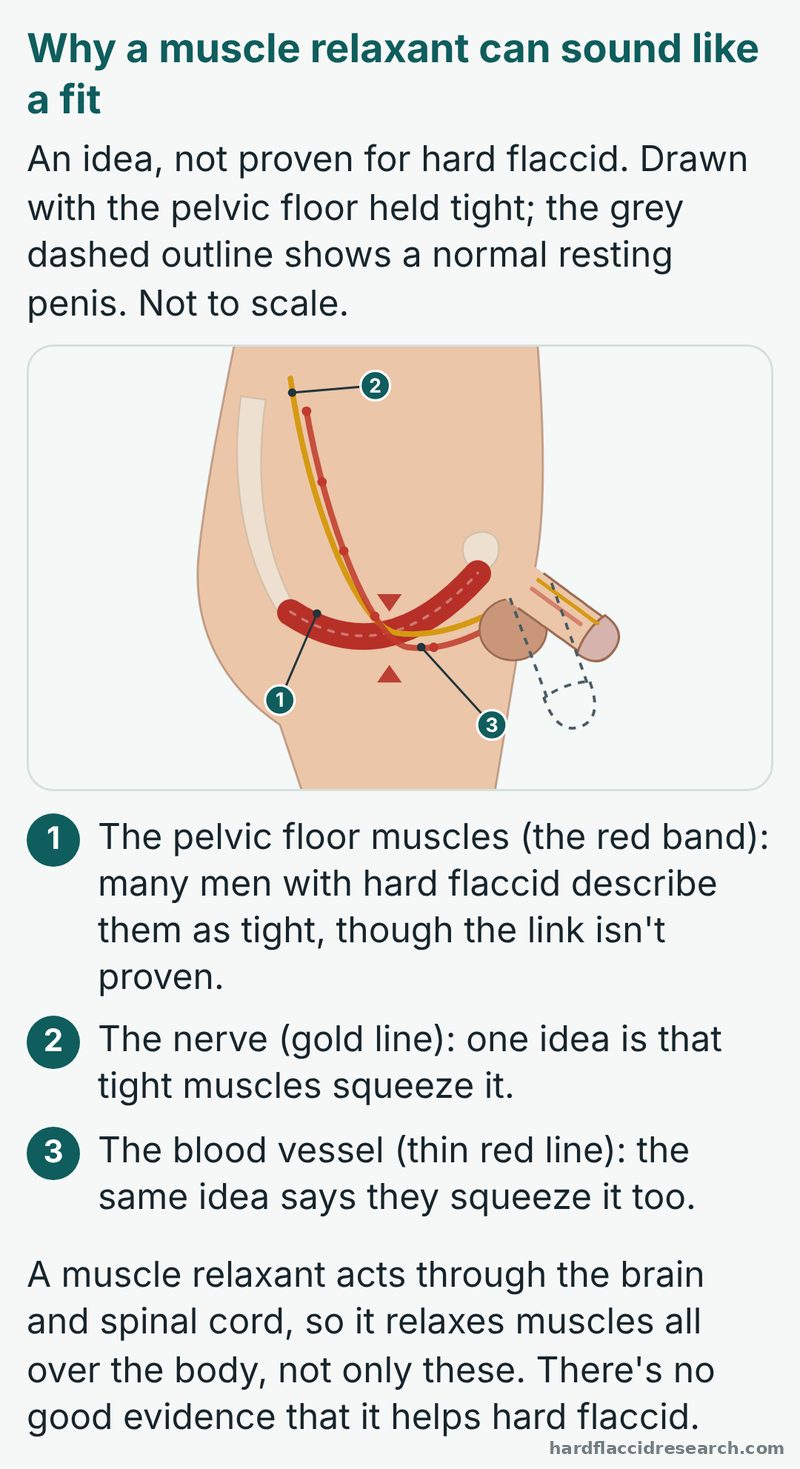 Why a muscle relaxant can sound like a fit for hard flaccid
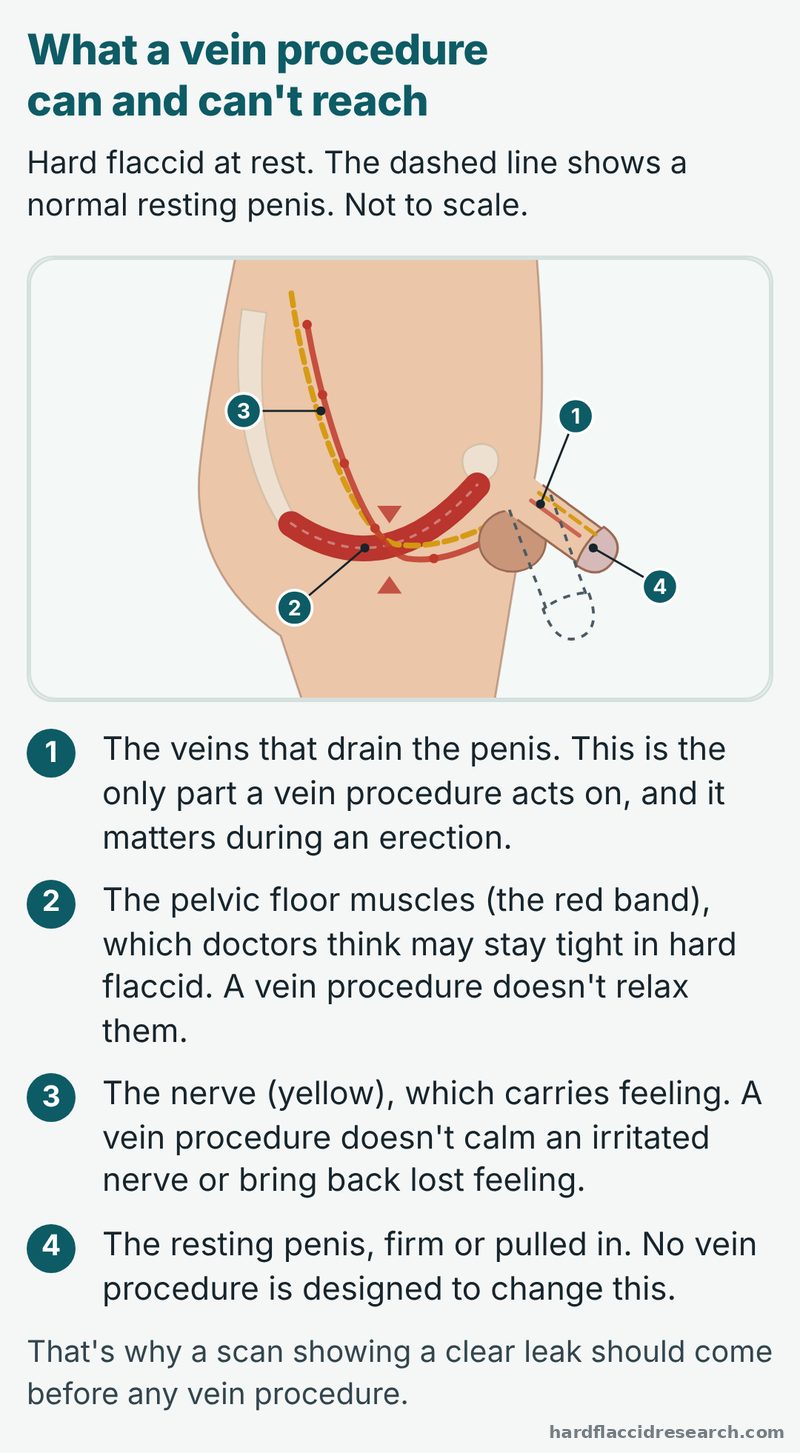 What a vein procedure can and can’t reach
Posture, sitting and daily life
Sitting, standing, the toilet, cycling and weight: everyday things that may press on the pelvic floor and nerves.
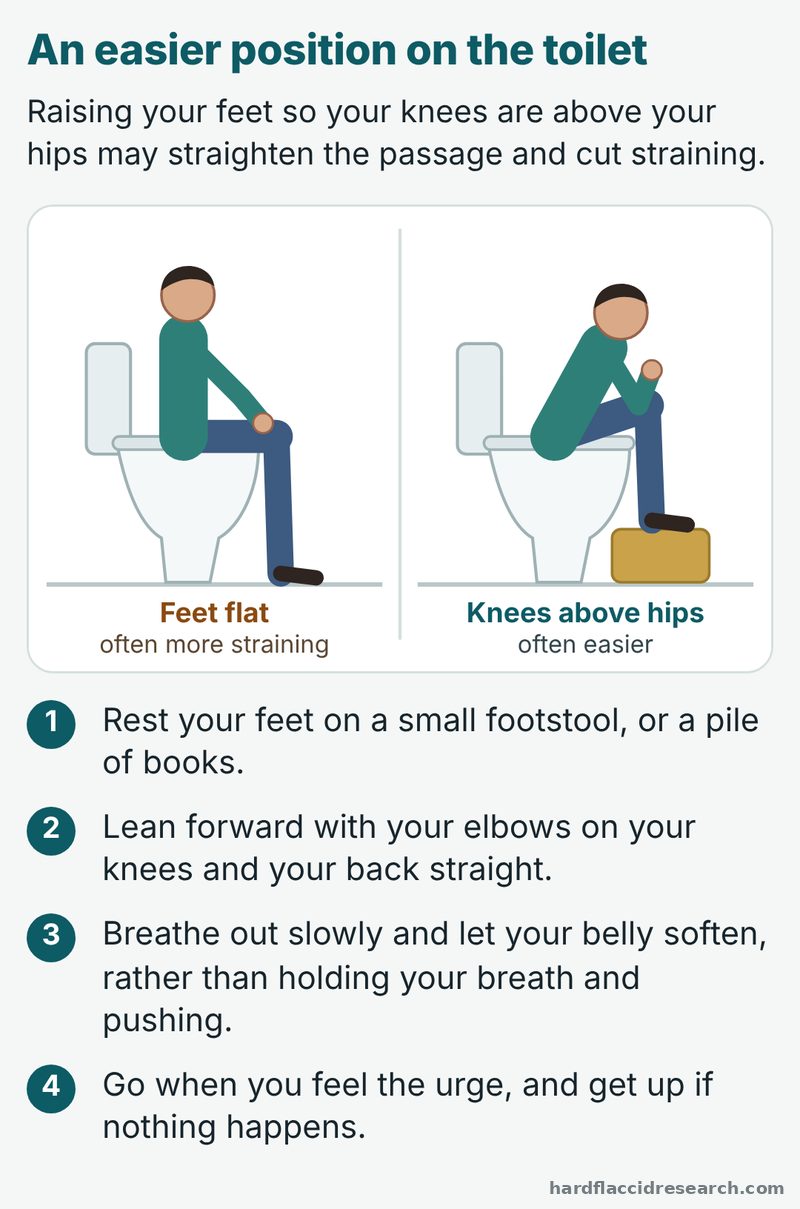 An easier position on the toilet
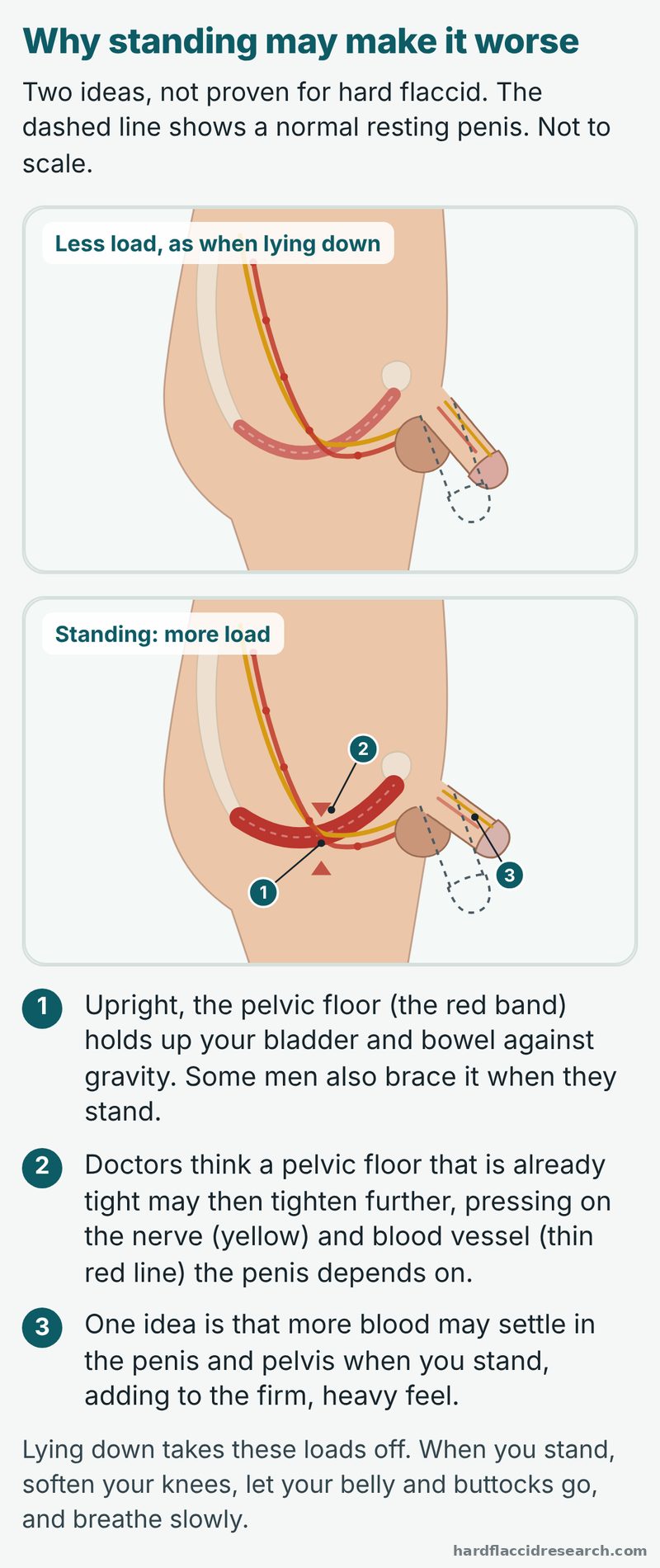 Why standing may make hard flaccid worse
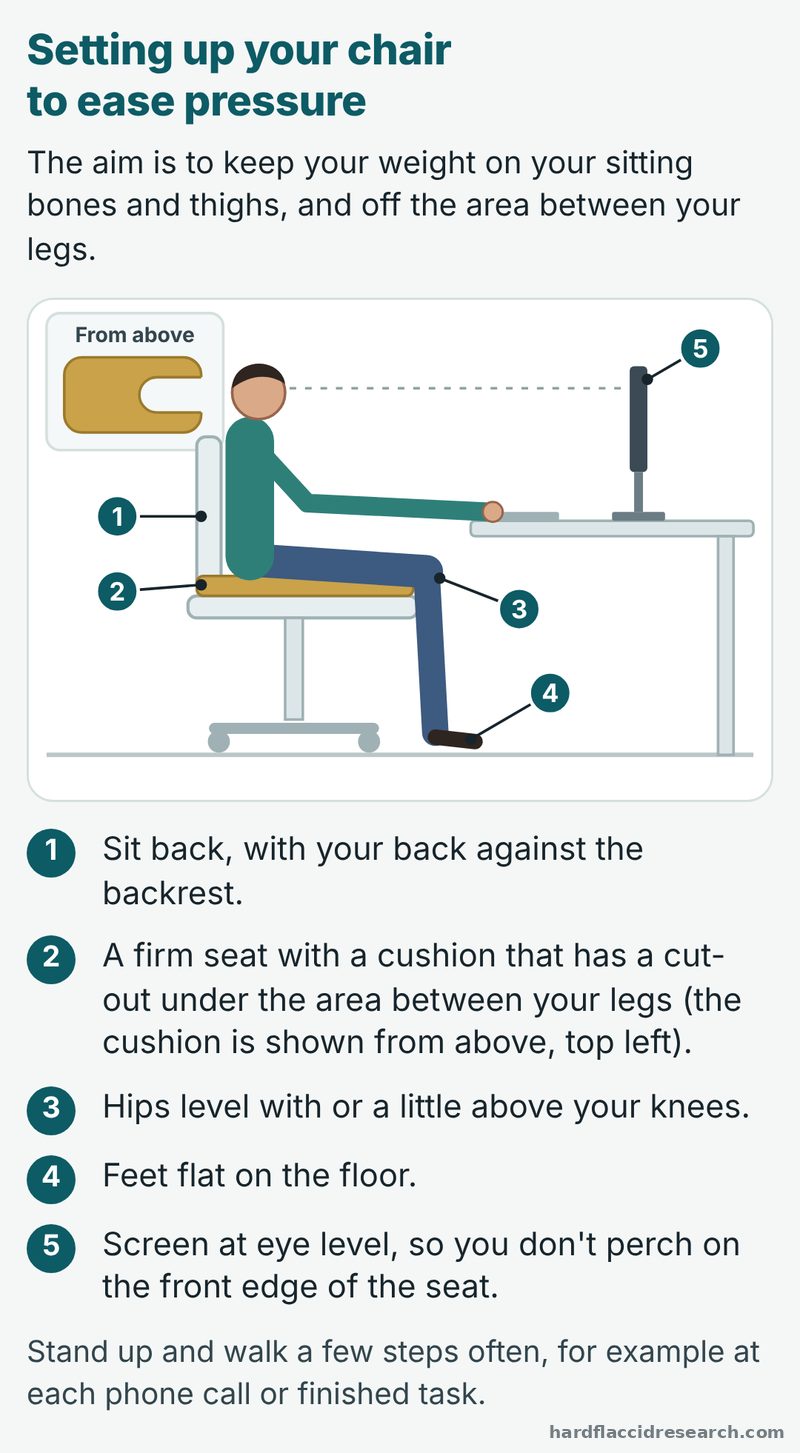 Setting up your chair to ease pressure between the legs
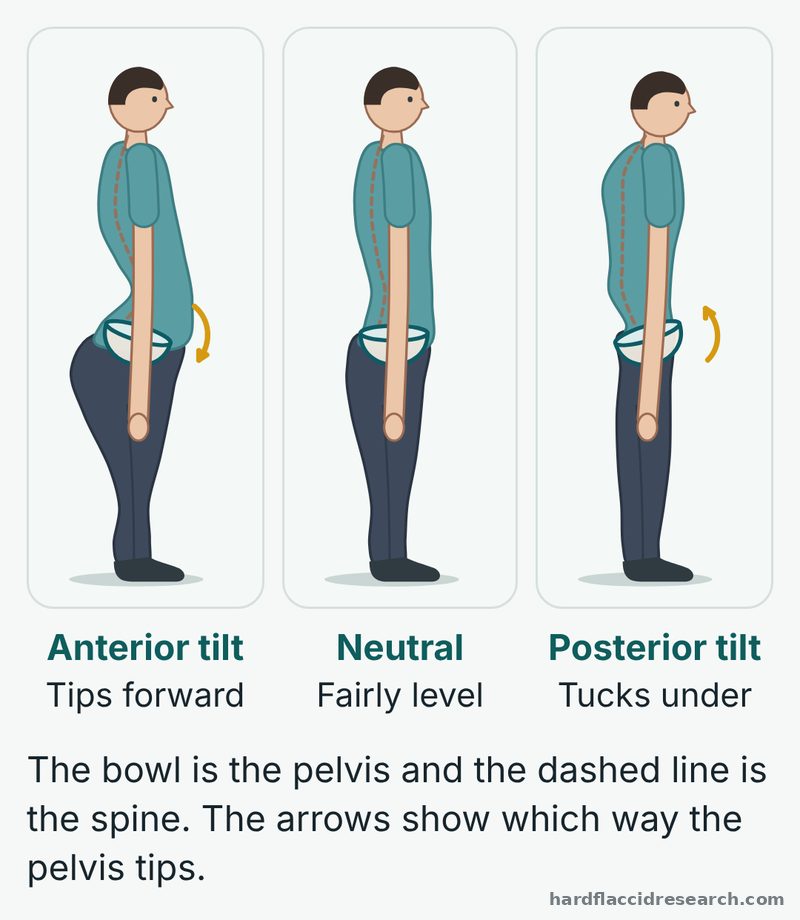 Anterior, neutral and posterior pelvic tilt
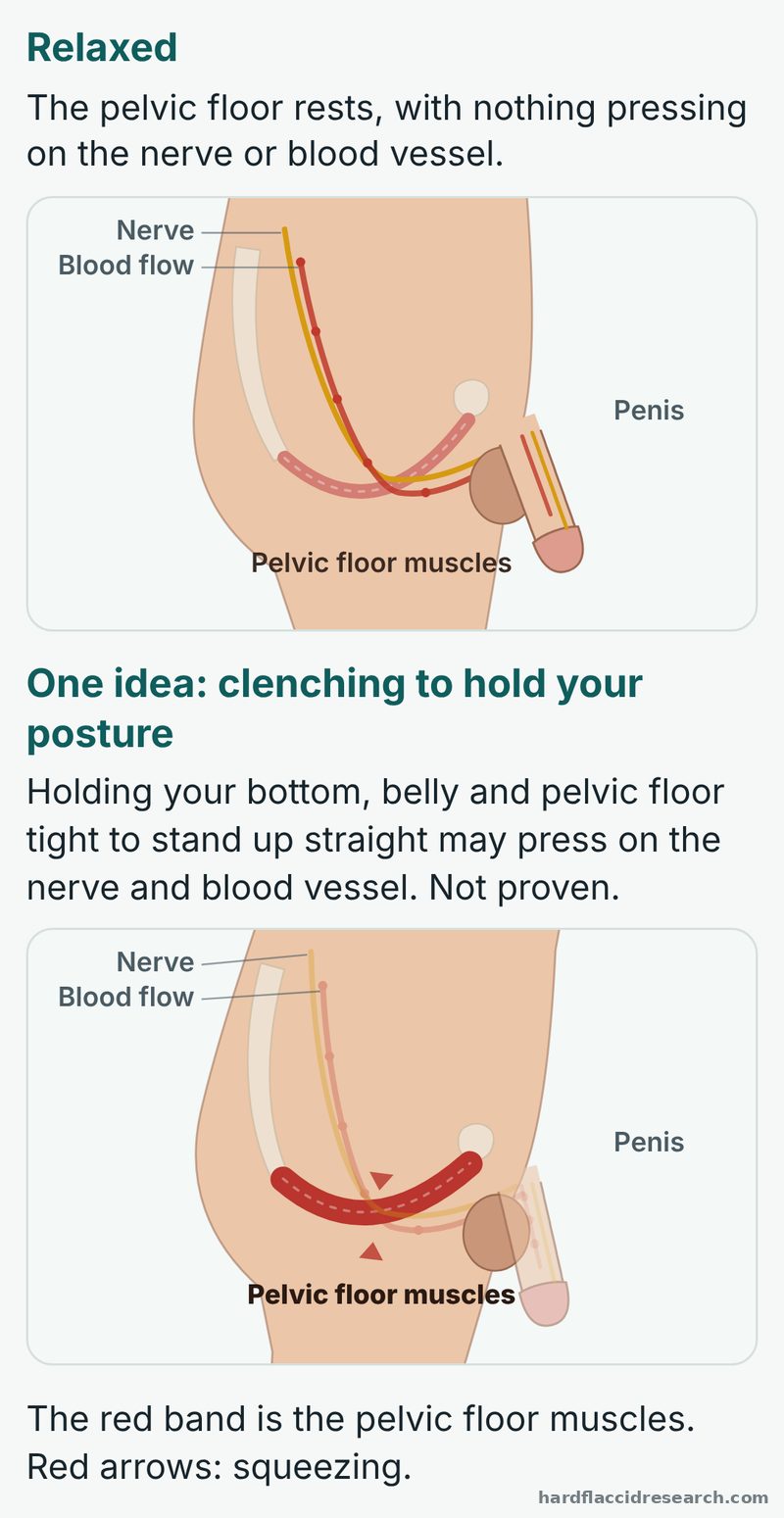 How holding your posture may keep the pelvic floor tight
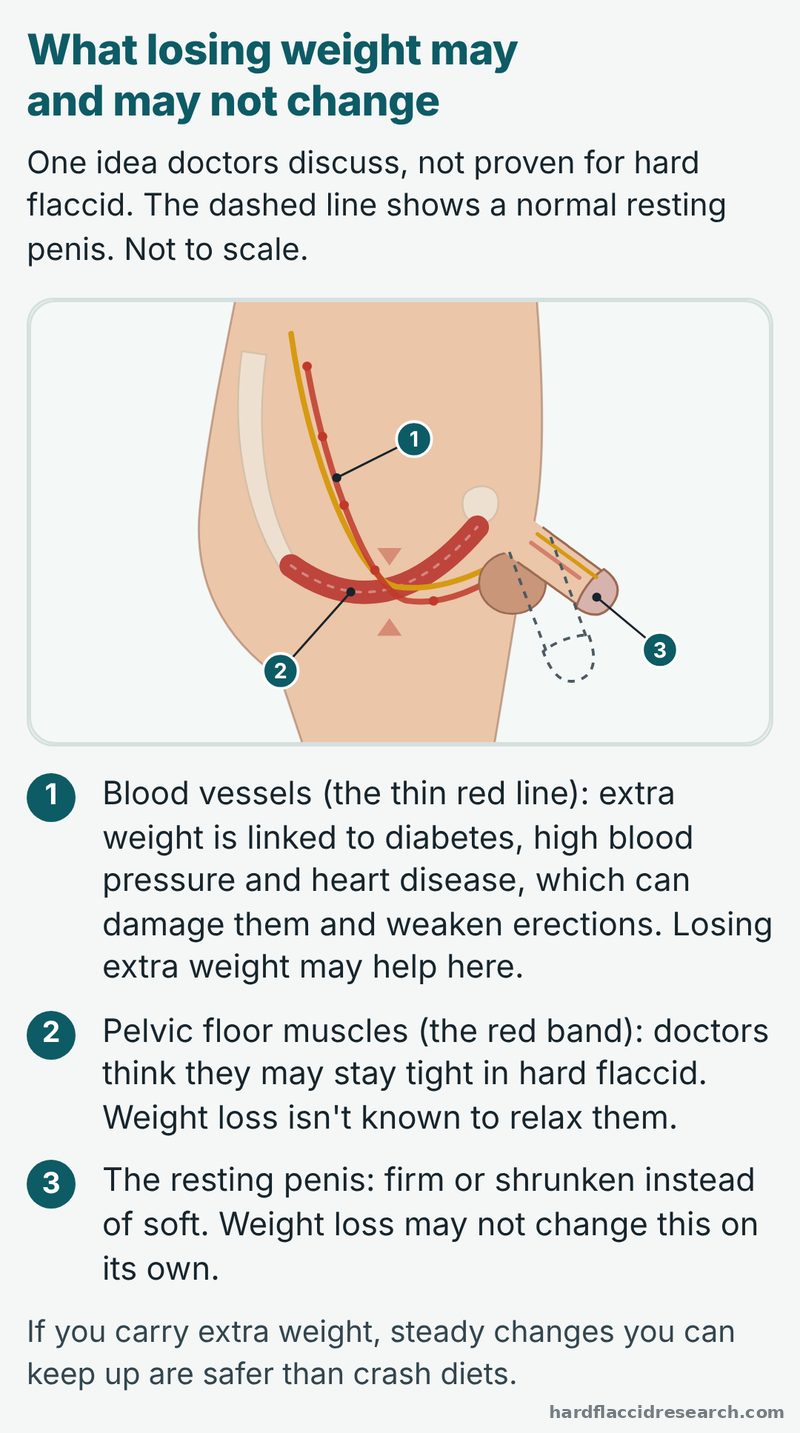 What losing weight may and may not change
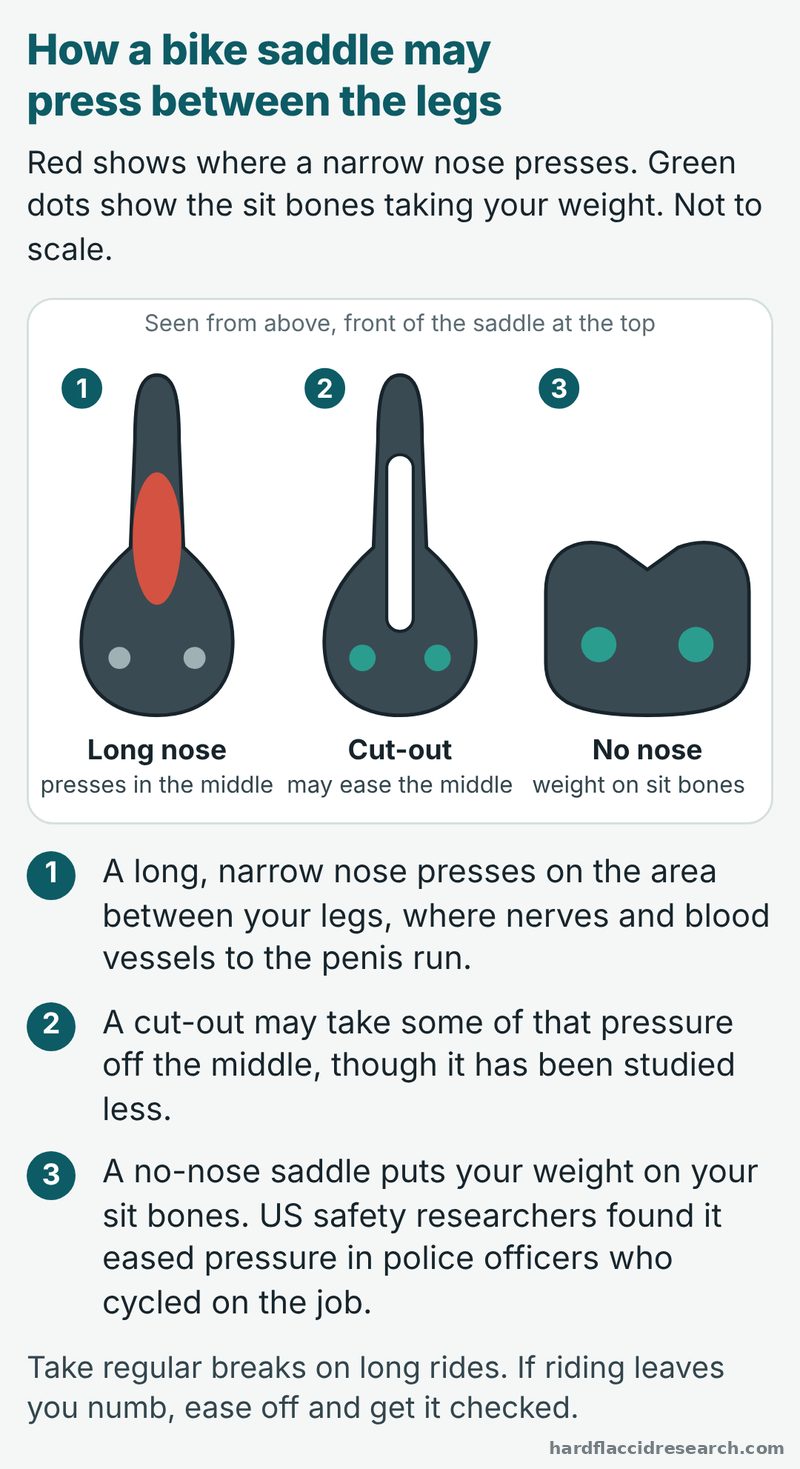 How a bike saddle may press between the legs
Tests and getting better
What tests look at, what to note for your doctor, and how men describe symptoms easing.
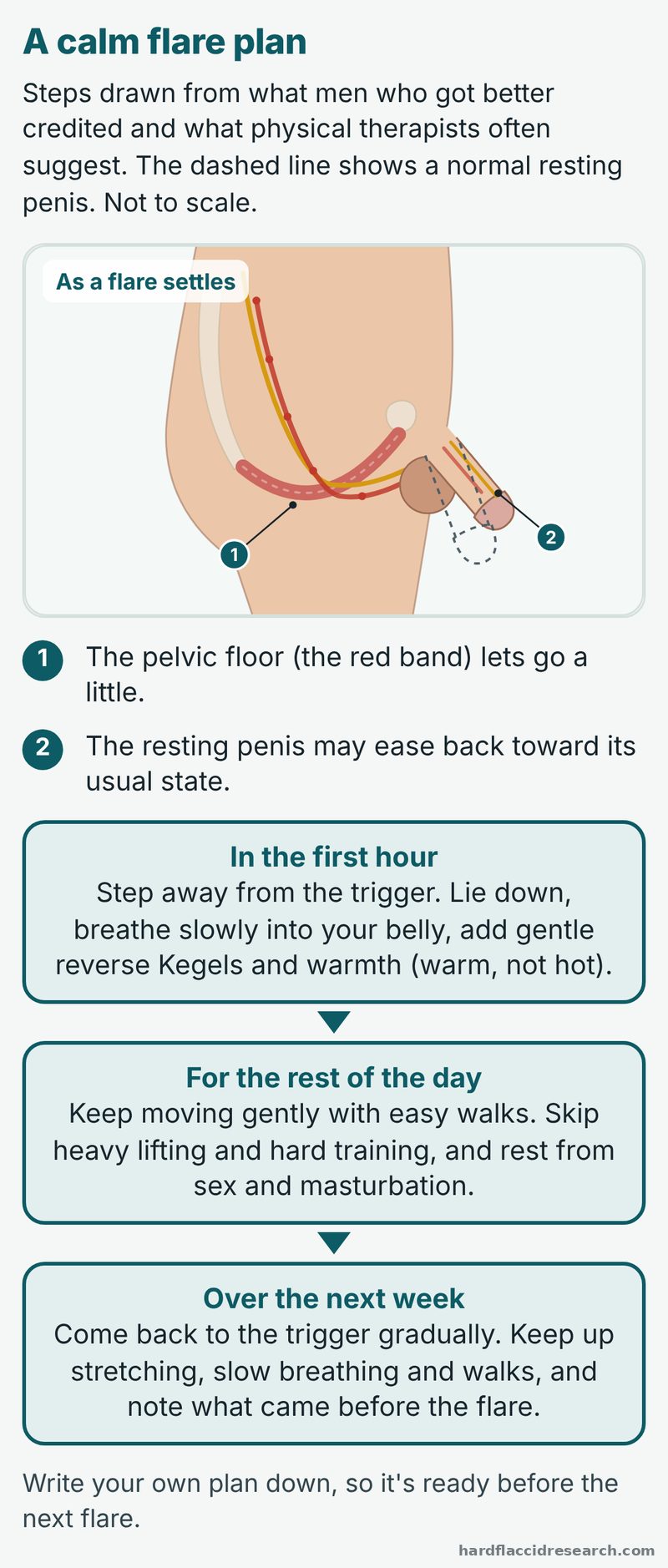 A calm plan for a hard flaccid flare-up
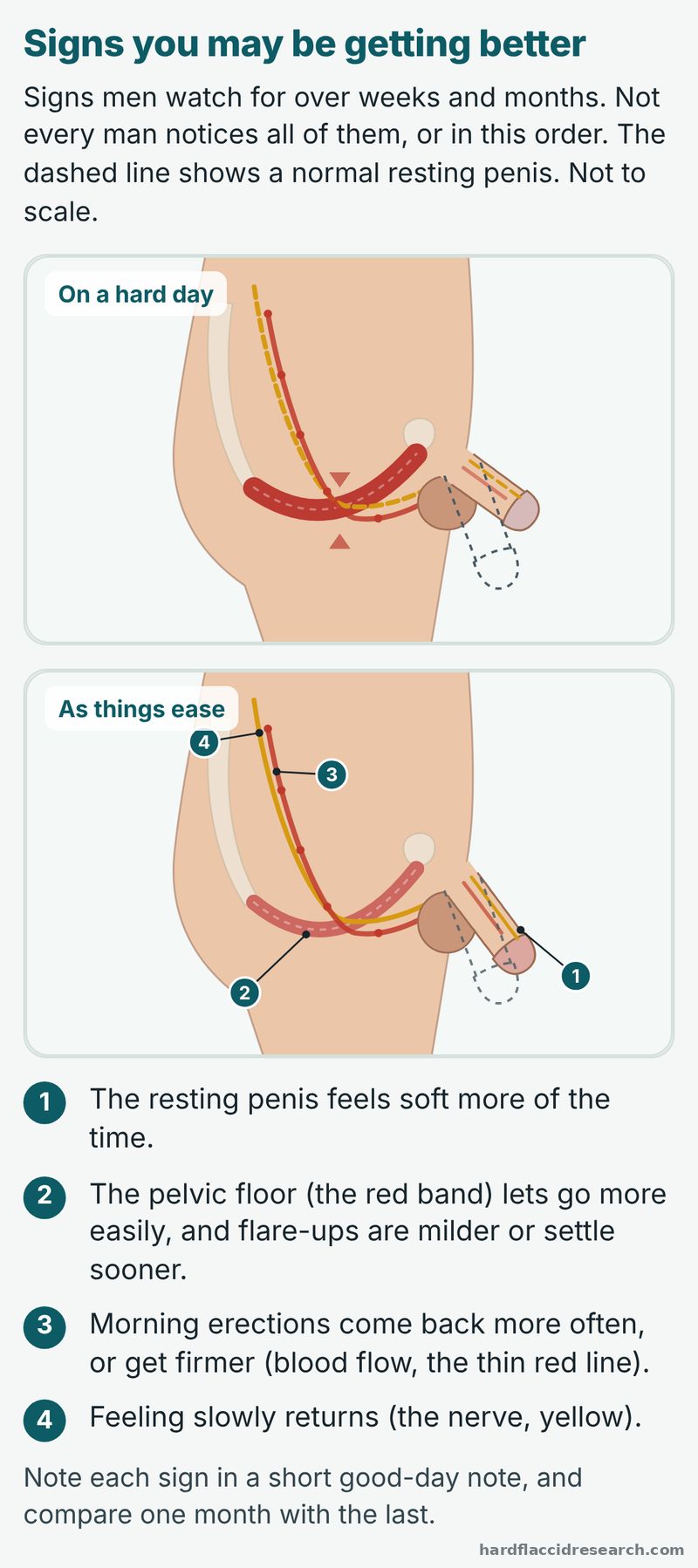 Signs you may be getting better from hard flaccid
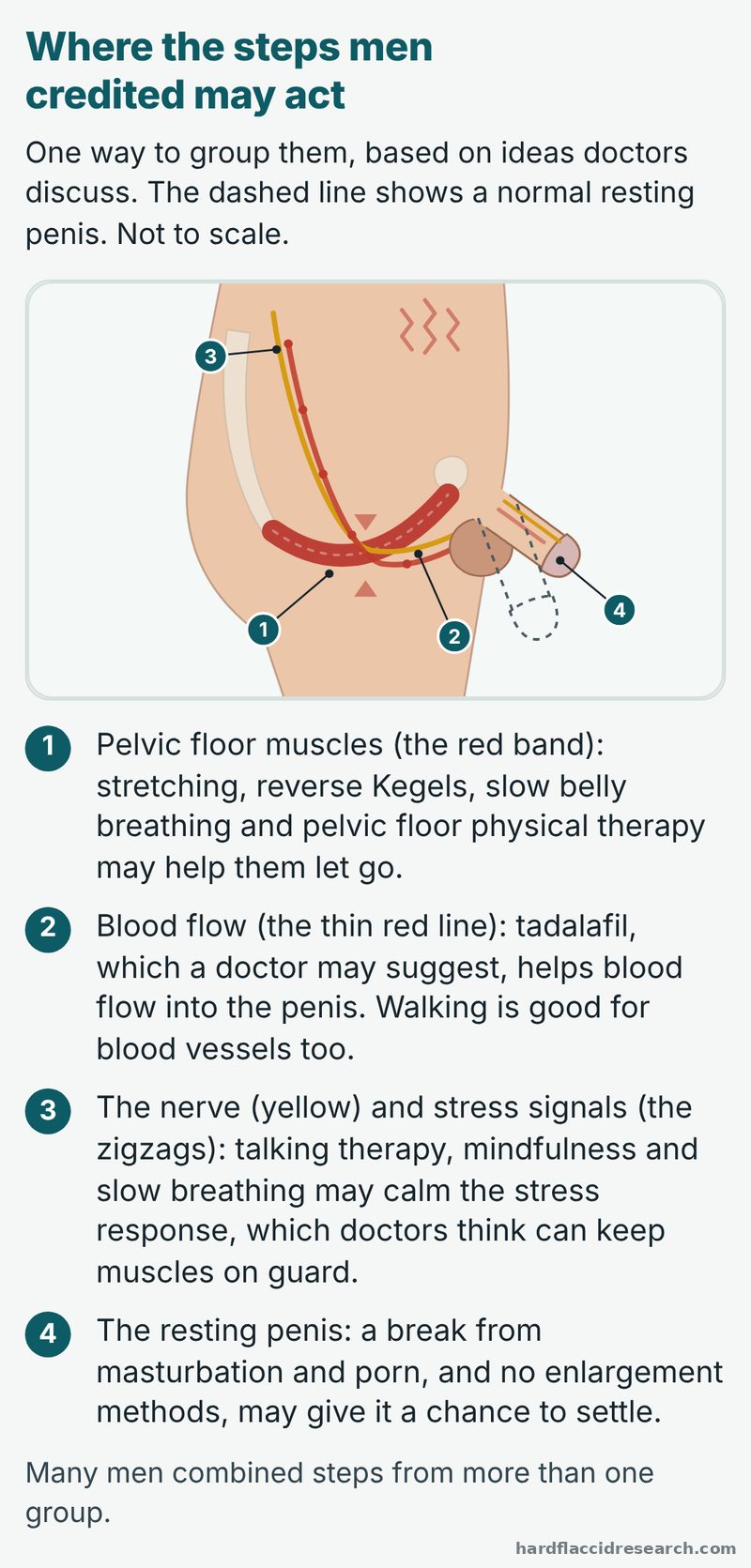 Where the steps men credited with getting better may act
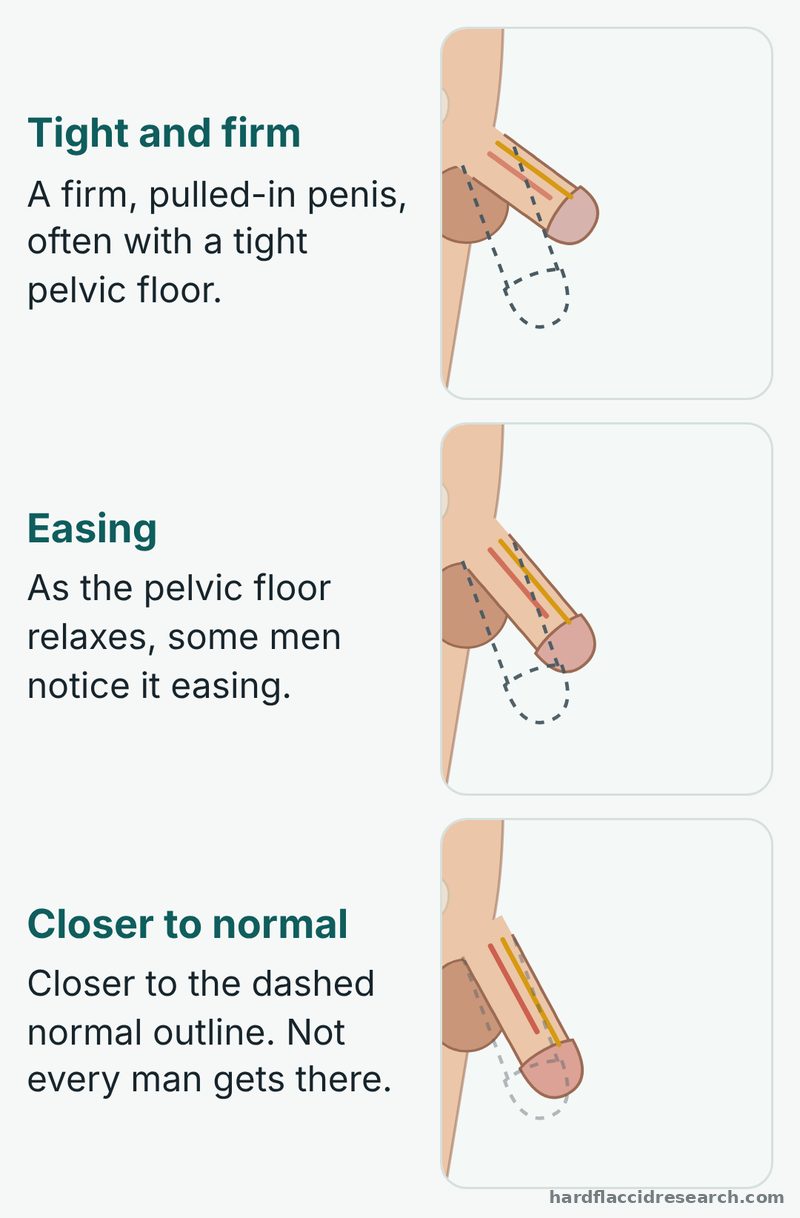 How the resting penis may ease back toward normal
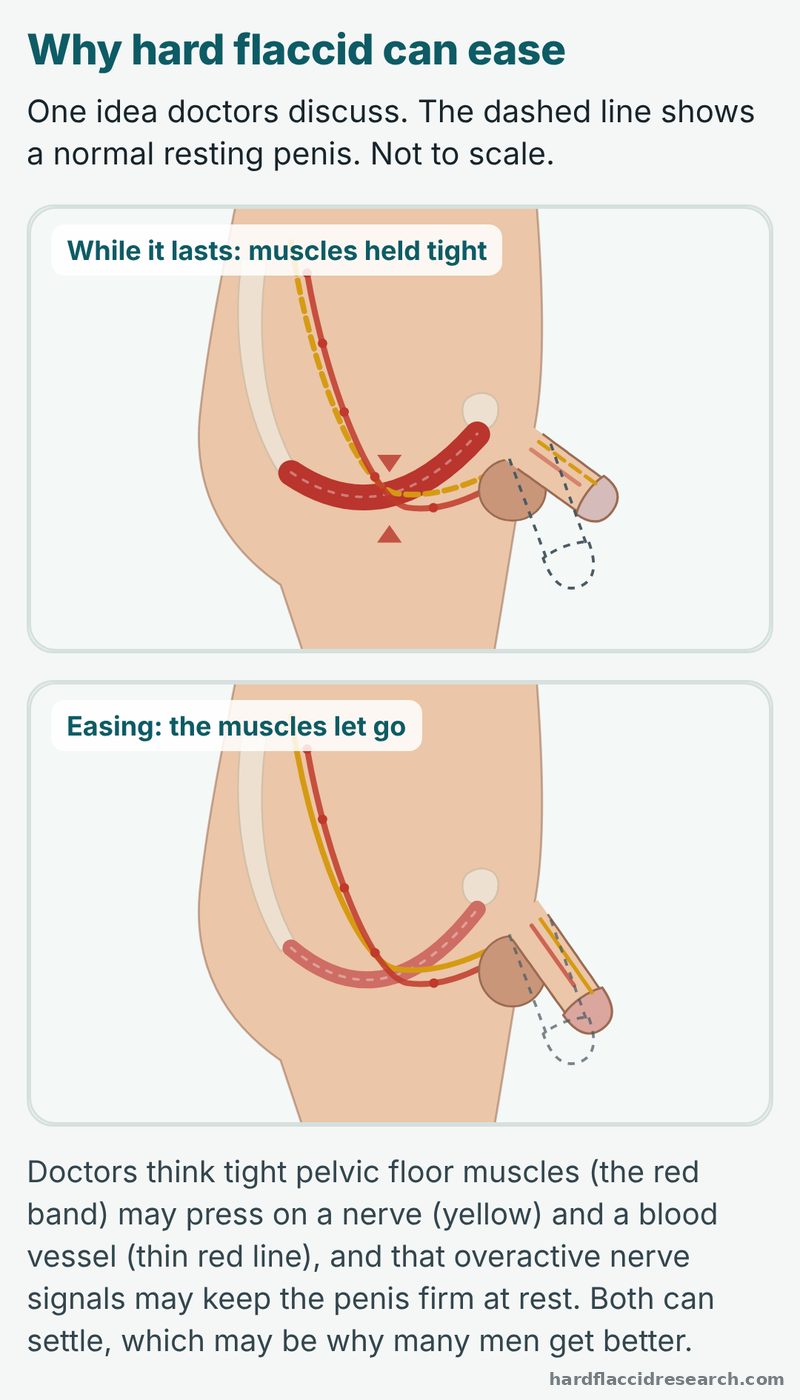 Why hard flaccid can ease
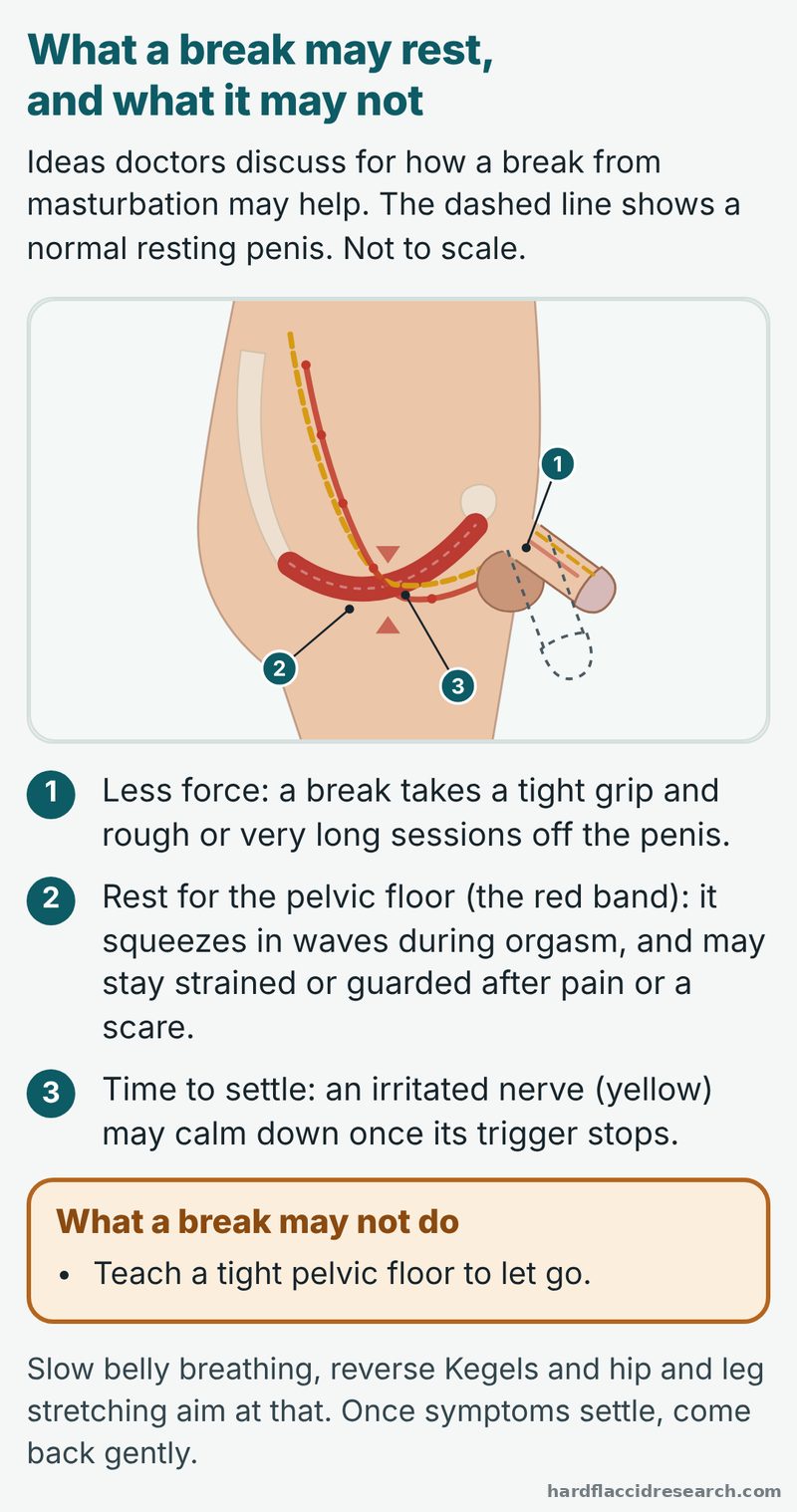 What a break from masturbation may rest, and what it may not
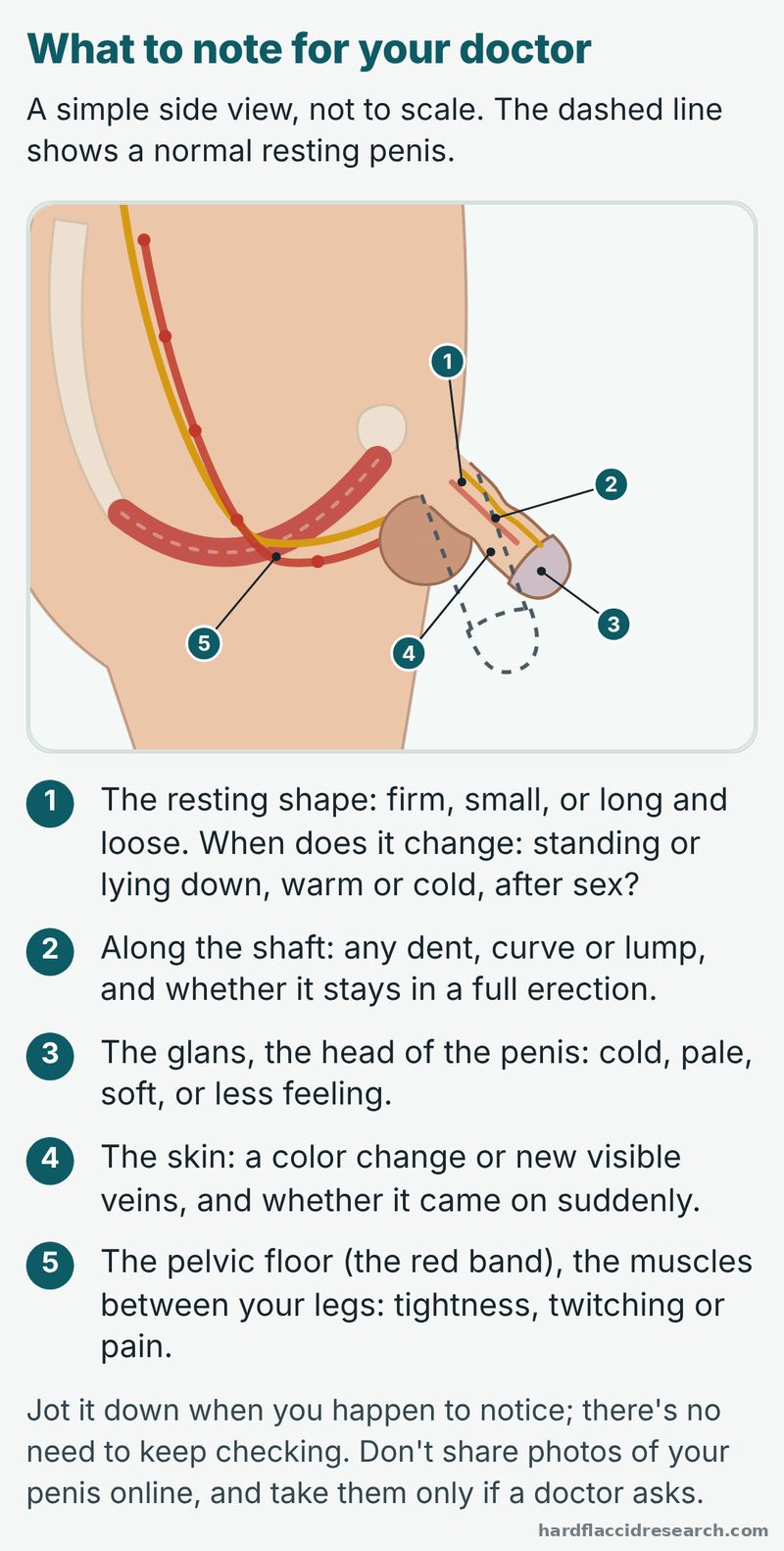 What to note for your doctor about hard flaccid
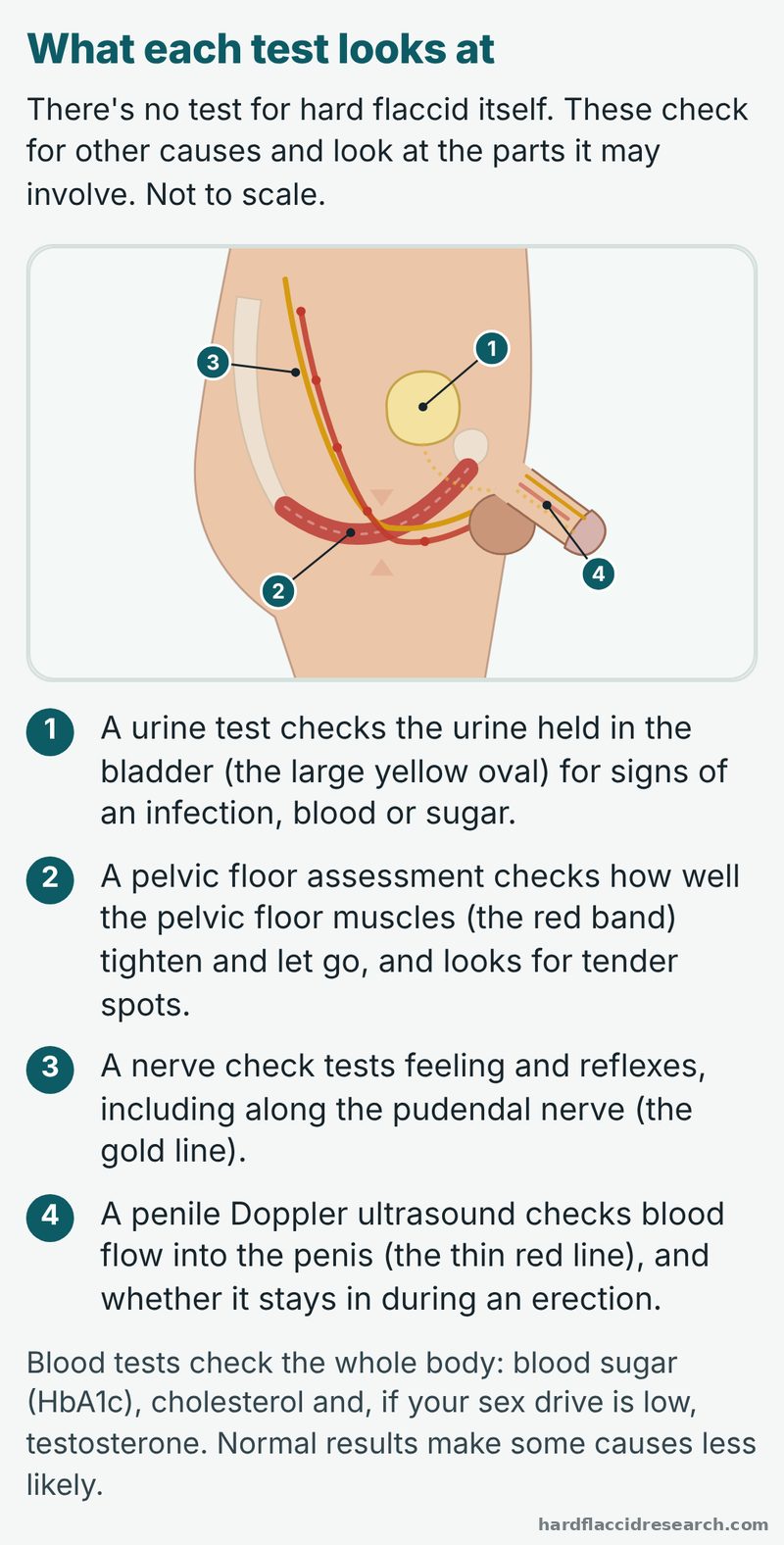 What each test for hard flaccid looks at
Pelvic and genital anatomy
The muscles, nerves and organs of the male pelvis, and where common pains and lumps come from, drawn simply and explained in plain words.
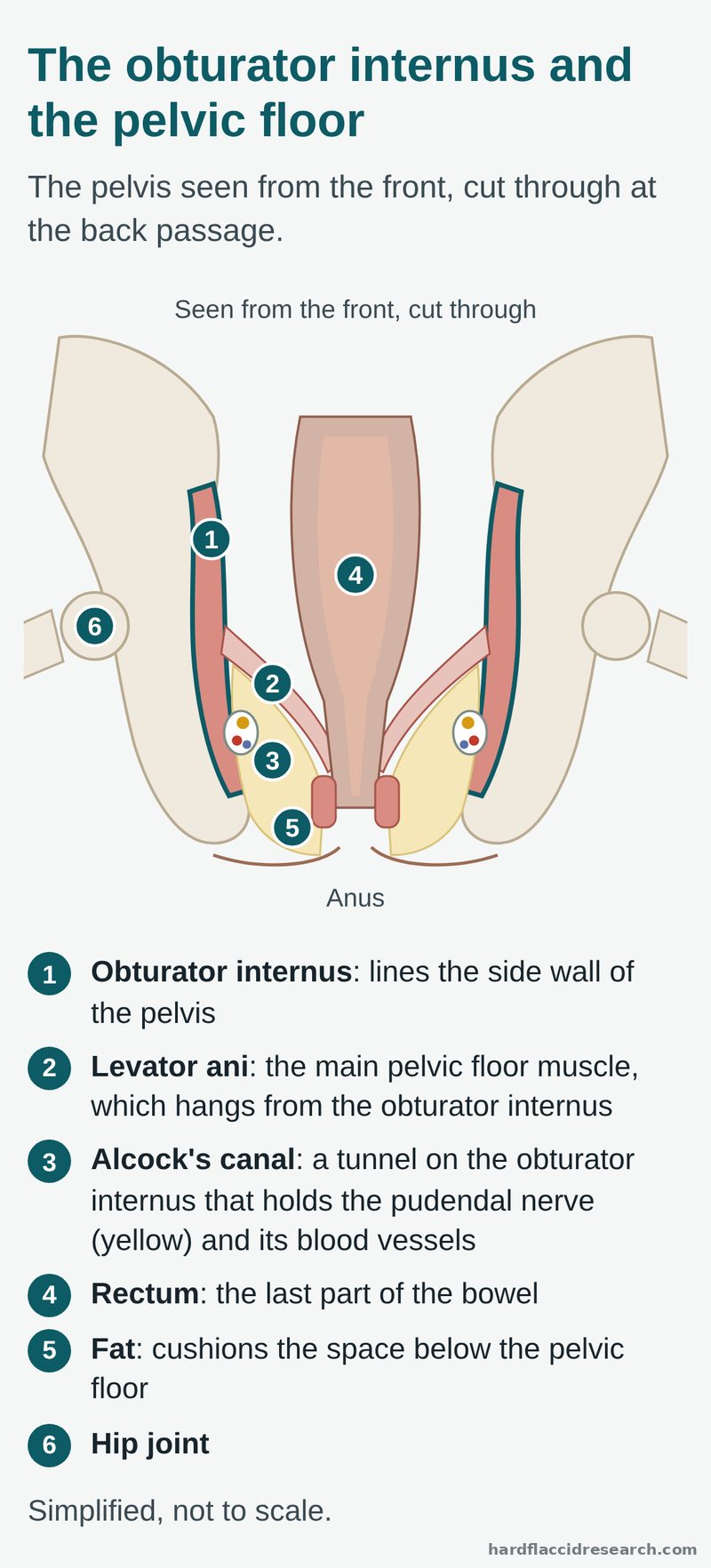 The obturator internus and the pelvic floor
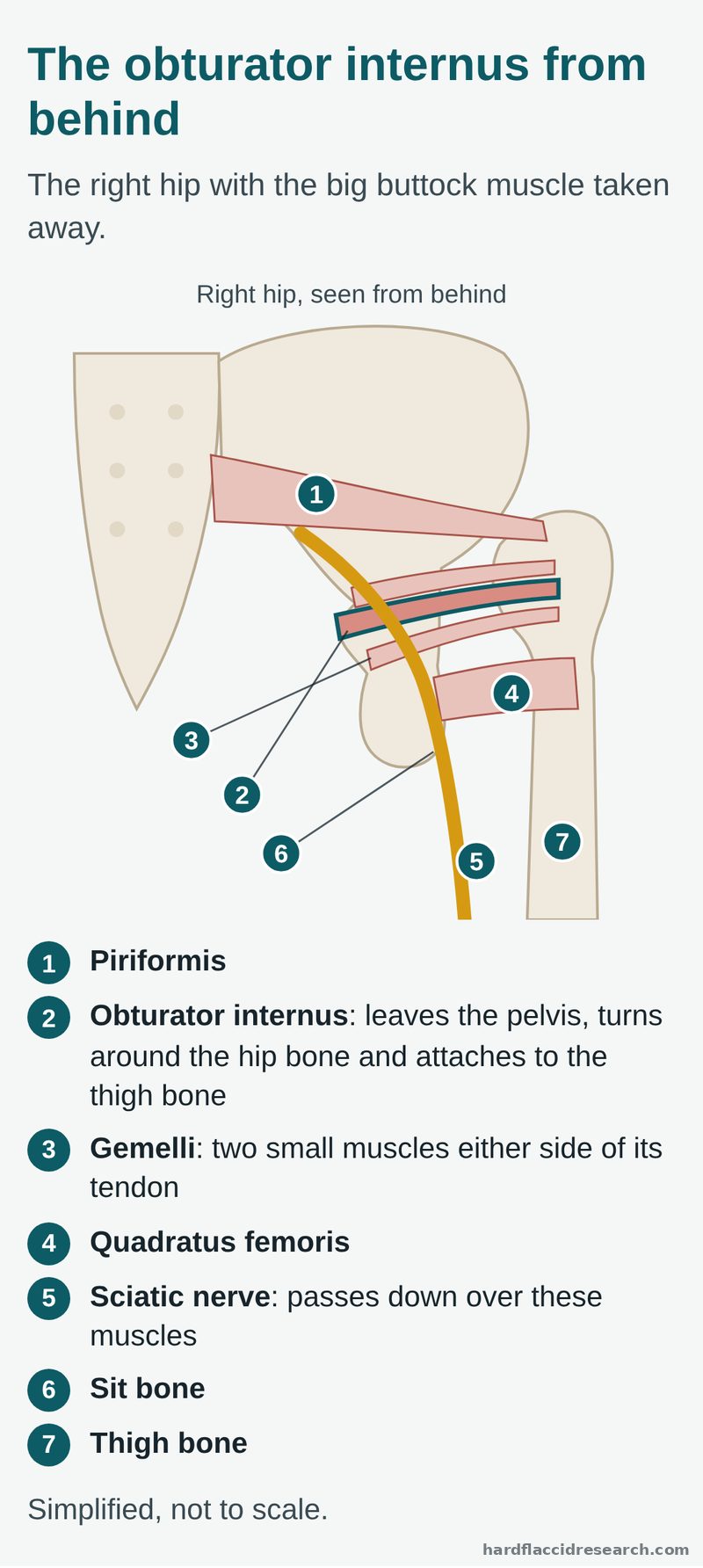 The obturator internus from behind
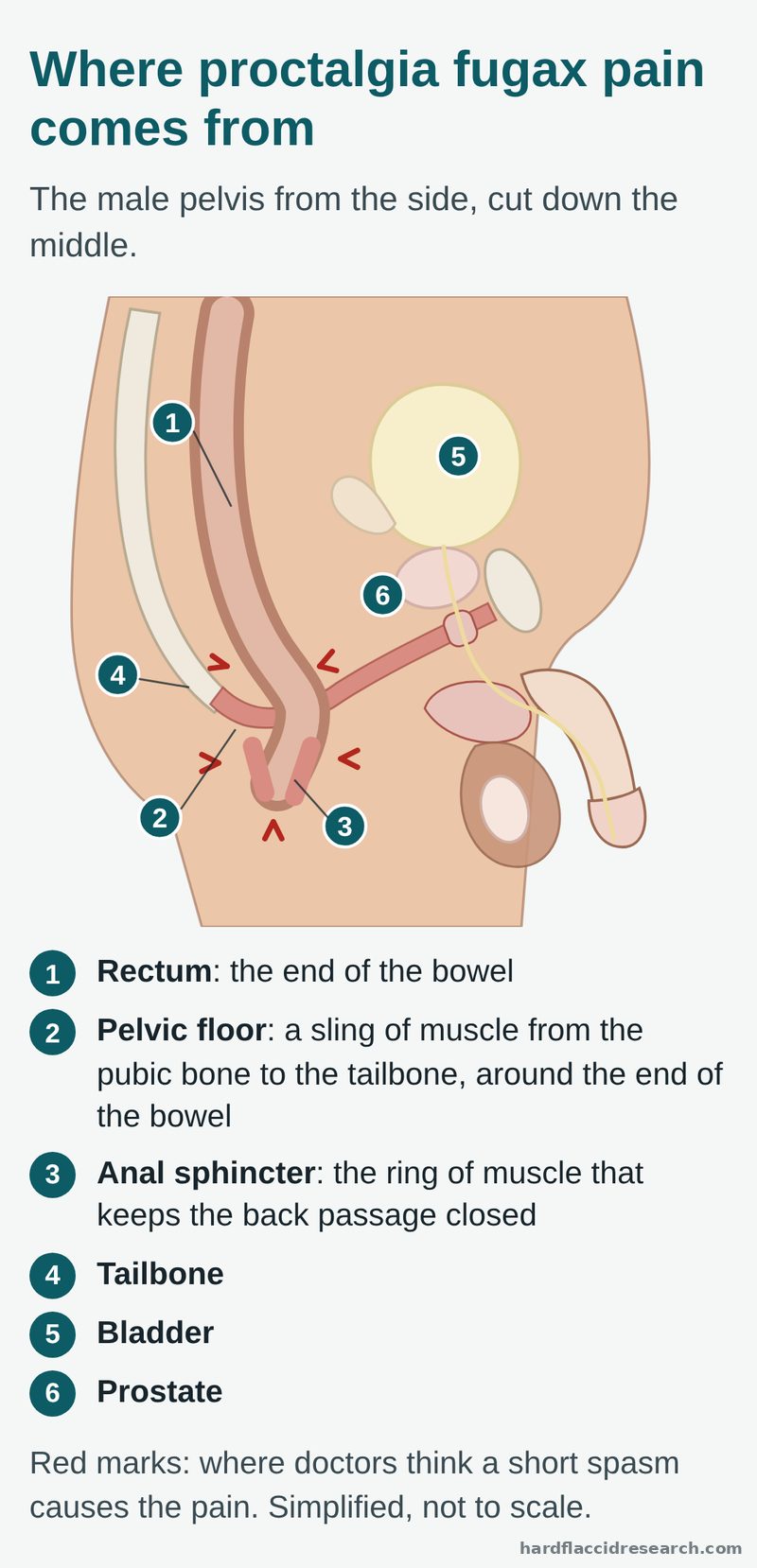 Where proctalgia fugax pain comes from
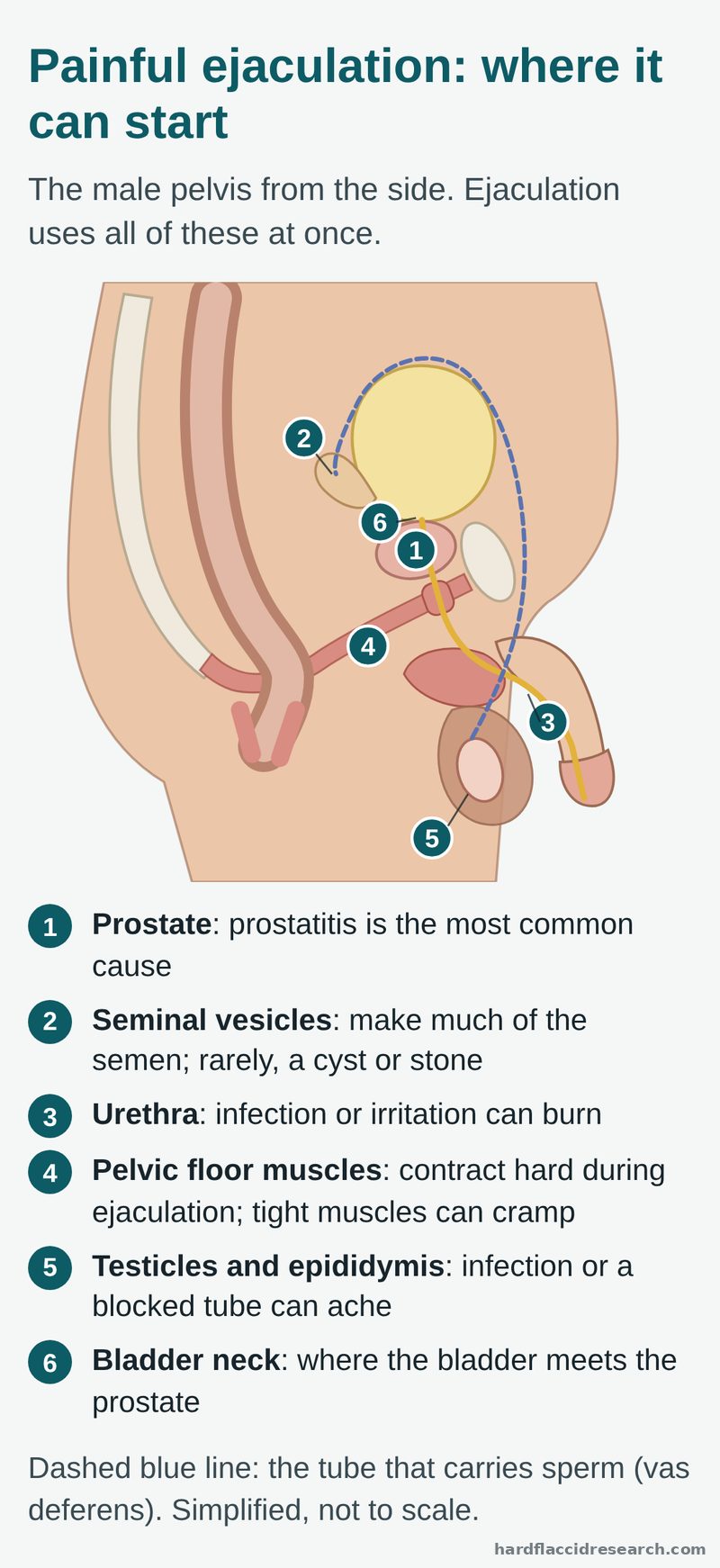 Painful ejaculation: where it can start
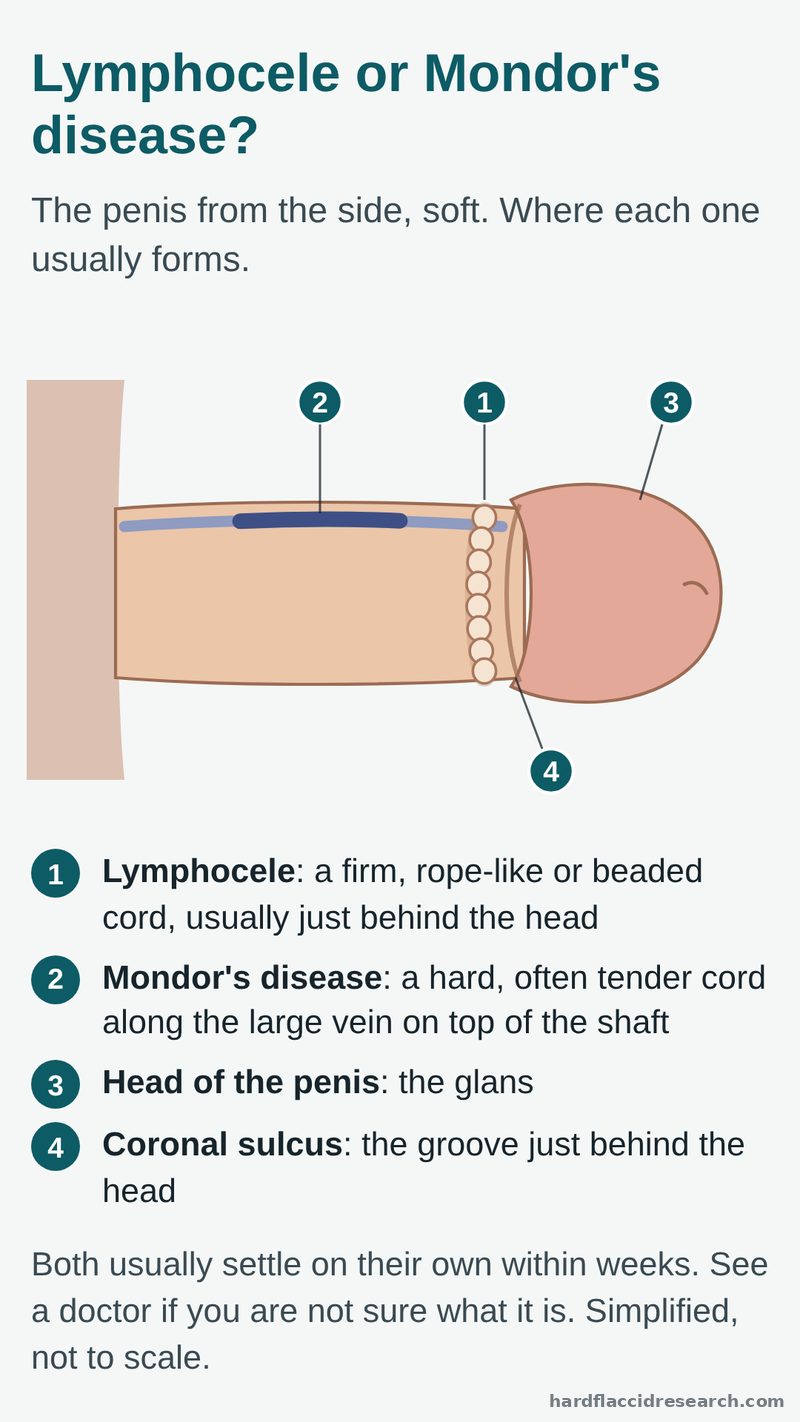 Penile lymphocele or Mondor's disease?
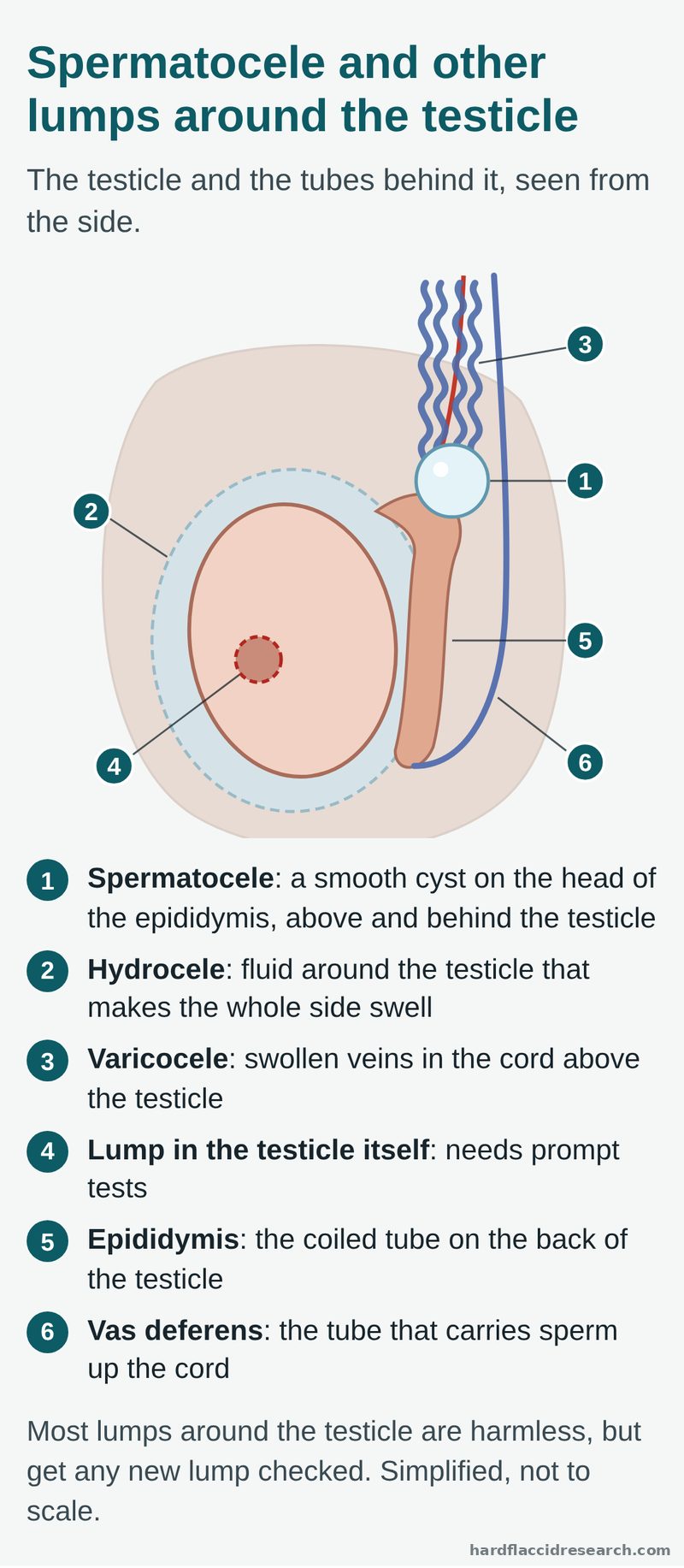 Spermatocele and other lumps around the testicle
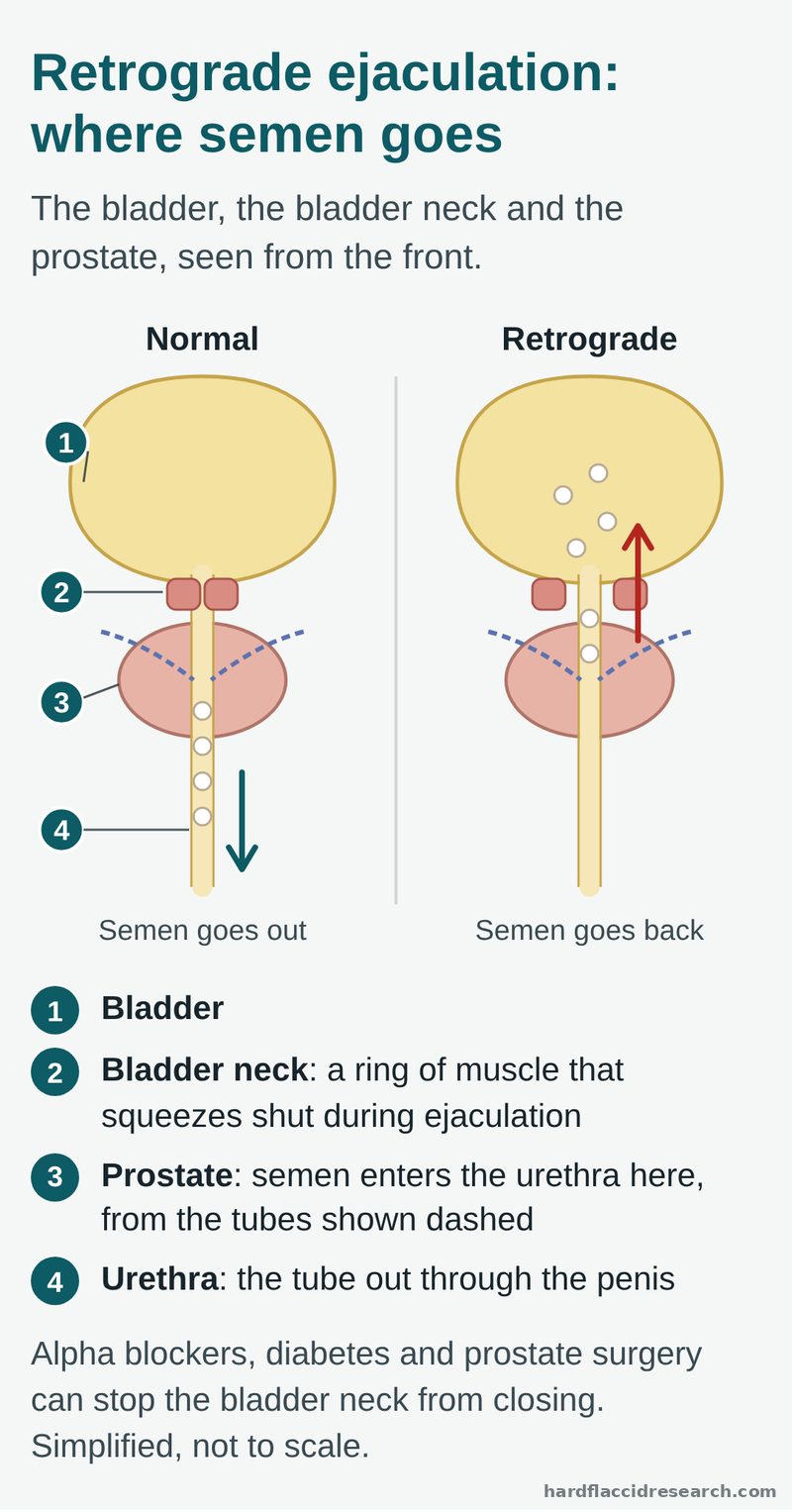 Retrograde ejaculation: where semen goes
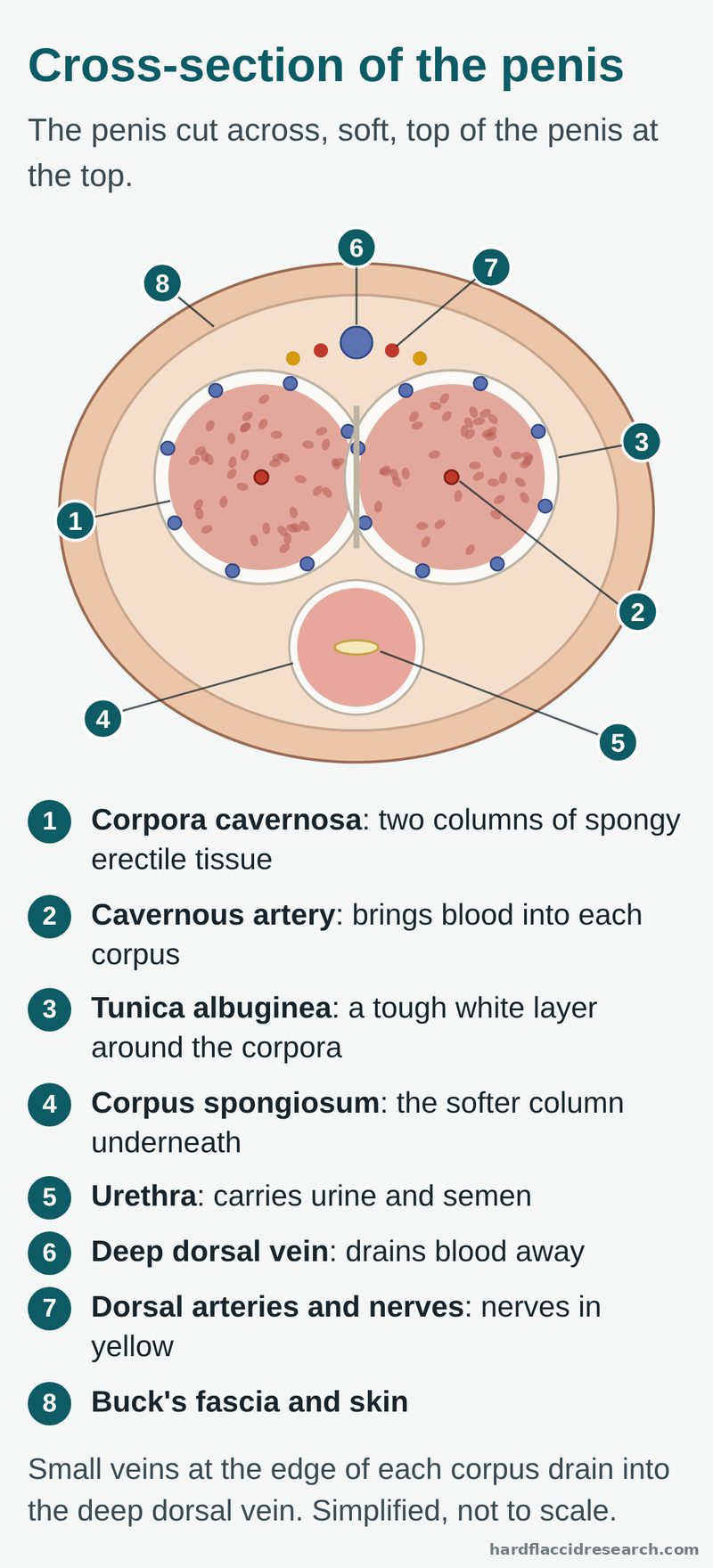 Cross-section of the penis
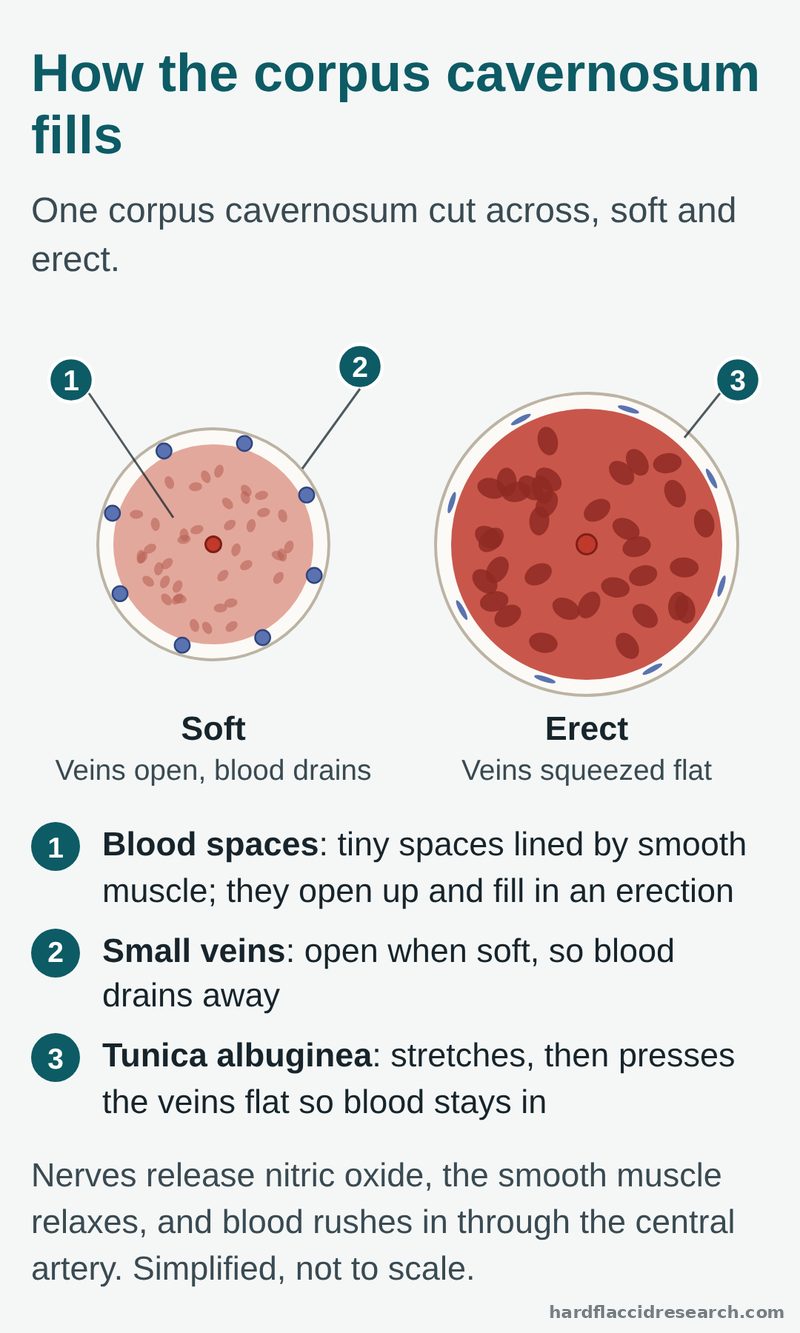 How the corpus cavernosum fills
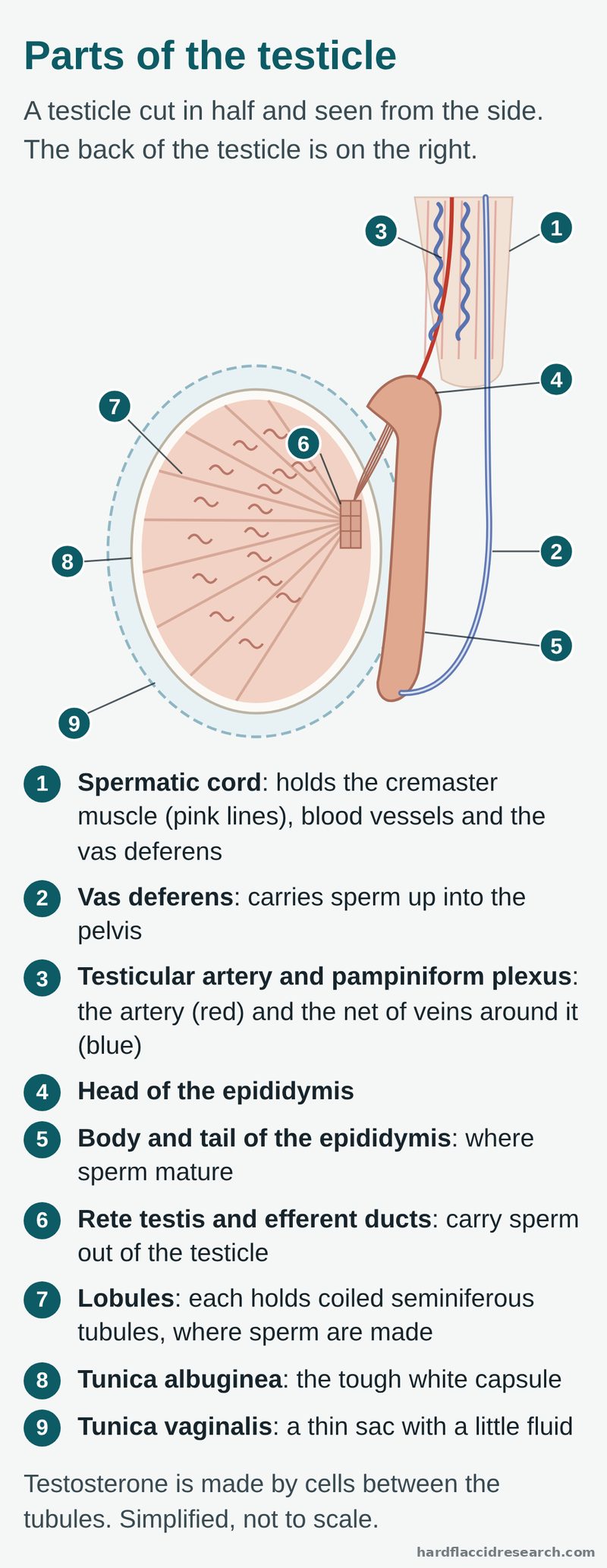 Parts of the testicle
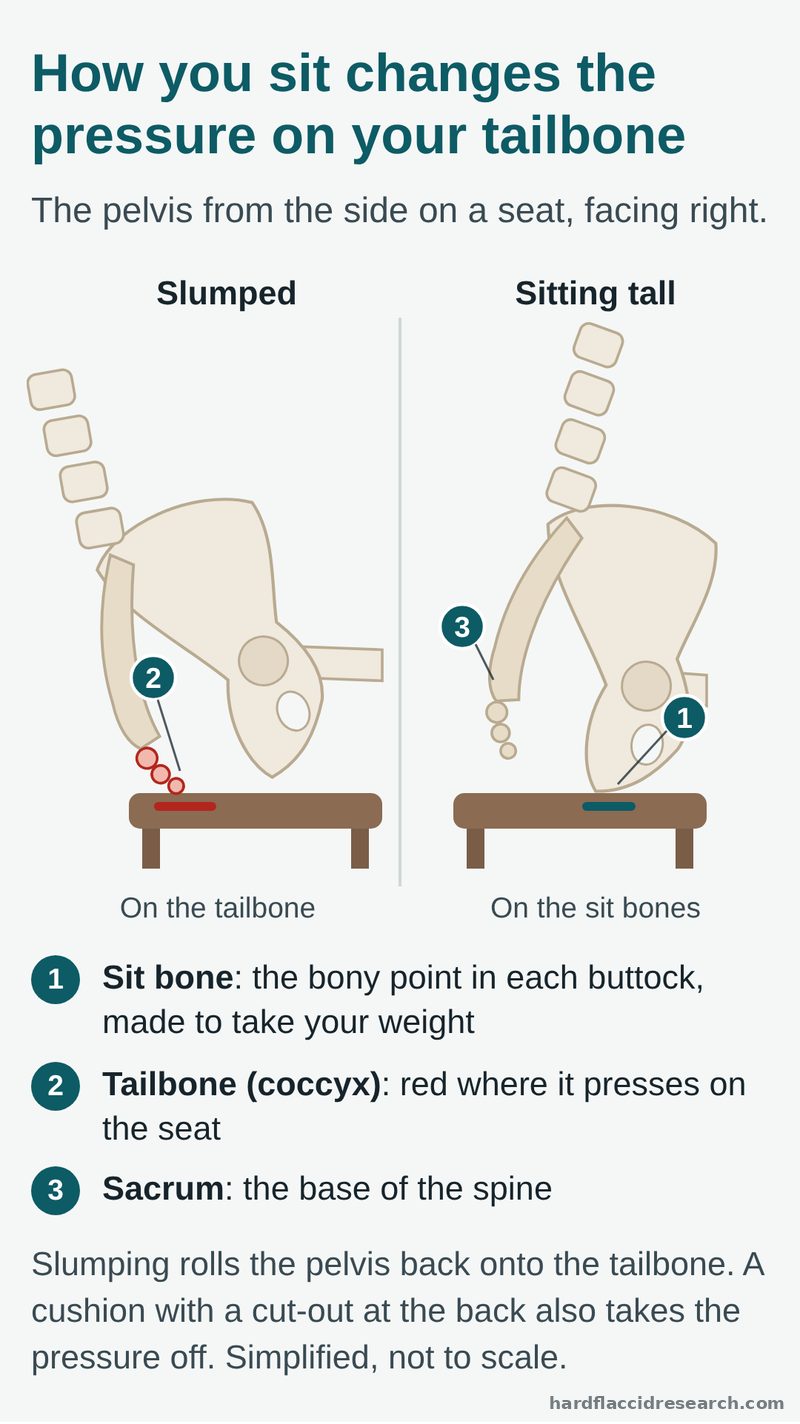 How you sit changes the pressure on your tailbone
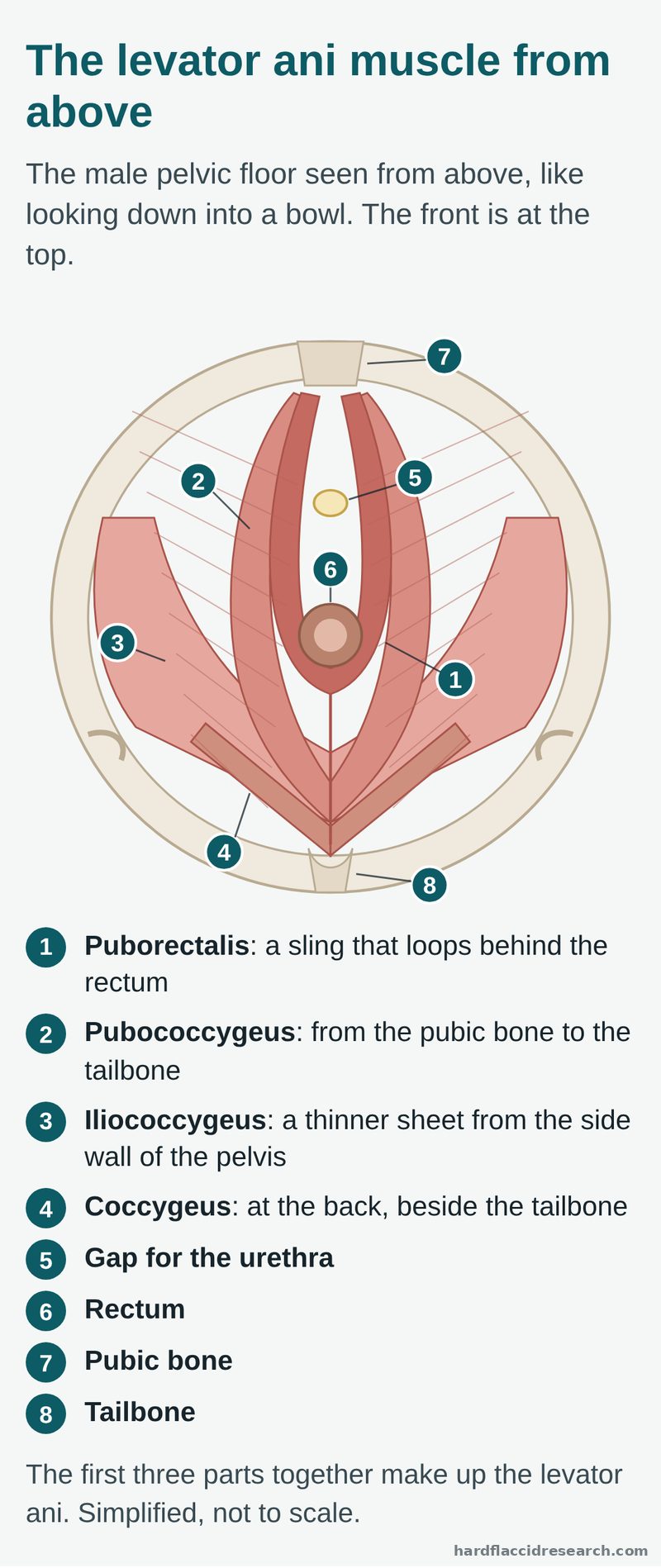 The levator ani muscle from above
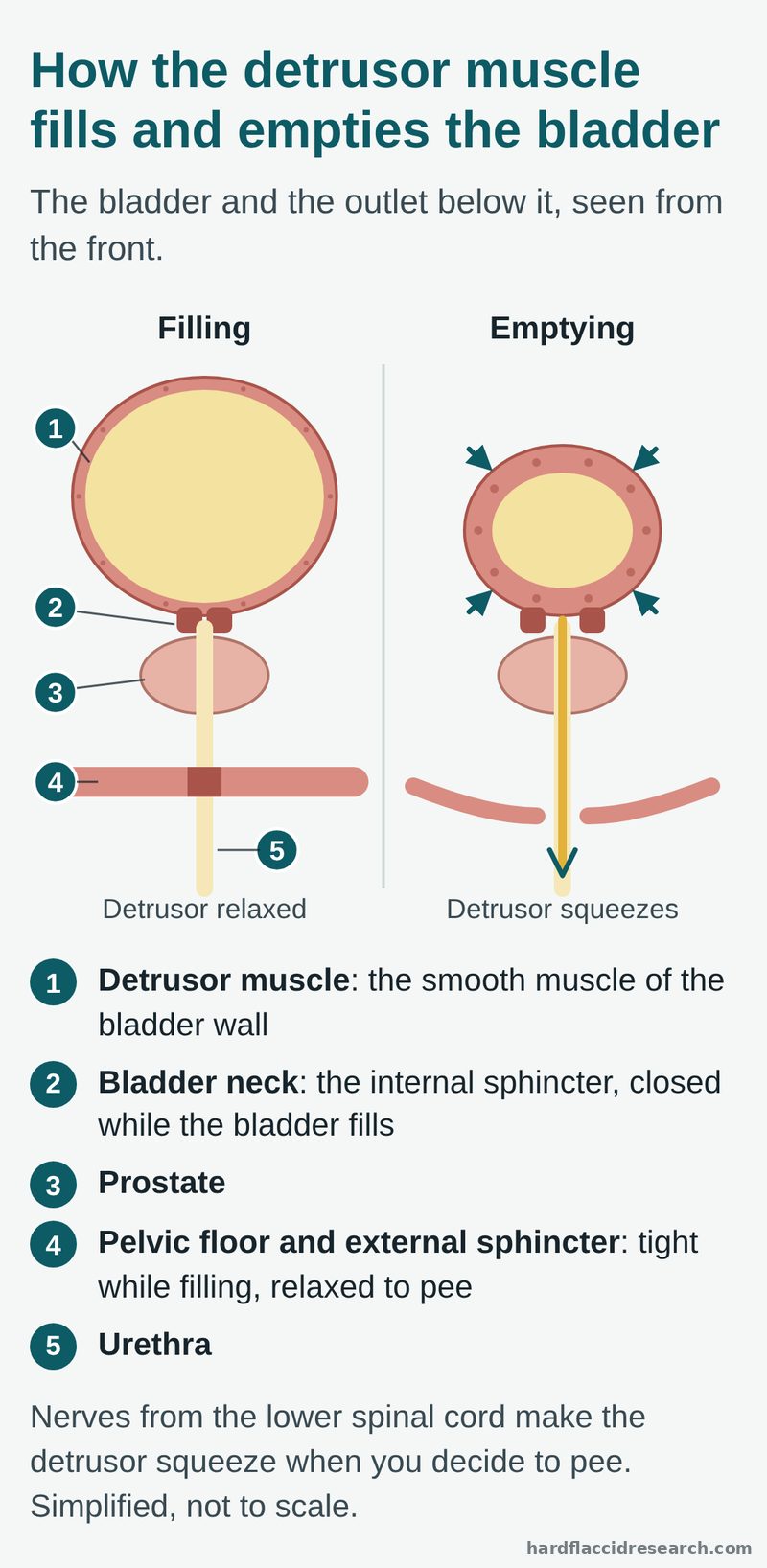 How the detrusor muscle fills and empties the bladder
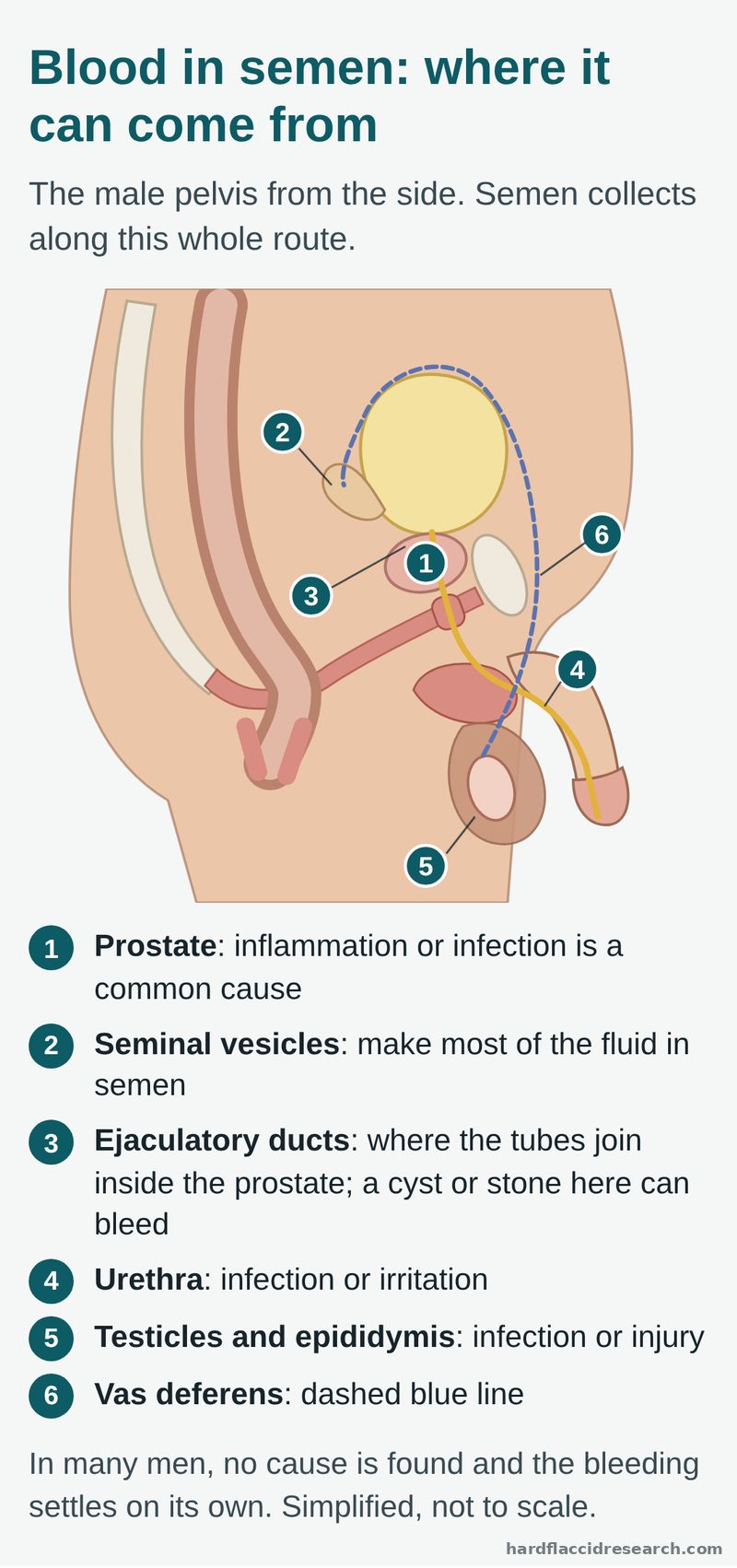 Blood in semen: where it can come from
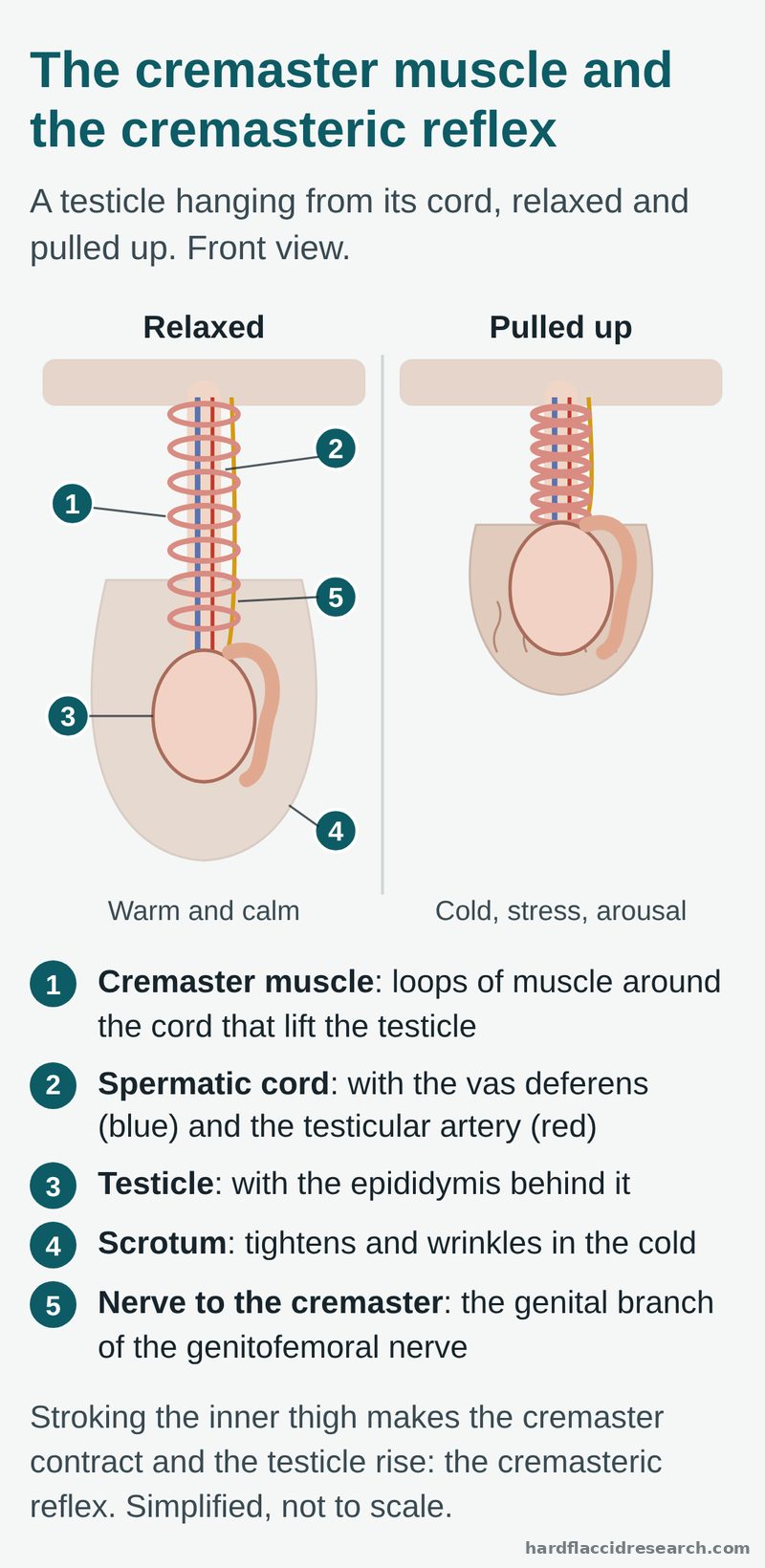 The cremaster muscle and the cremasteric reflex
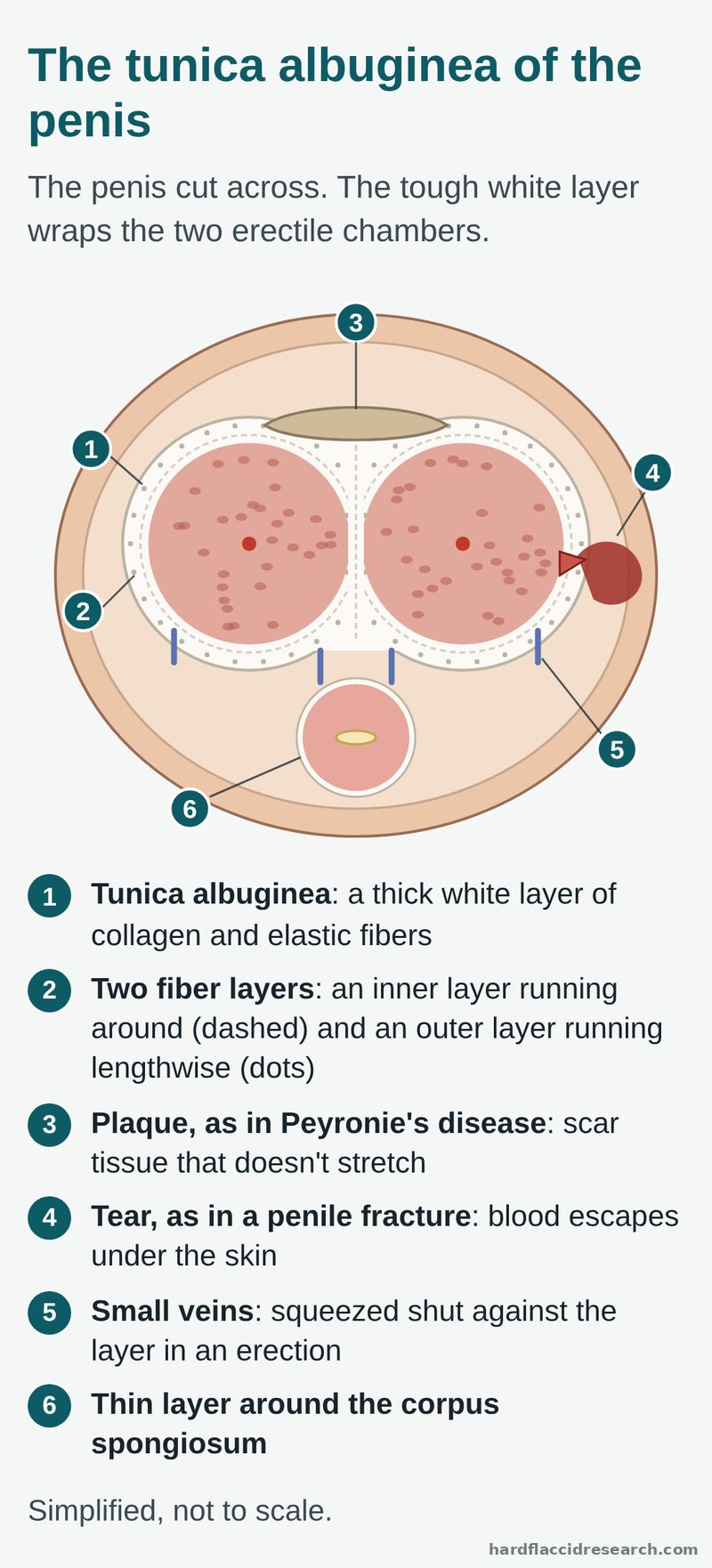 The tunica albuginea of the penis
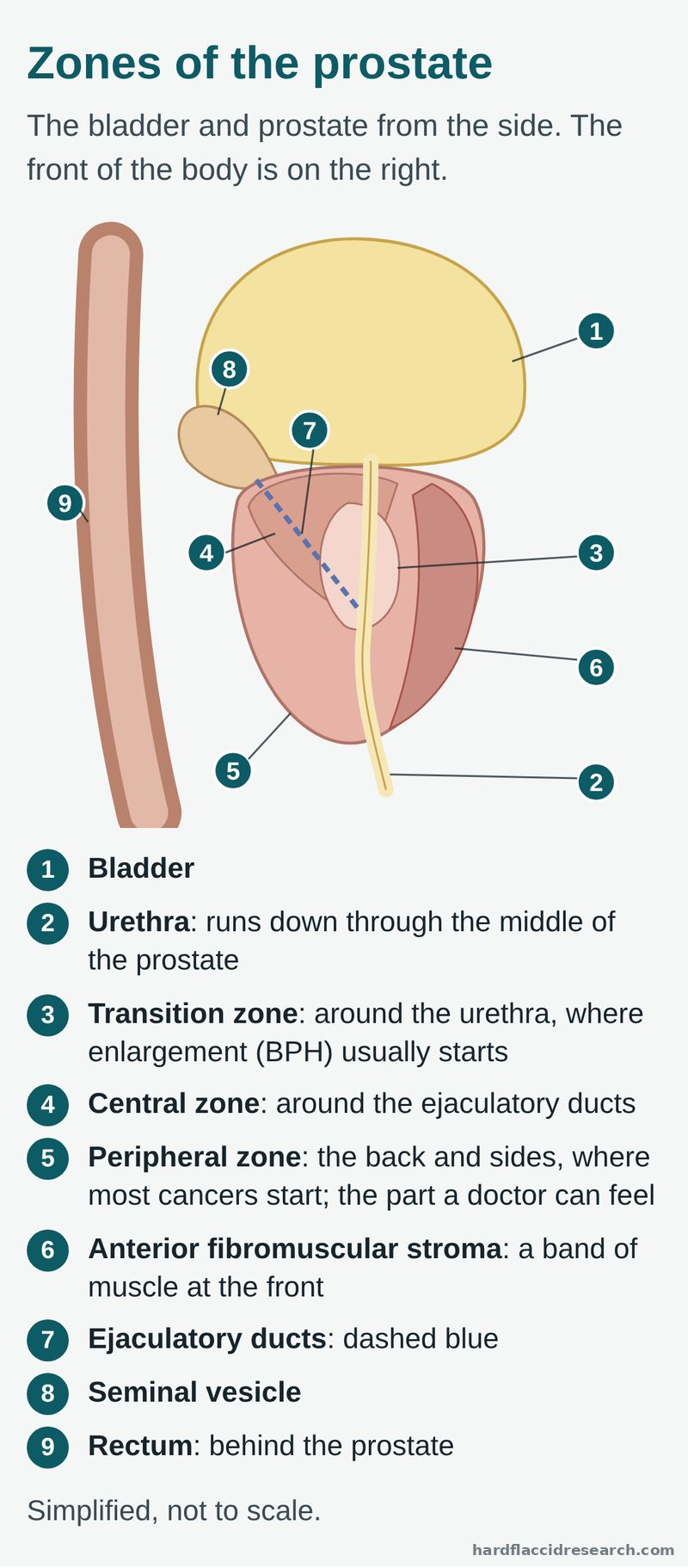 Zones of the prostate
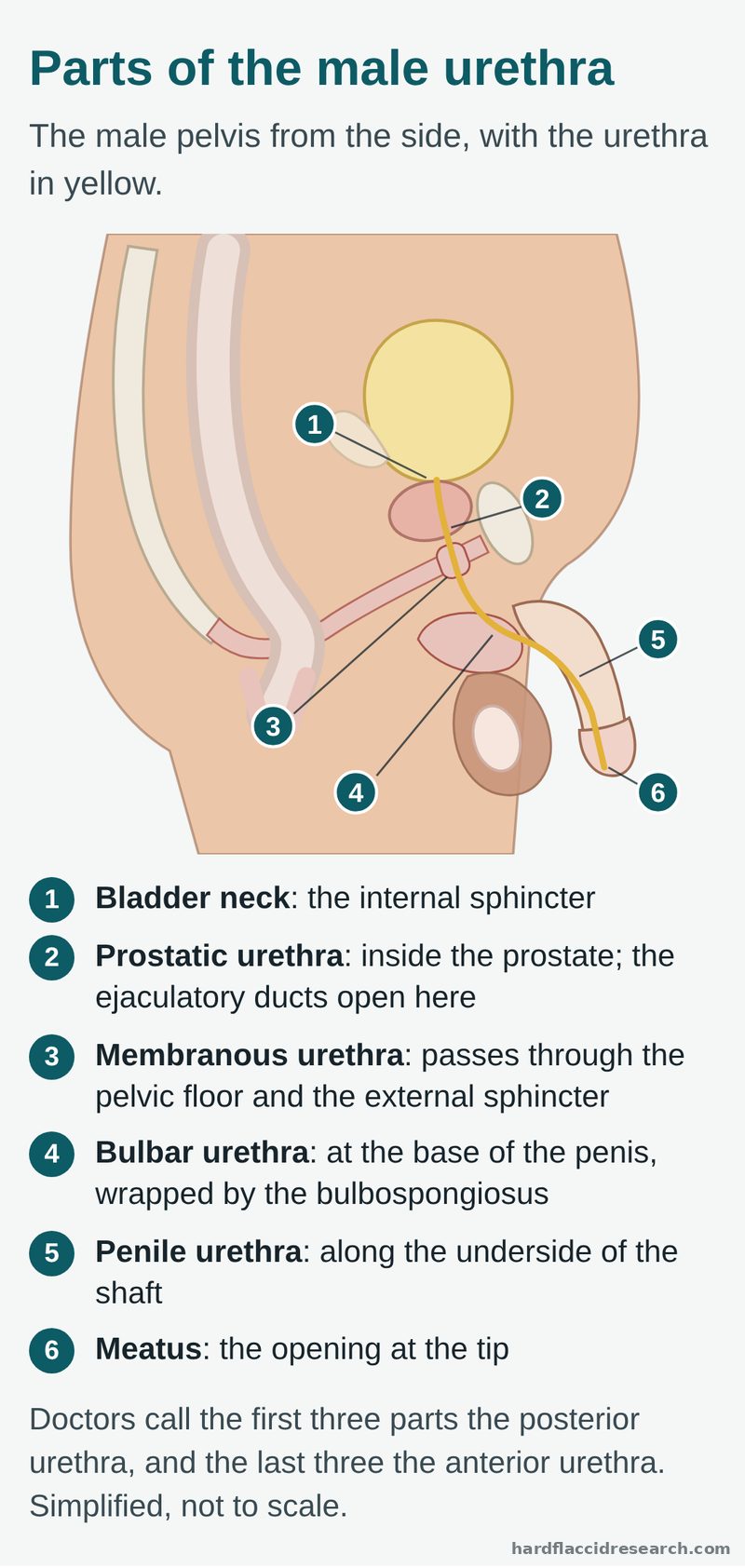 Parts of the male urethra
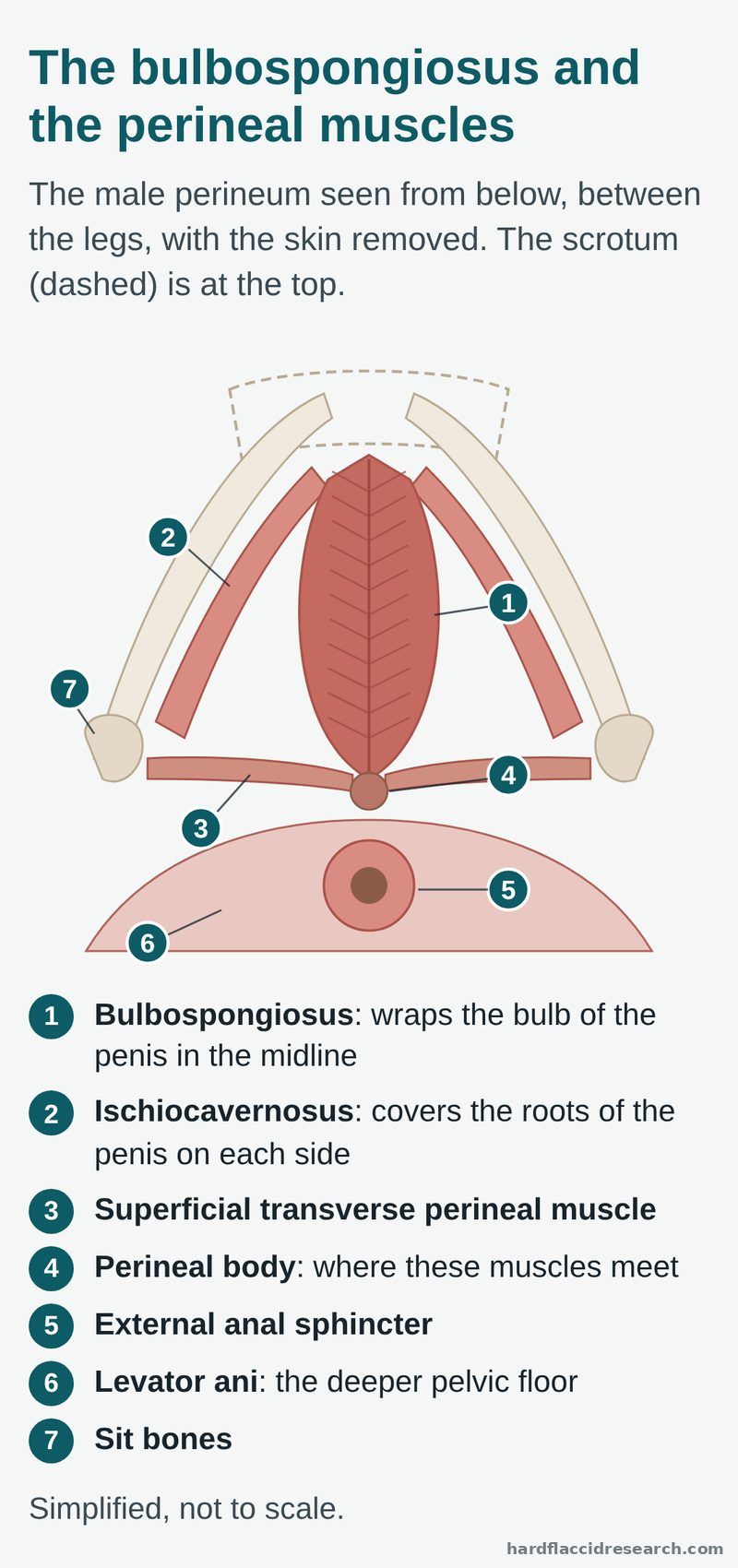 The bulbospongiosus and the perineal muscles
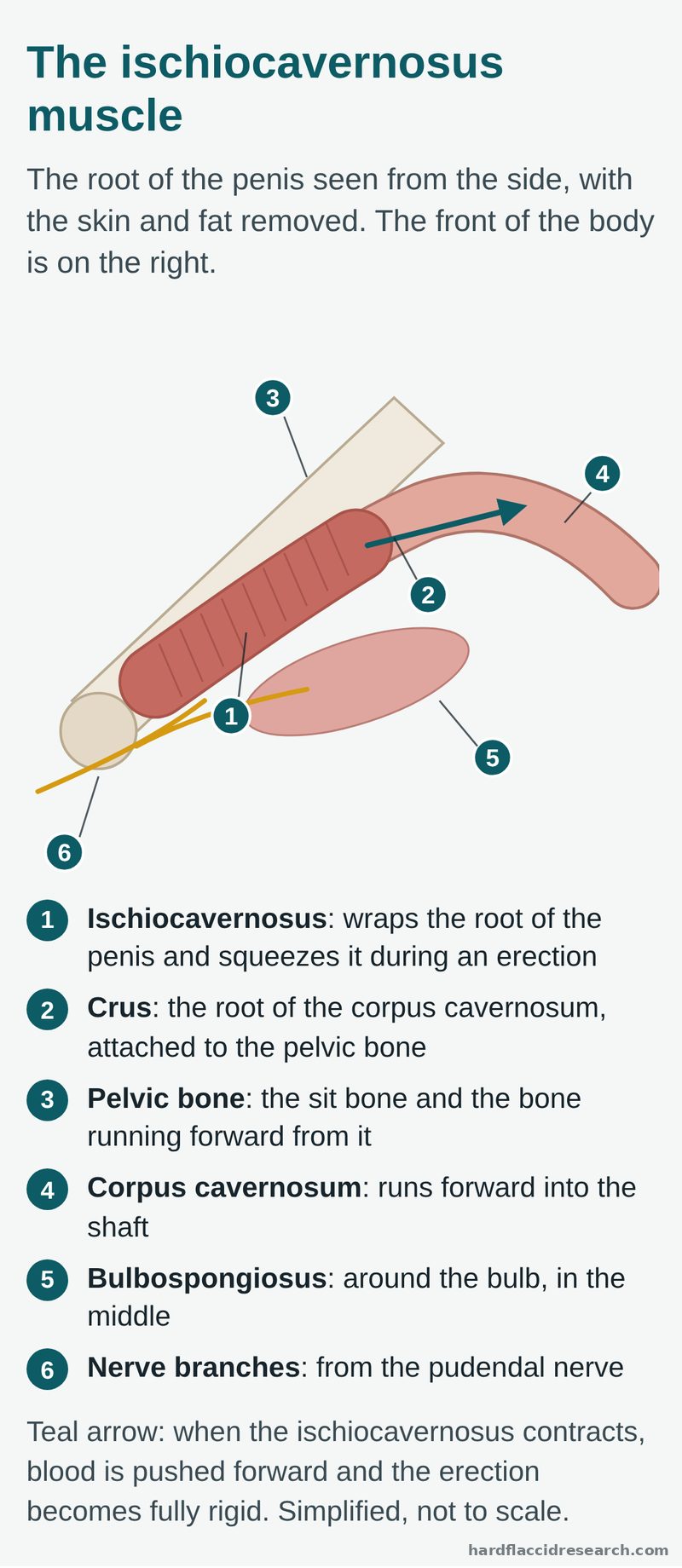 The ischiocavernosus muscle
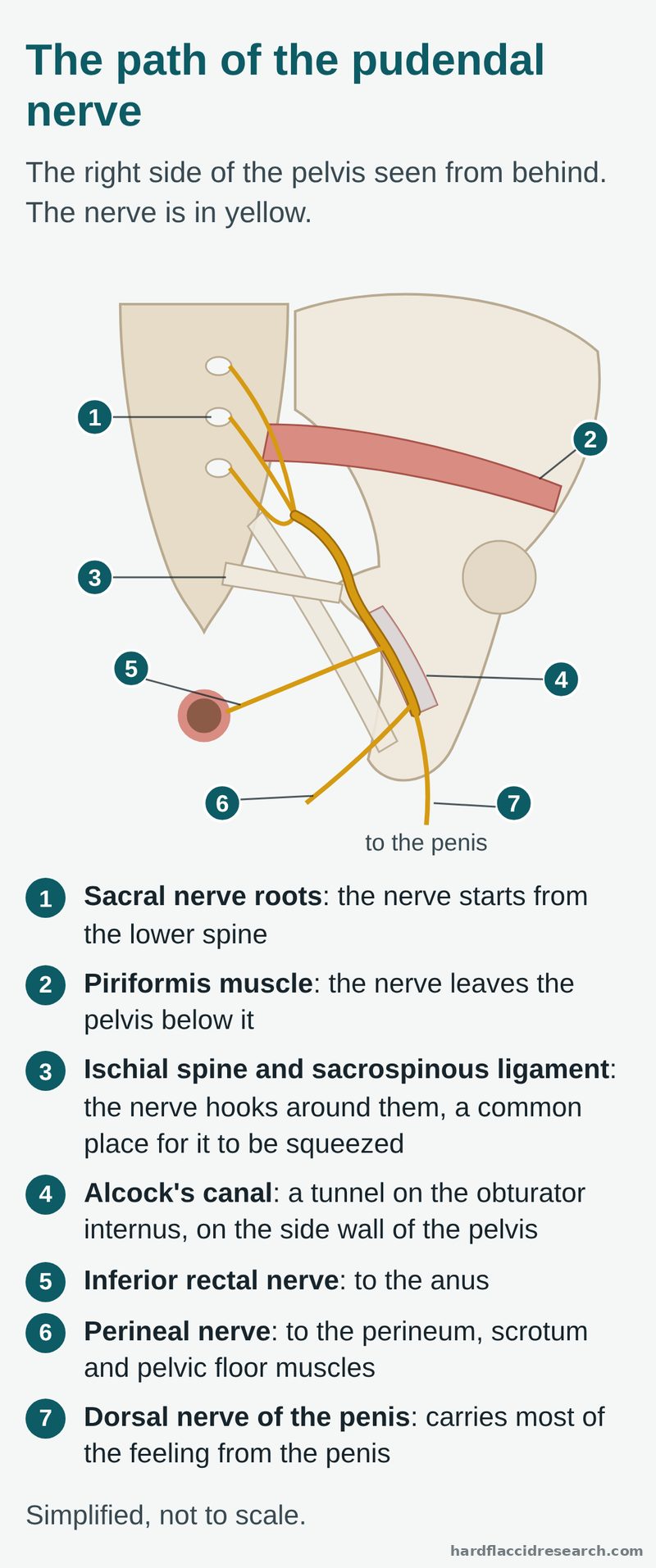 The pudendal nerve from behind: Alcock's canal and its branches
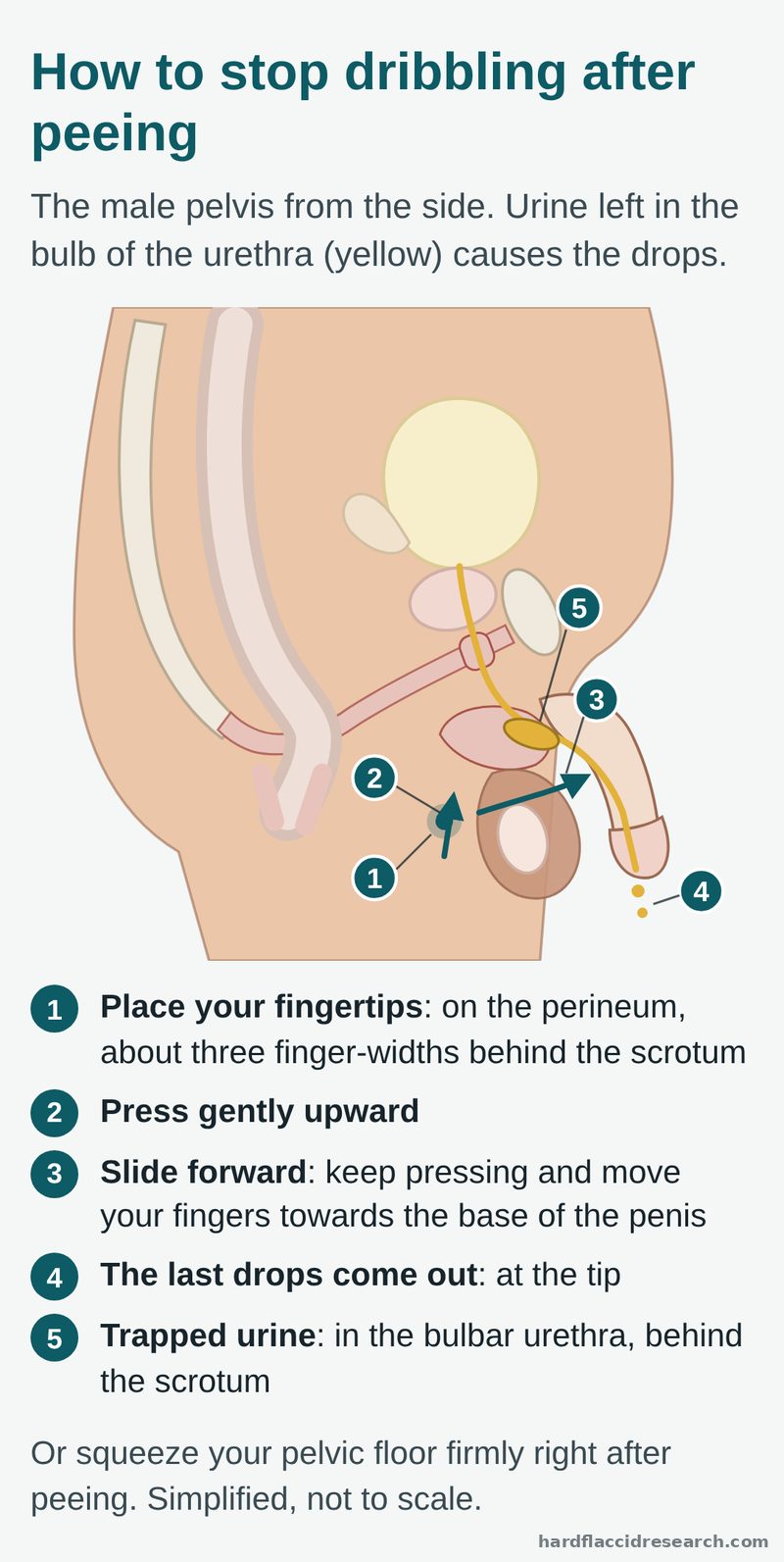 How to stop dribbling after peeing
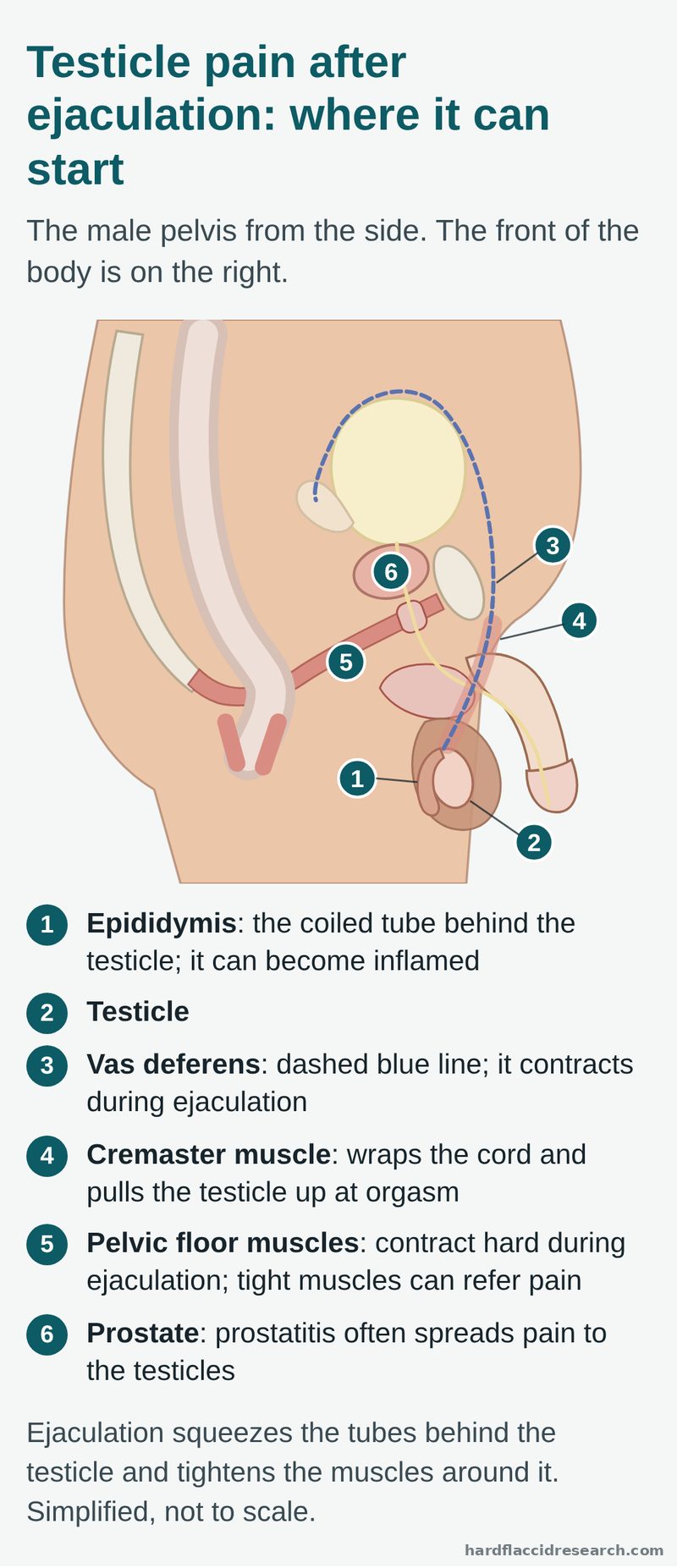 Testicle pain after ejaculation: where it can start
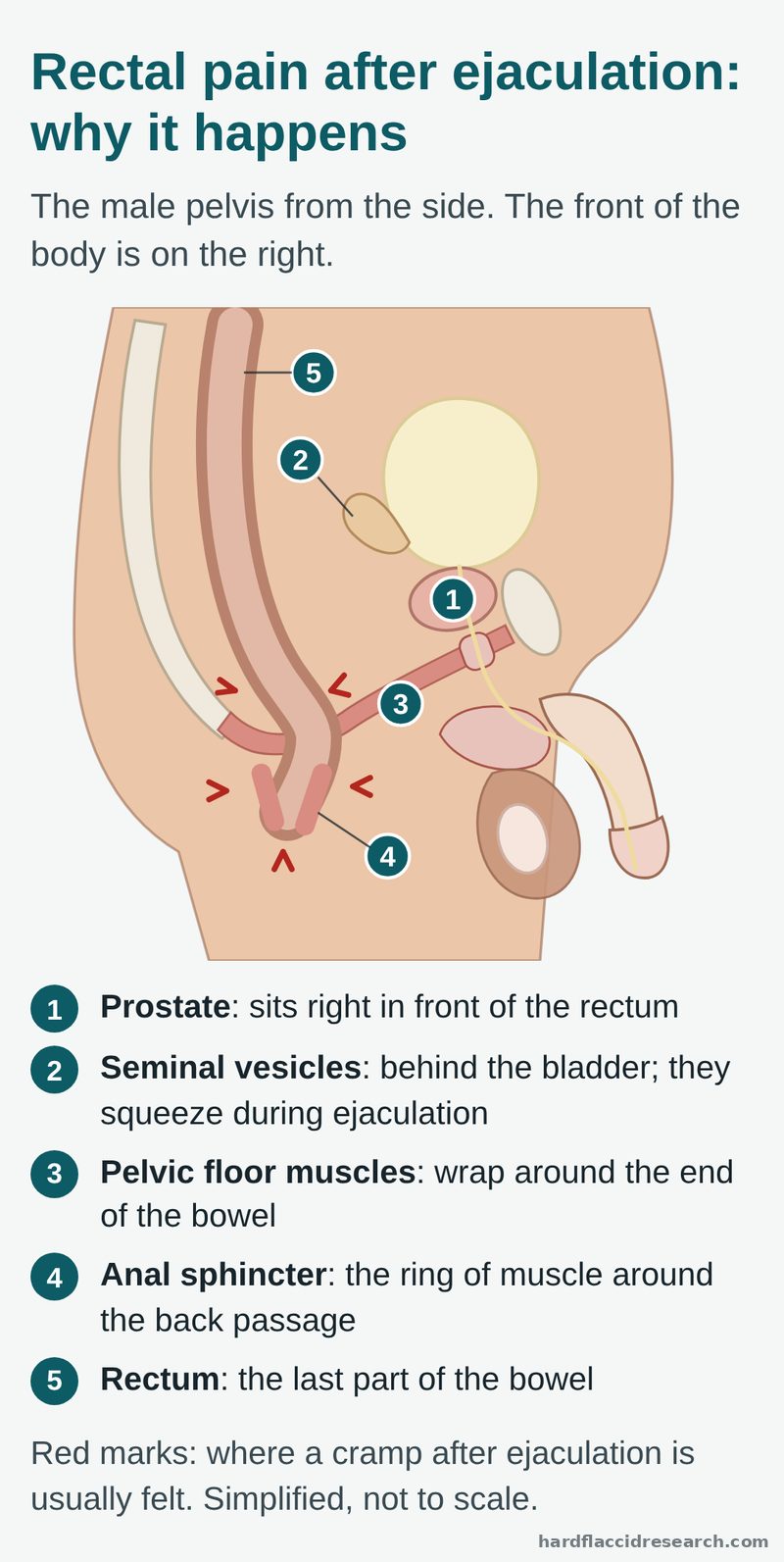 Rectal pain after ejaculation: why it happens
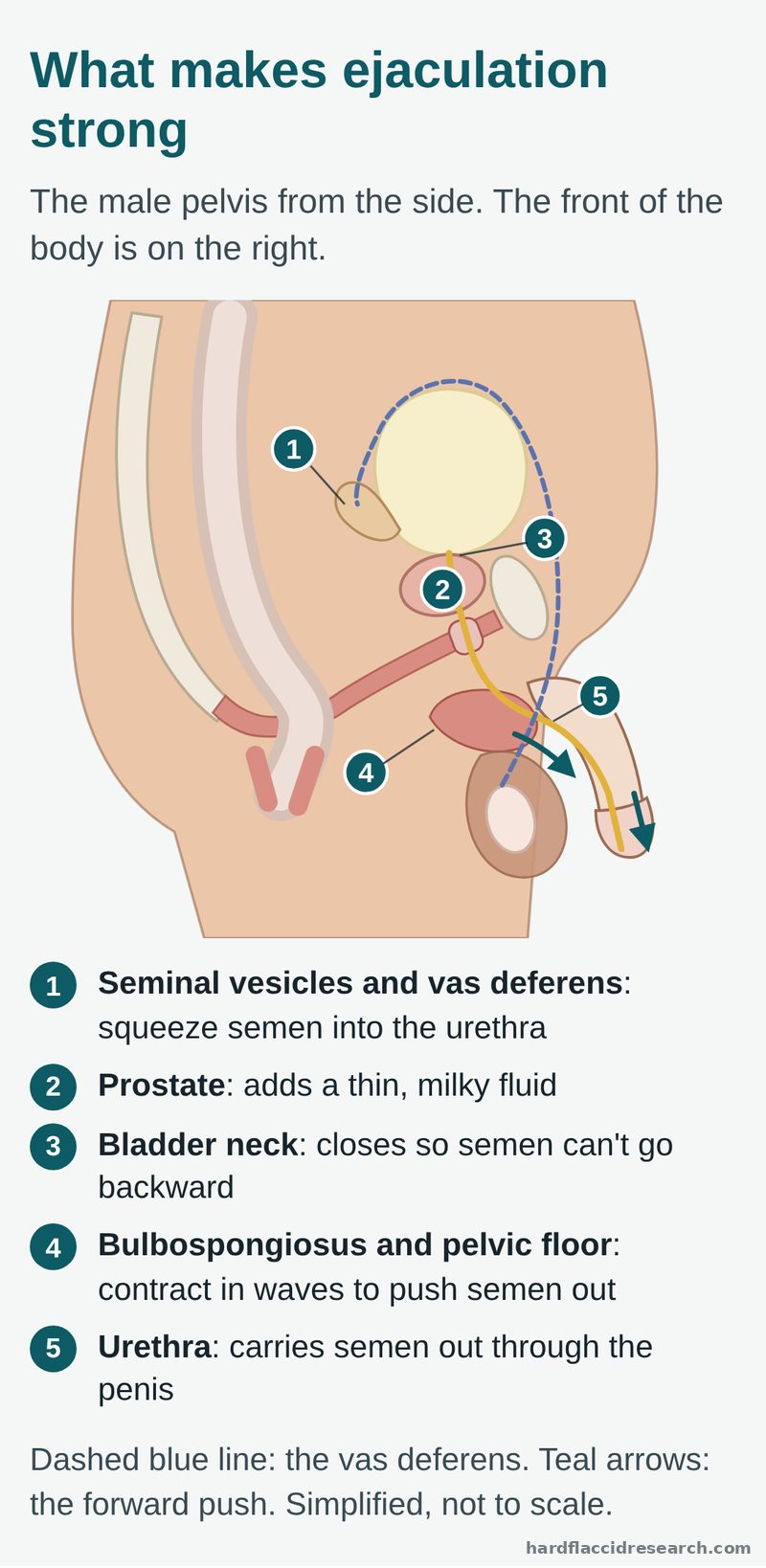 What makes ejaculation strong
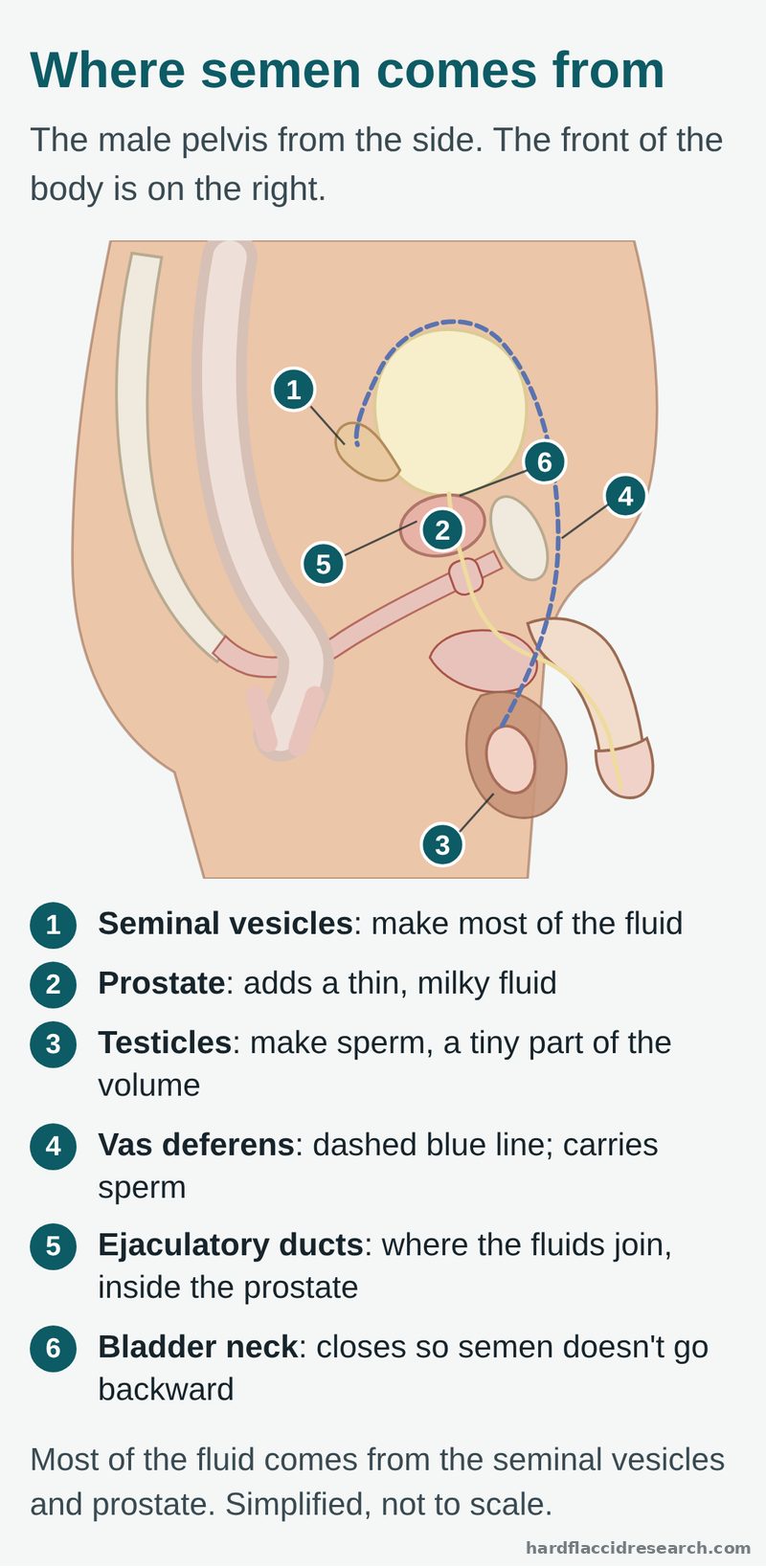 Where semen comes from
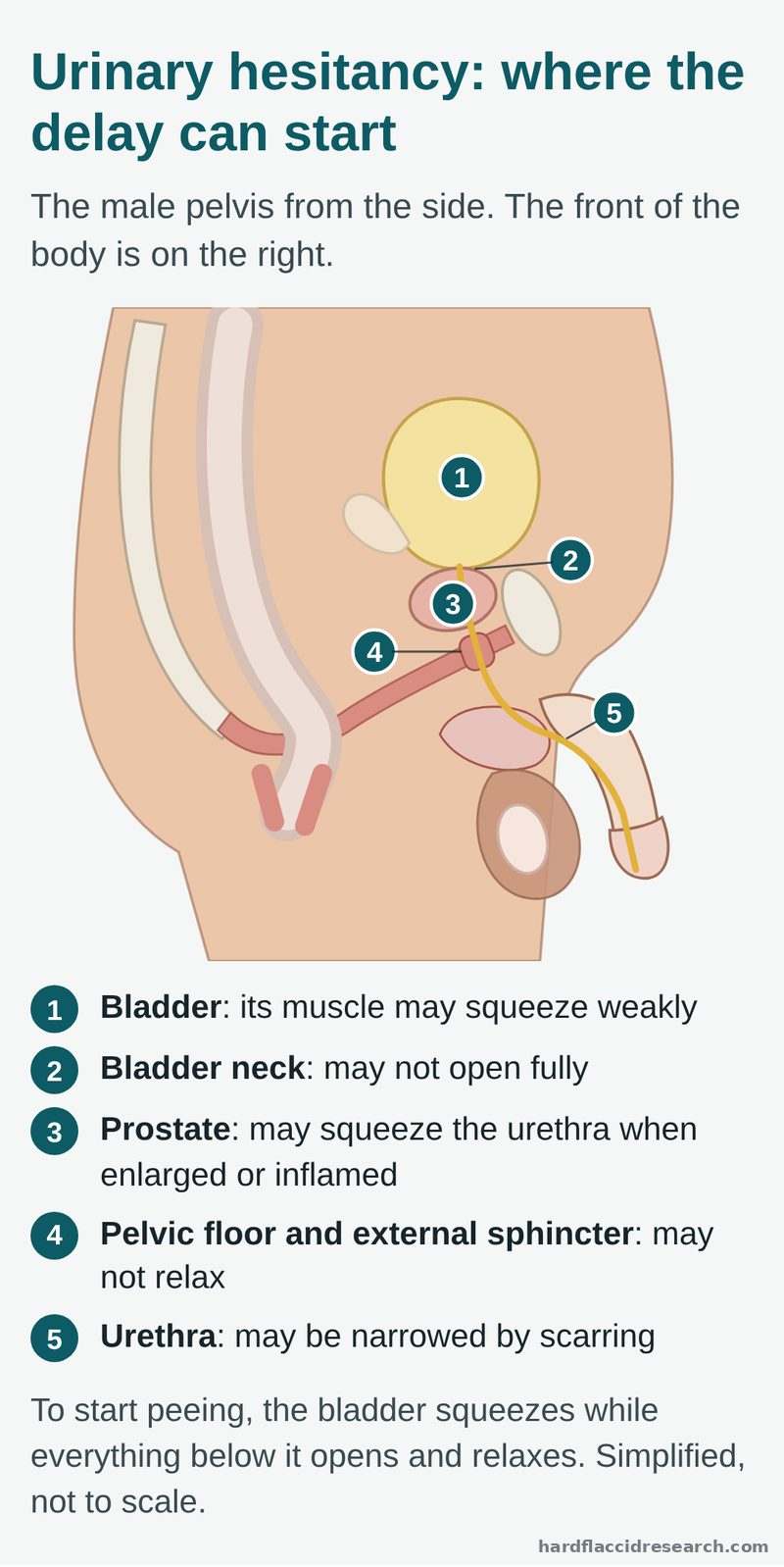 Urinary hesitancy: where the delay can start
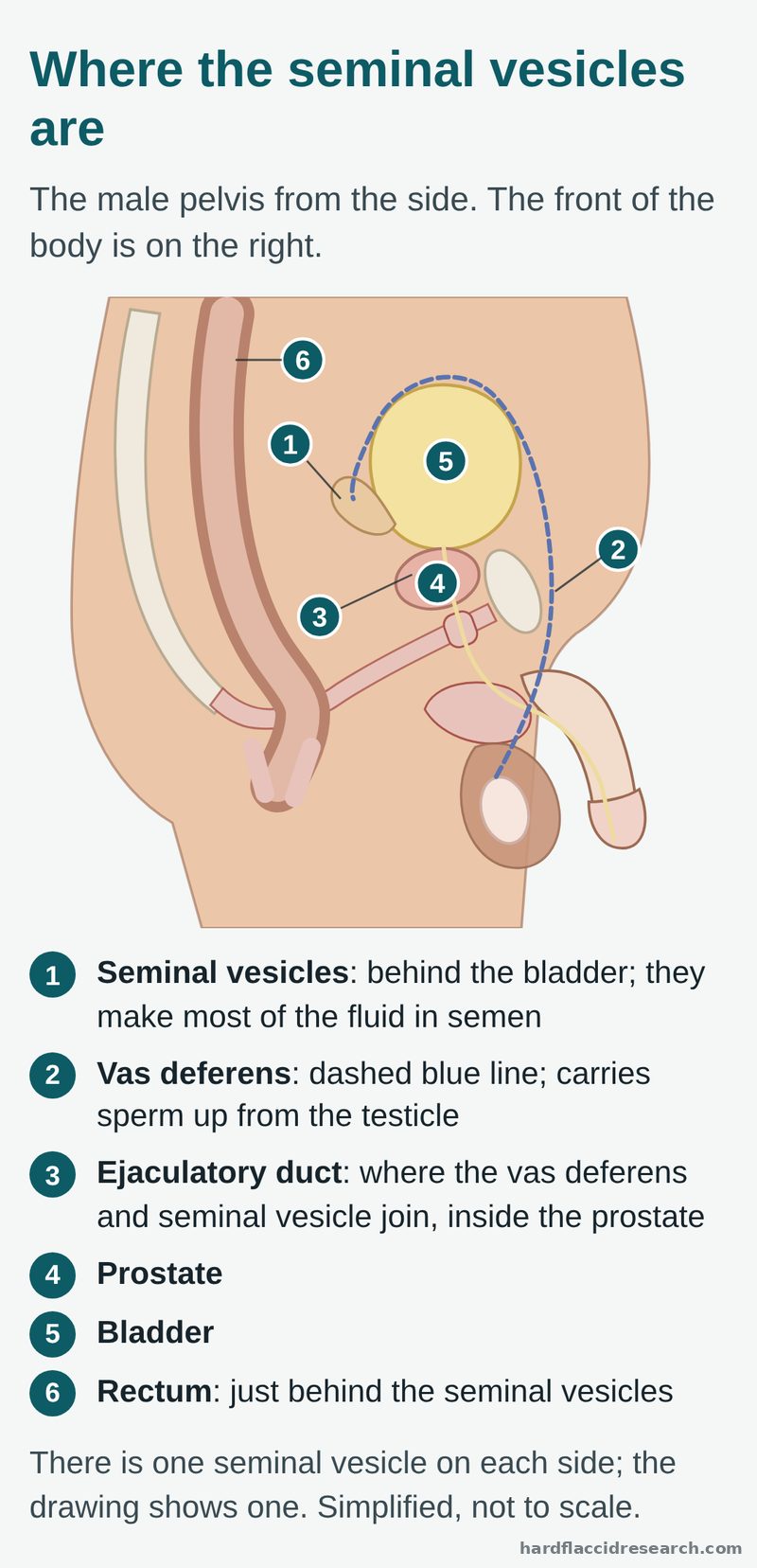 Where the seminal vesicles are
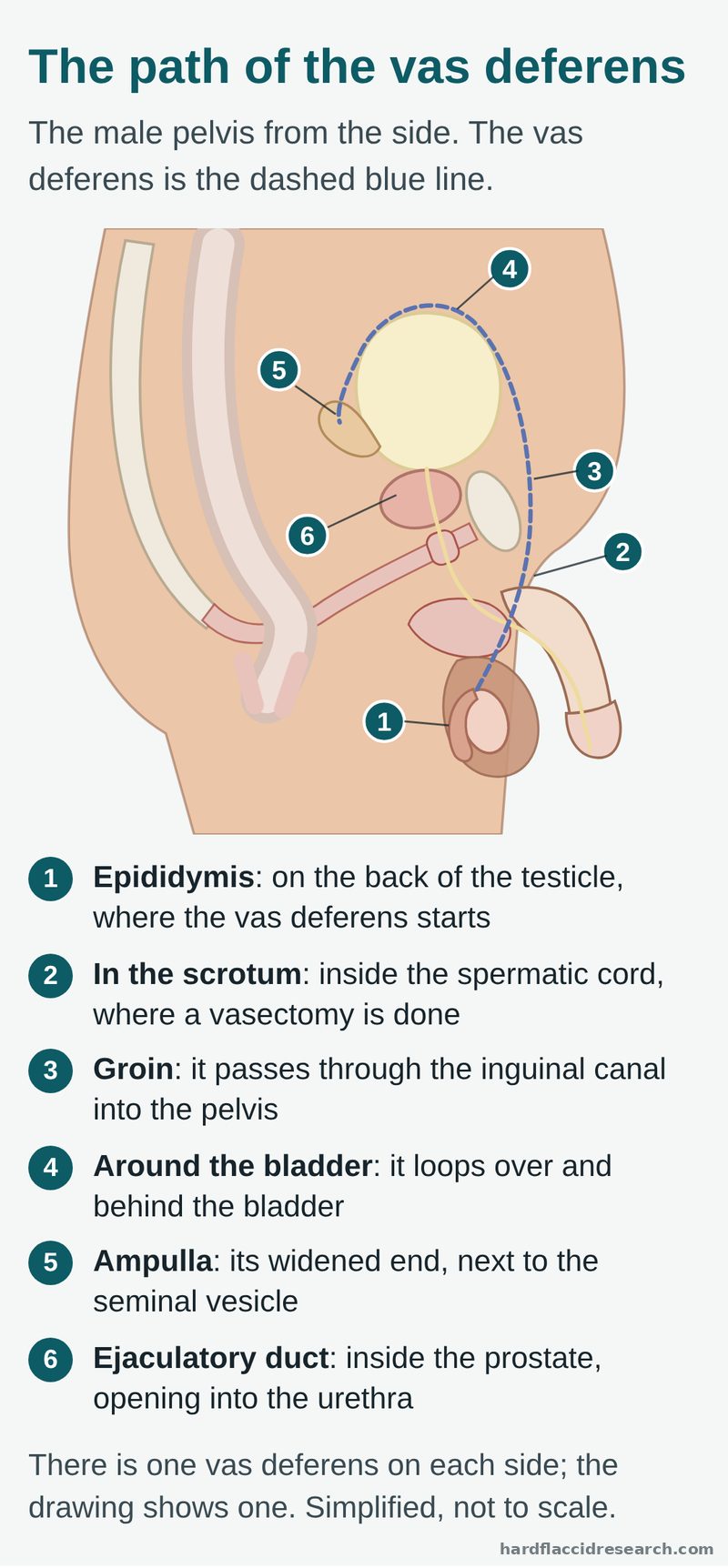 The path of the vas deferens
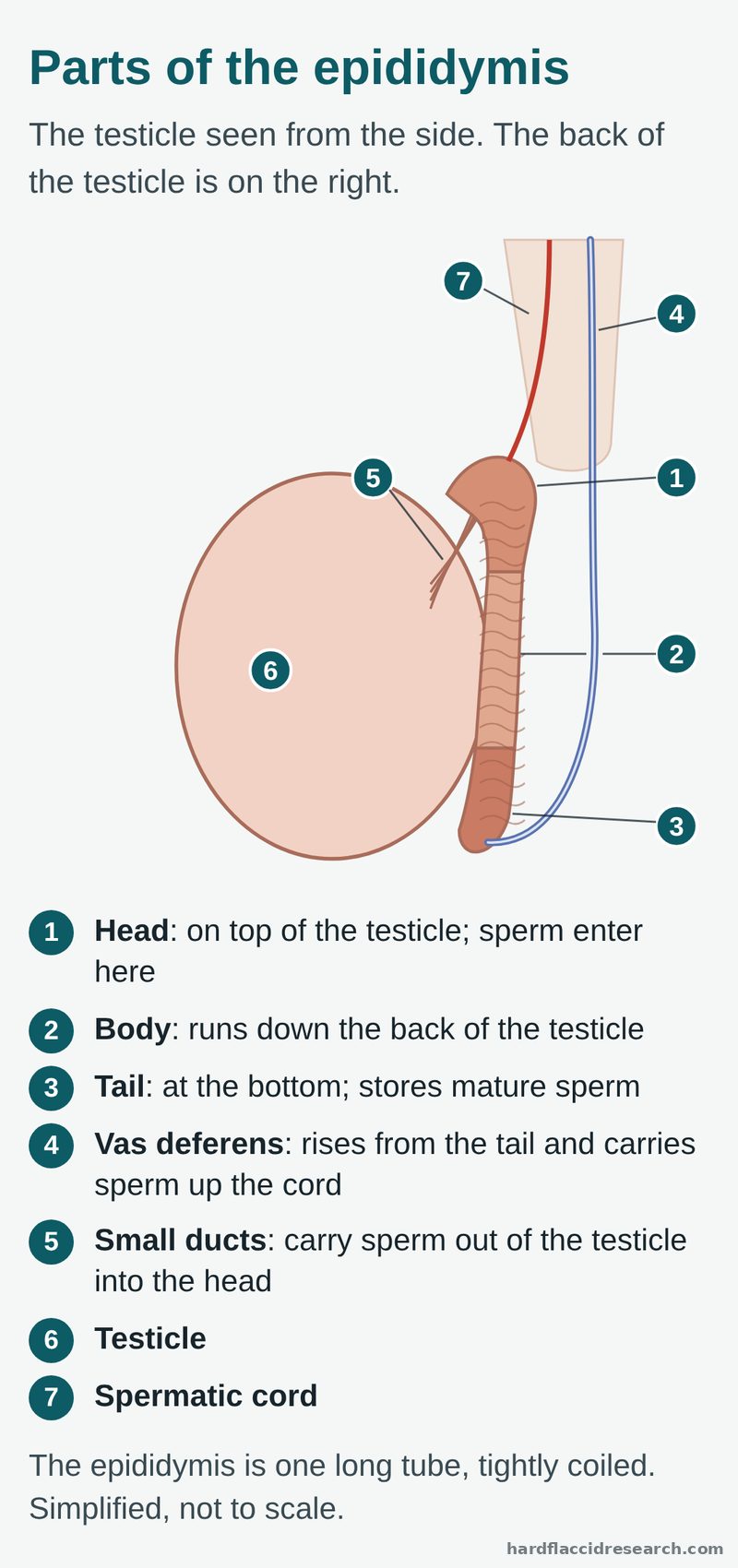 Parts of the epididymis
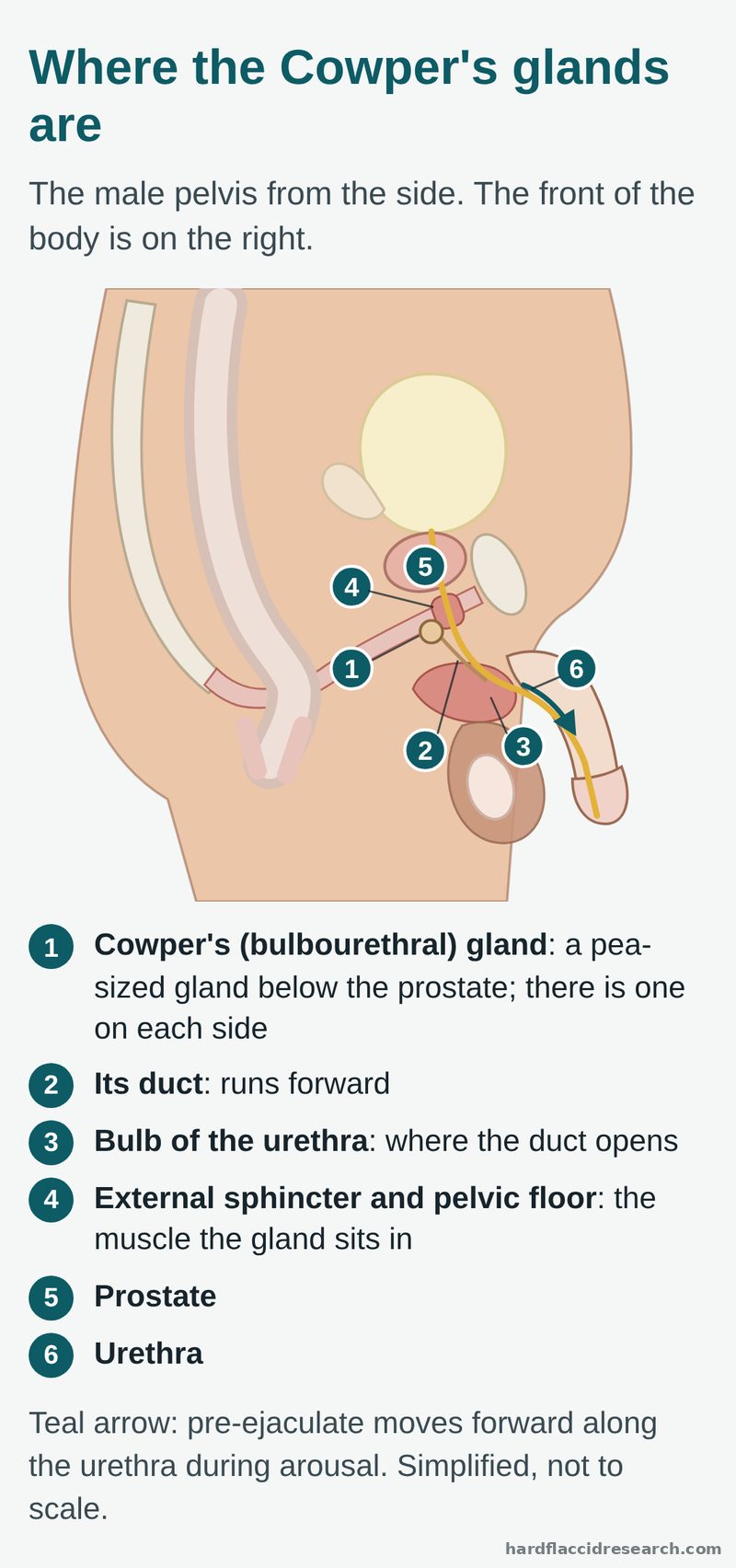 Where the Cowper's glands are
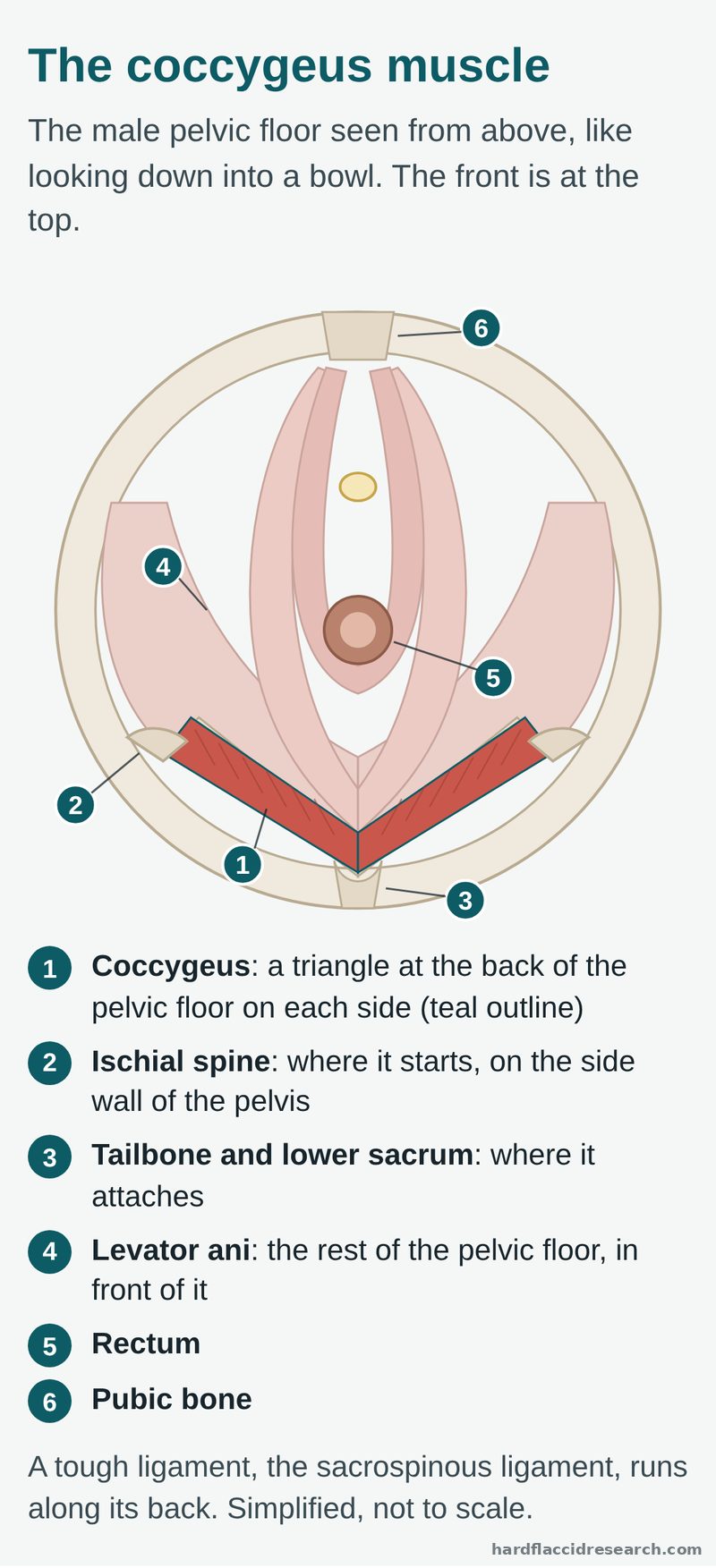 The coccygeus muscle
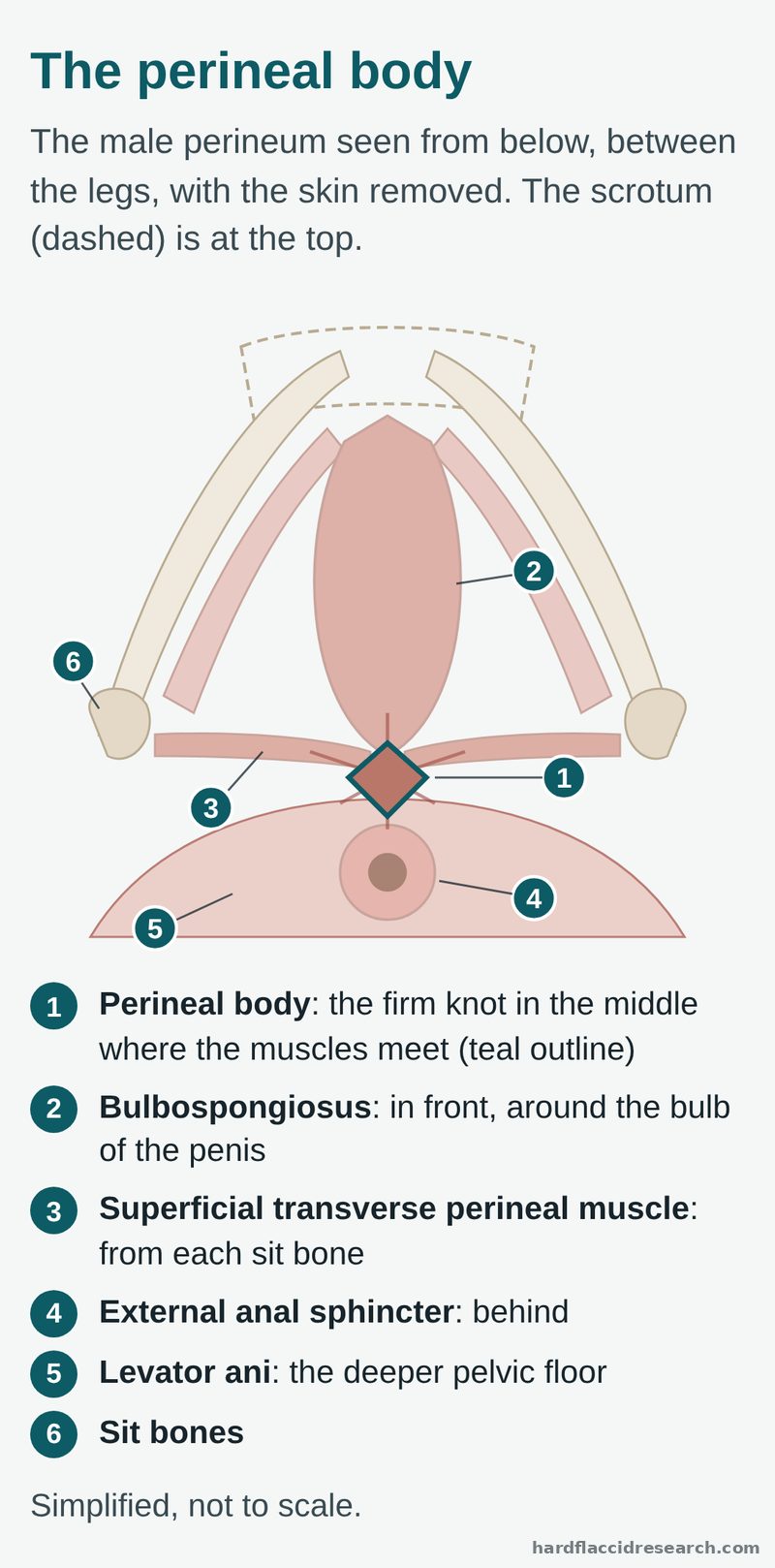 The perineal body
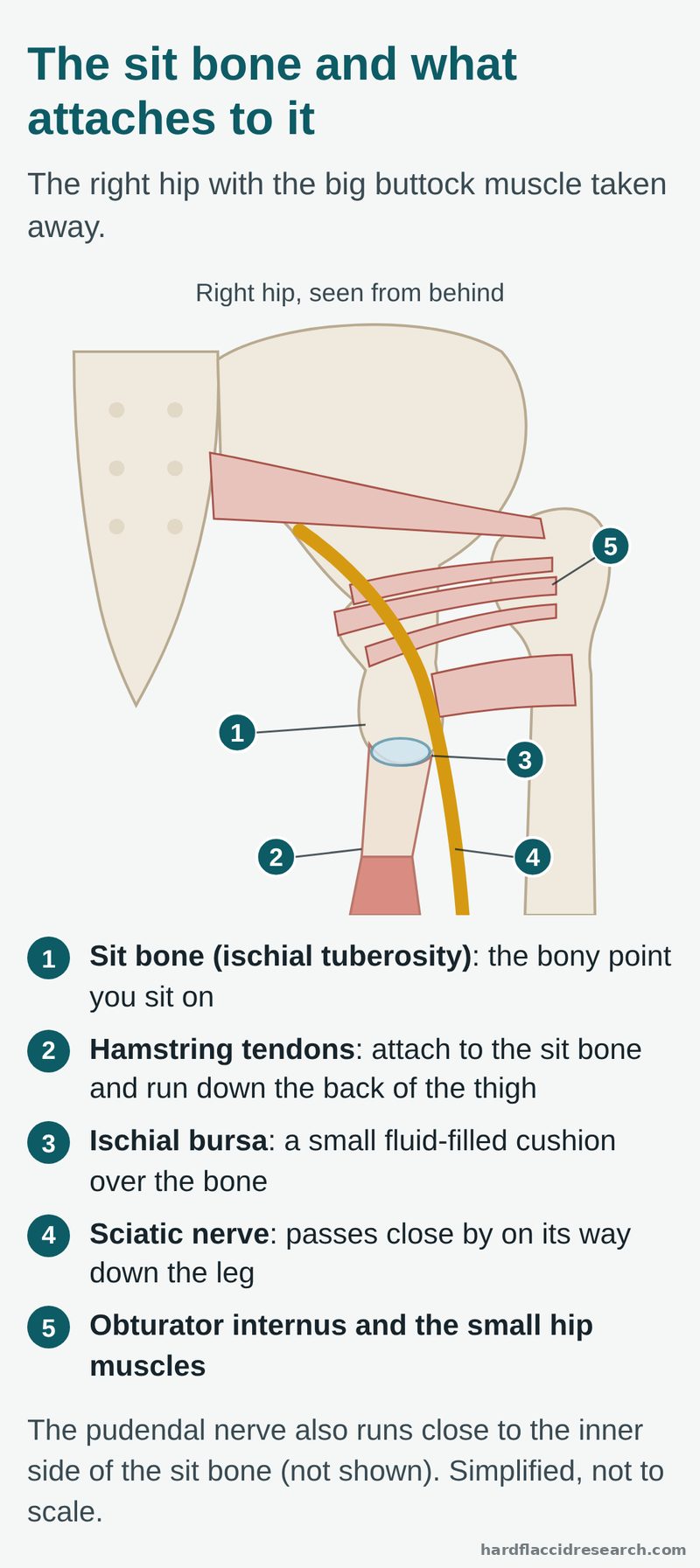 The sit bone and what attaches to it
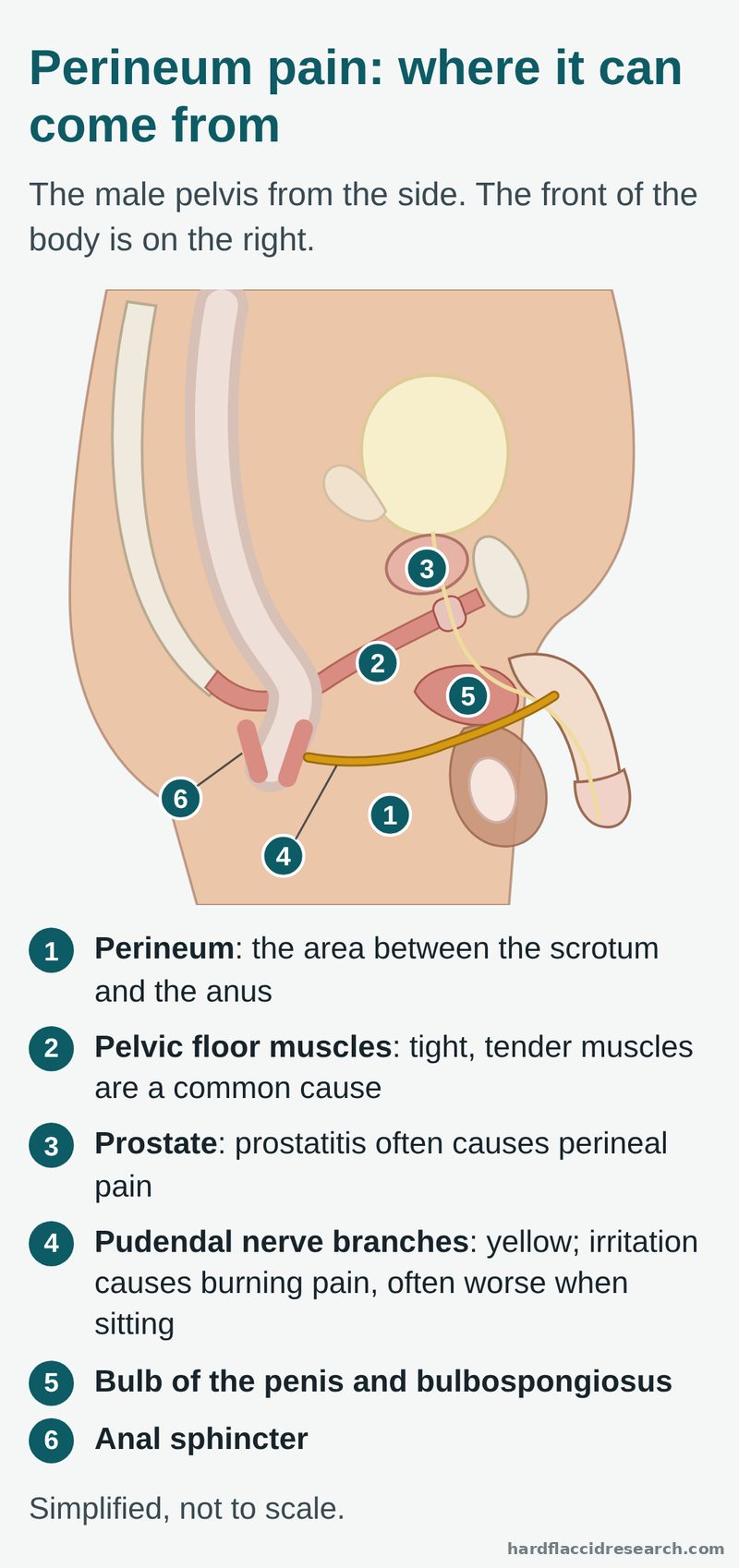 Perineum pain: where it can come from
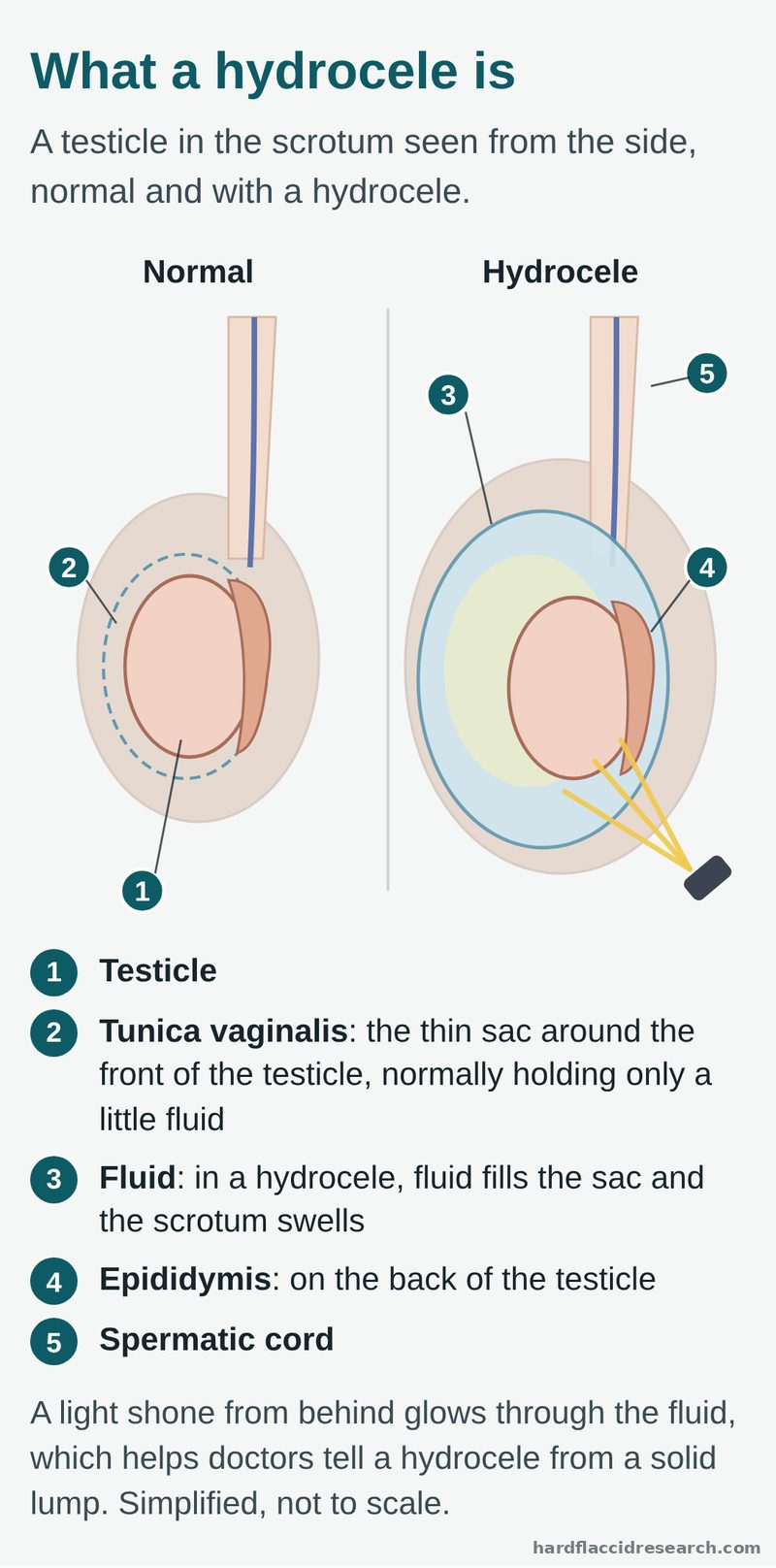 What a hydrocele is
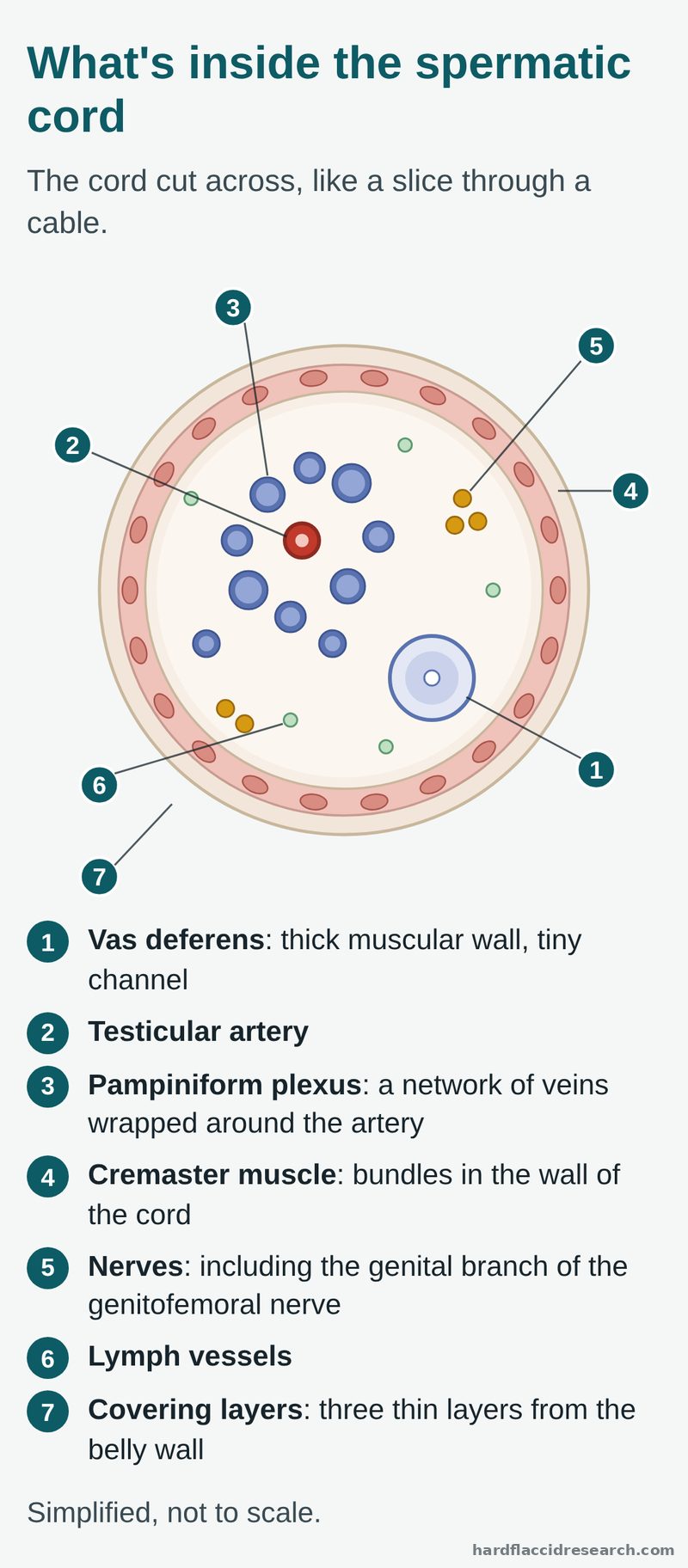 What's inside the spermatic cord
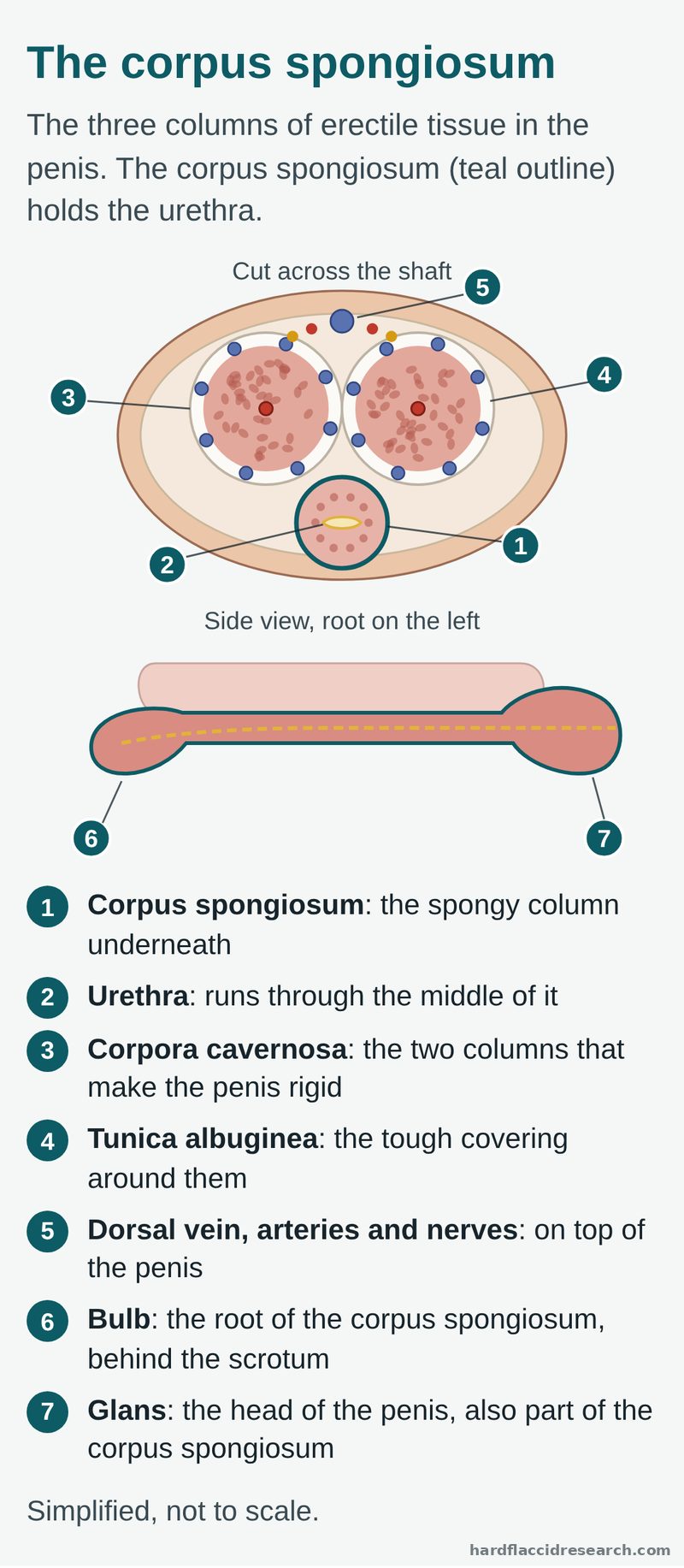 The corpus spongiosum
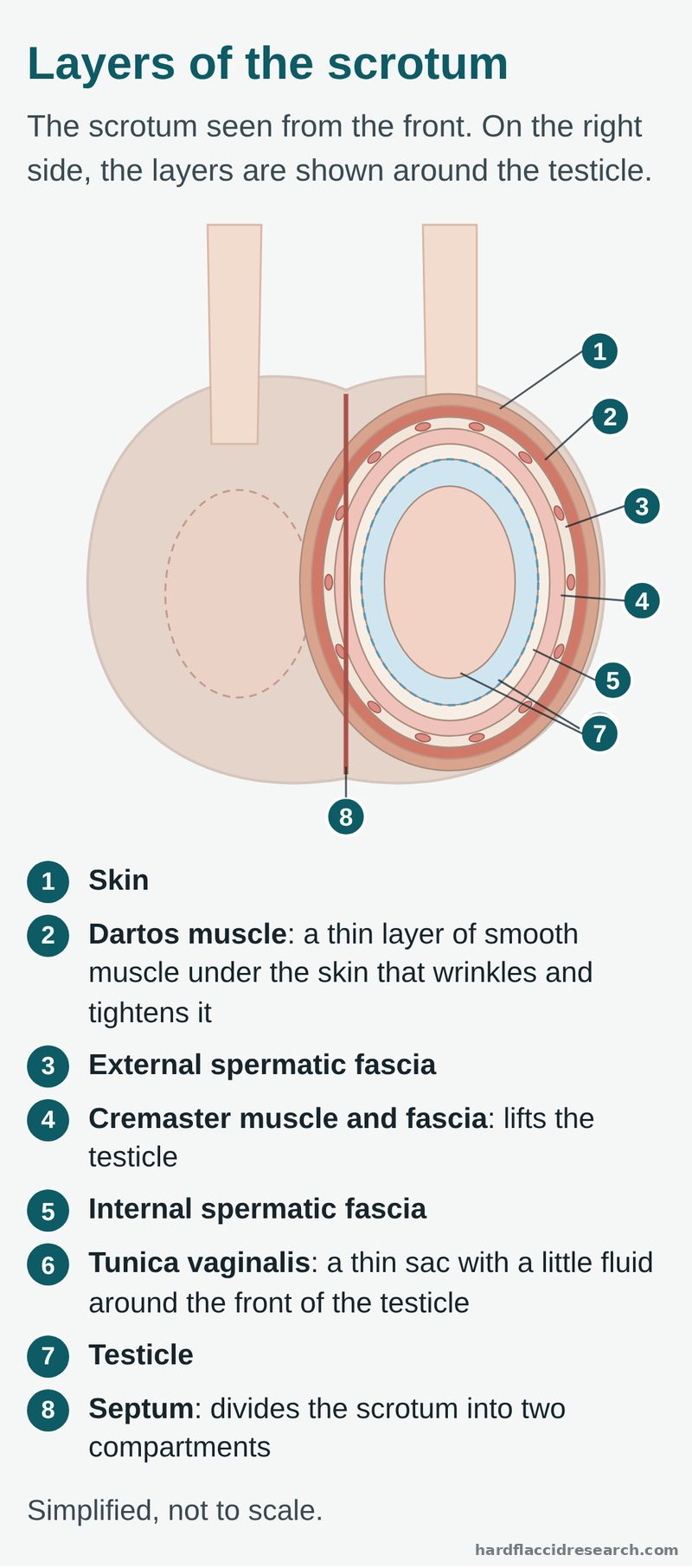 Layers of the scrotum
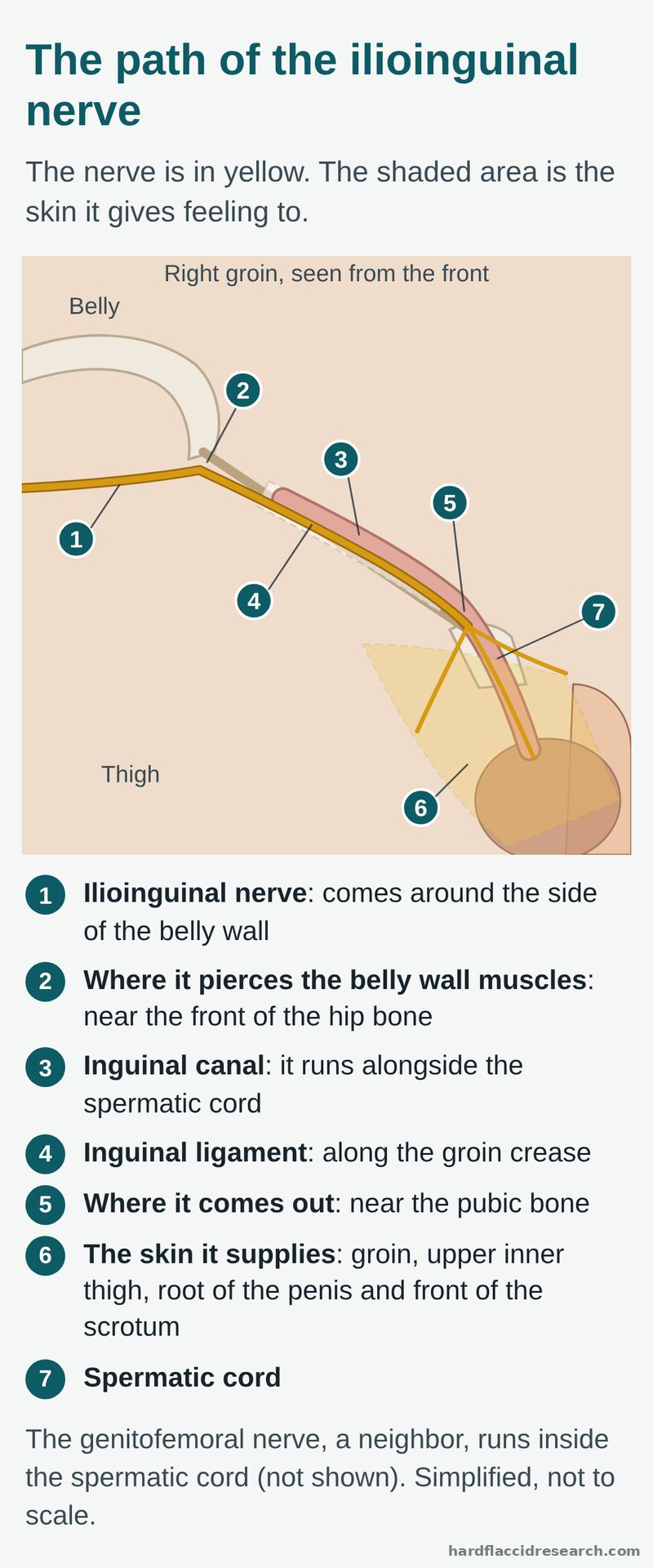 The path of the ilioinguinal nerve
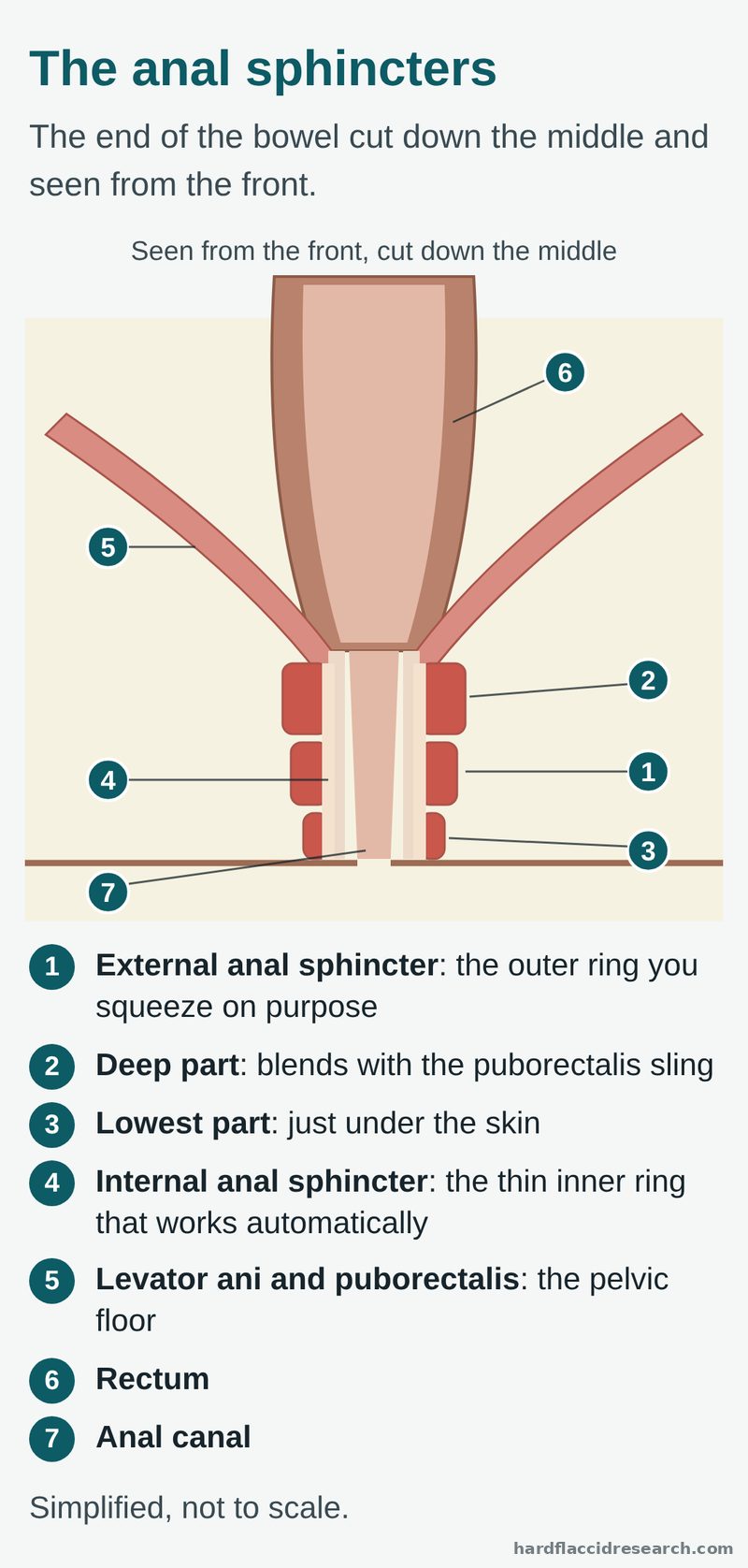 The anal sphincters
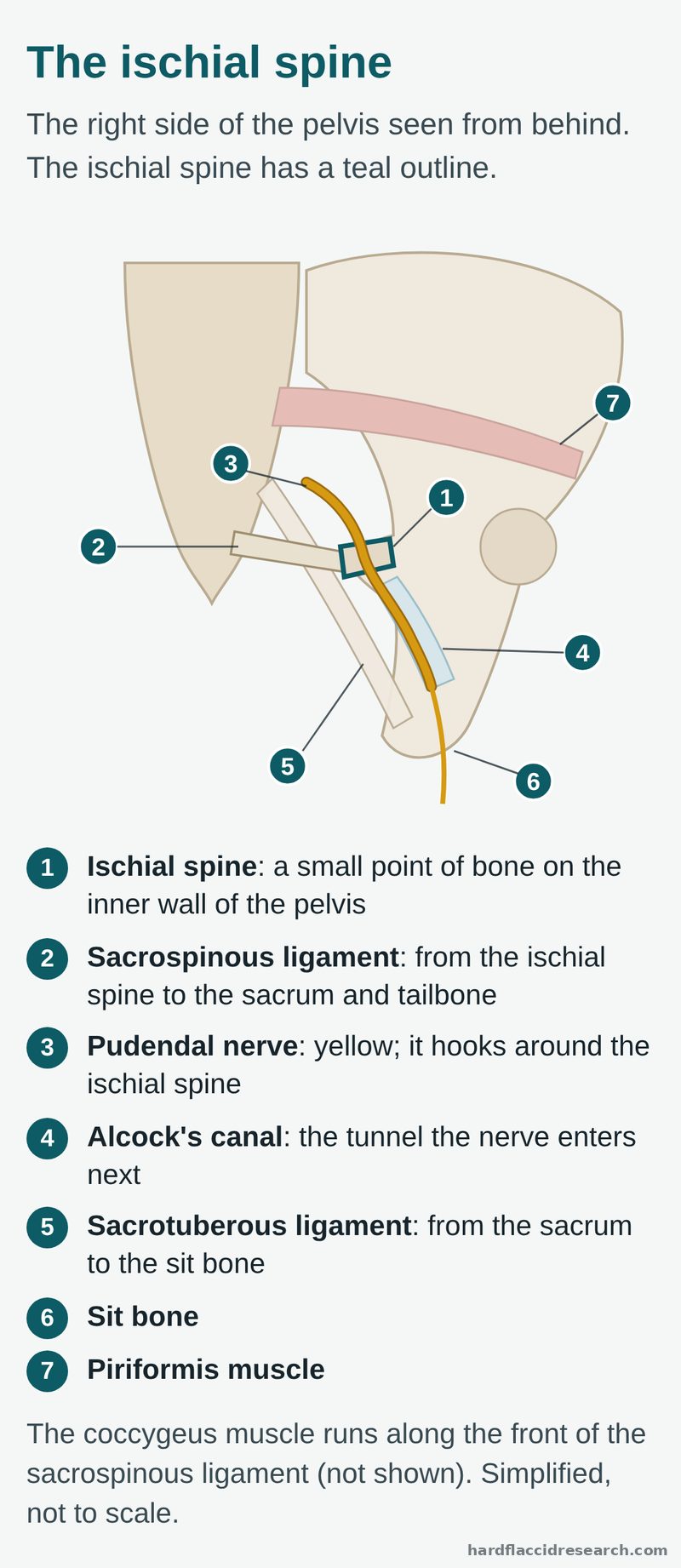 The ischial spine
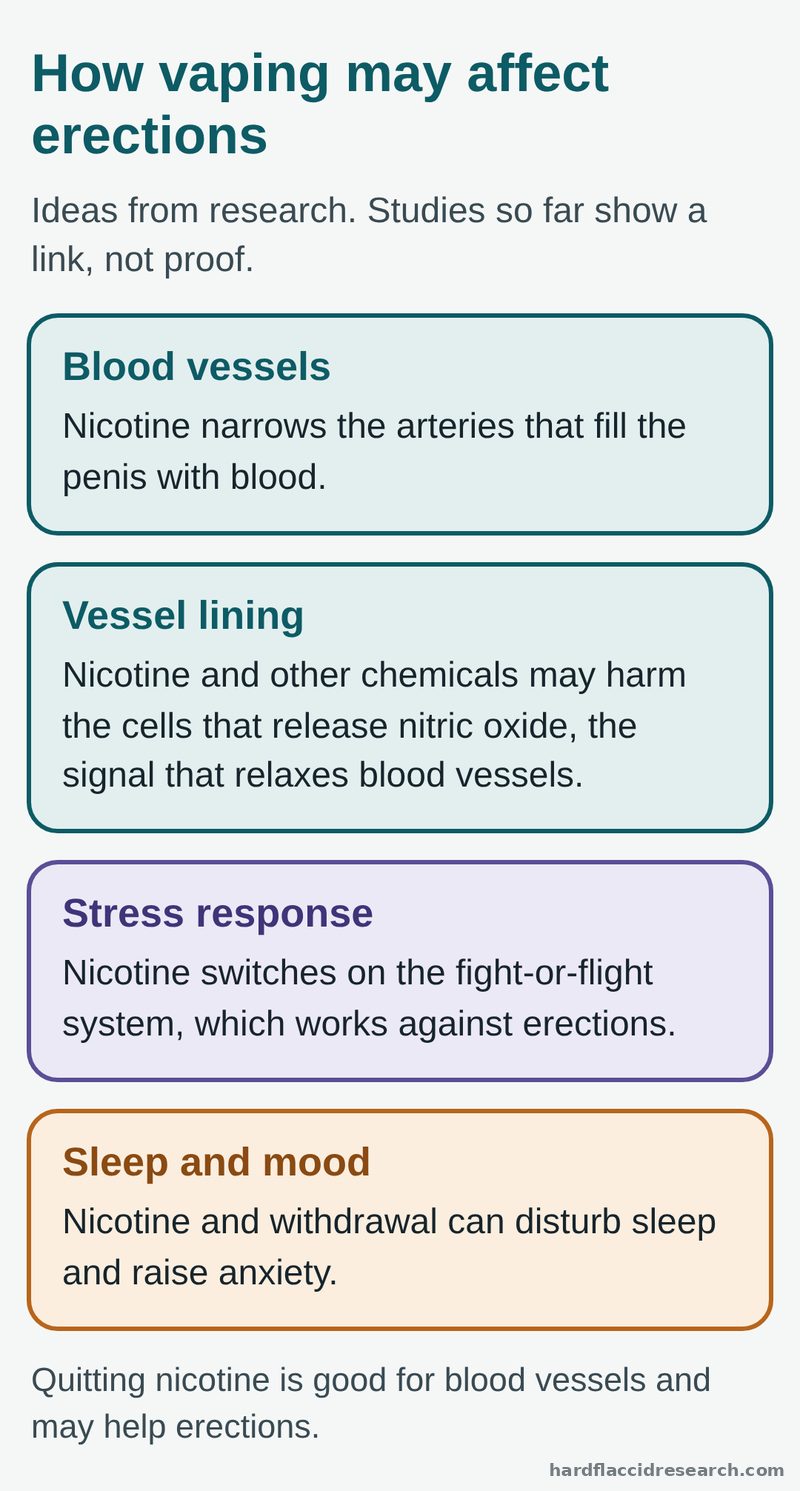 How vaping may affect erections
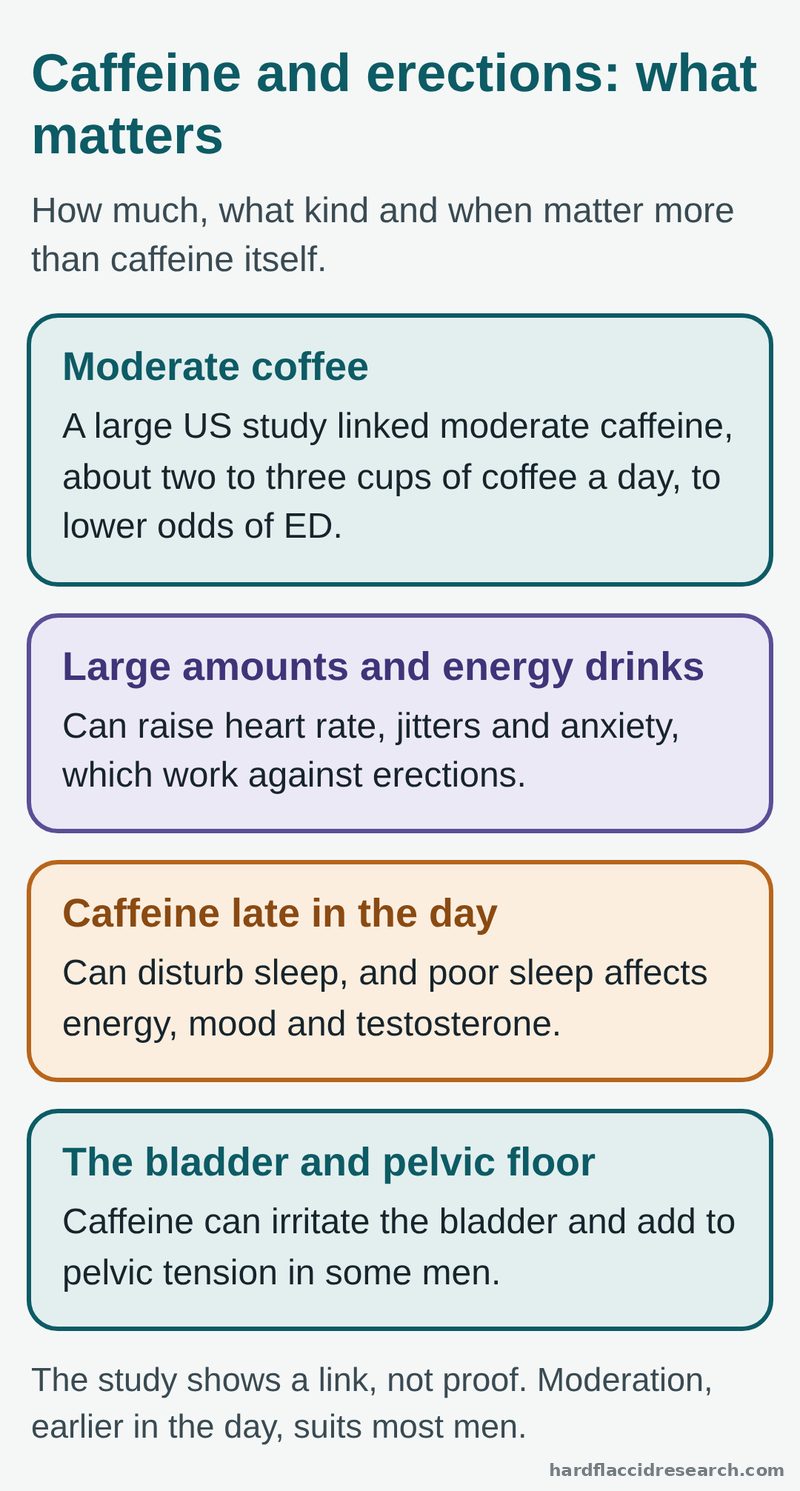 Caffeine and erections: what matters
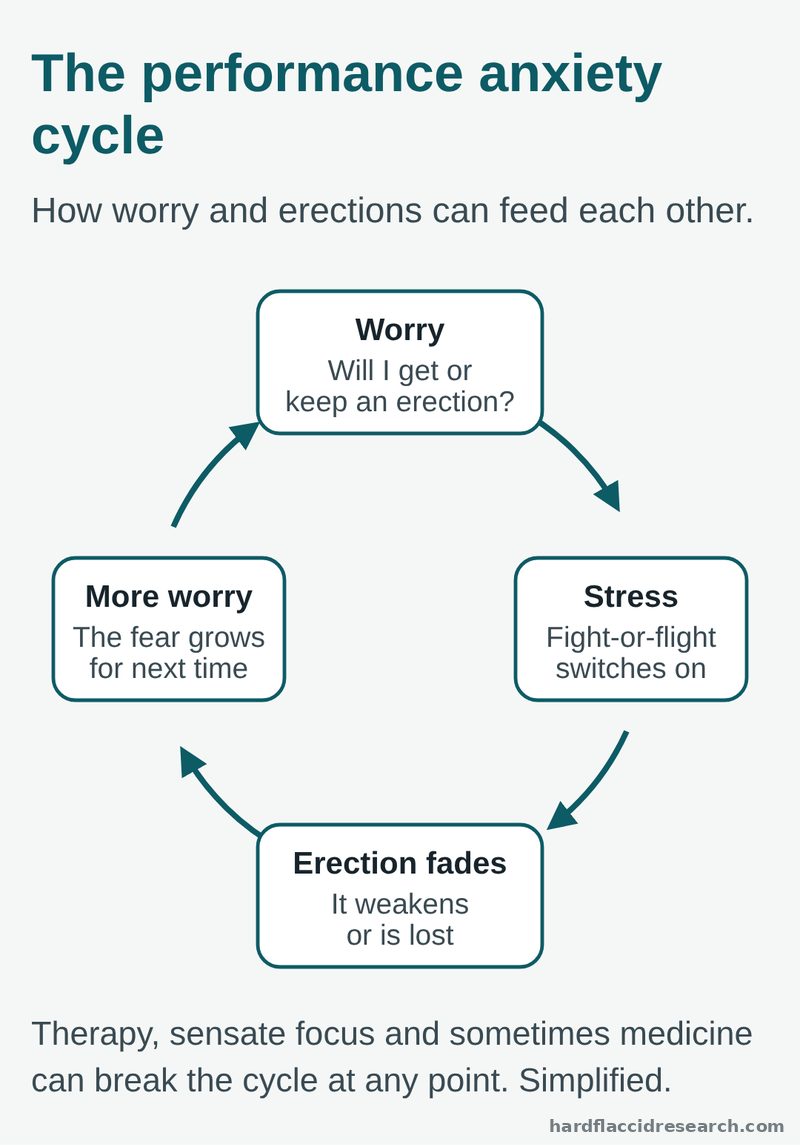 The performance anxiety cycle
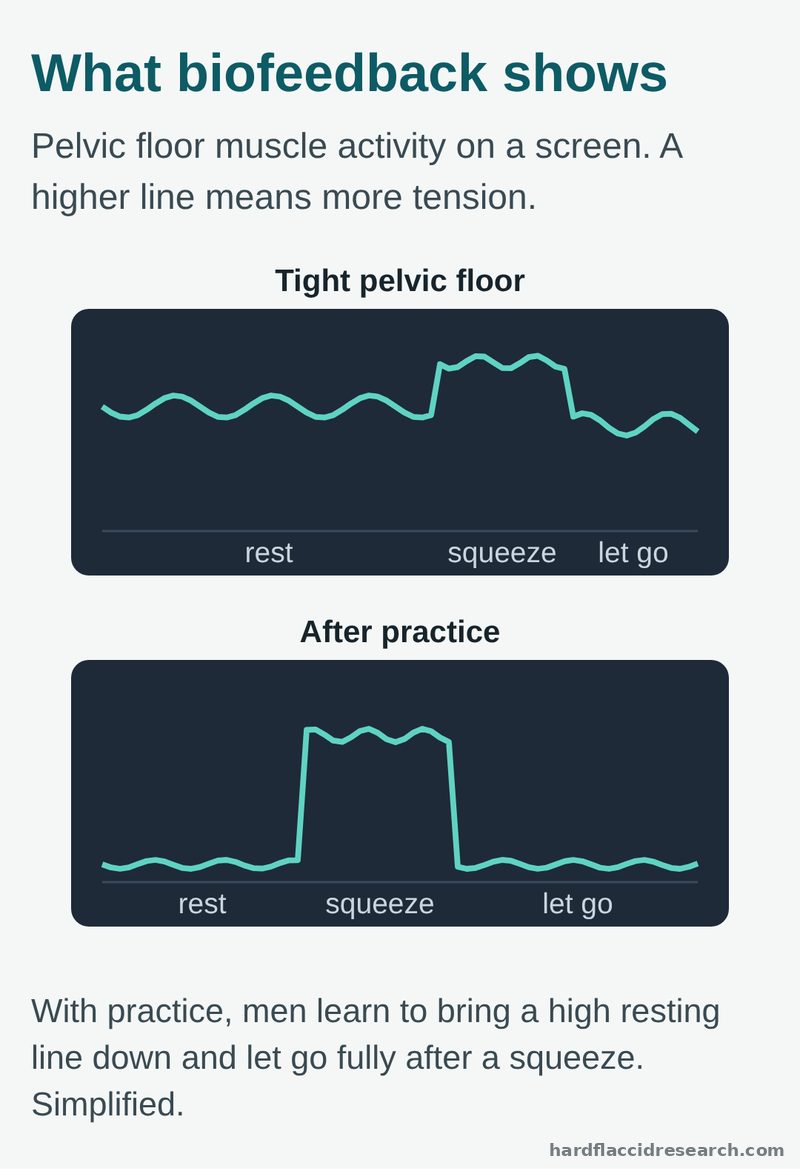 What biofeedback shows
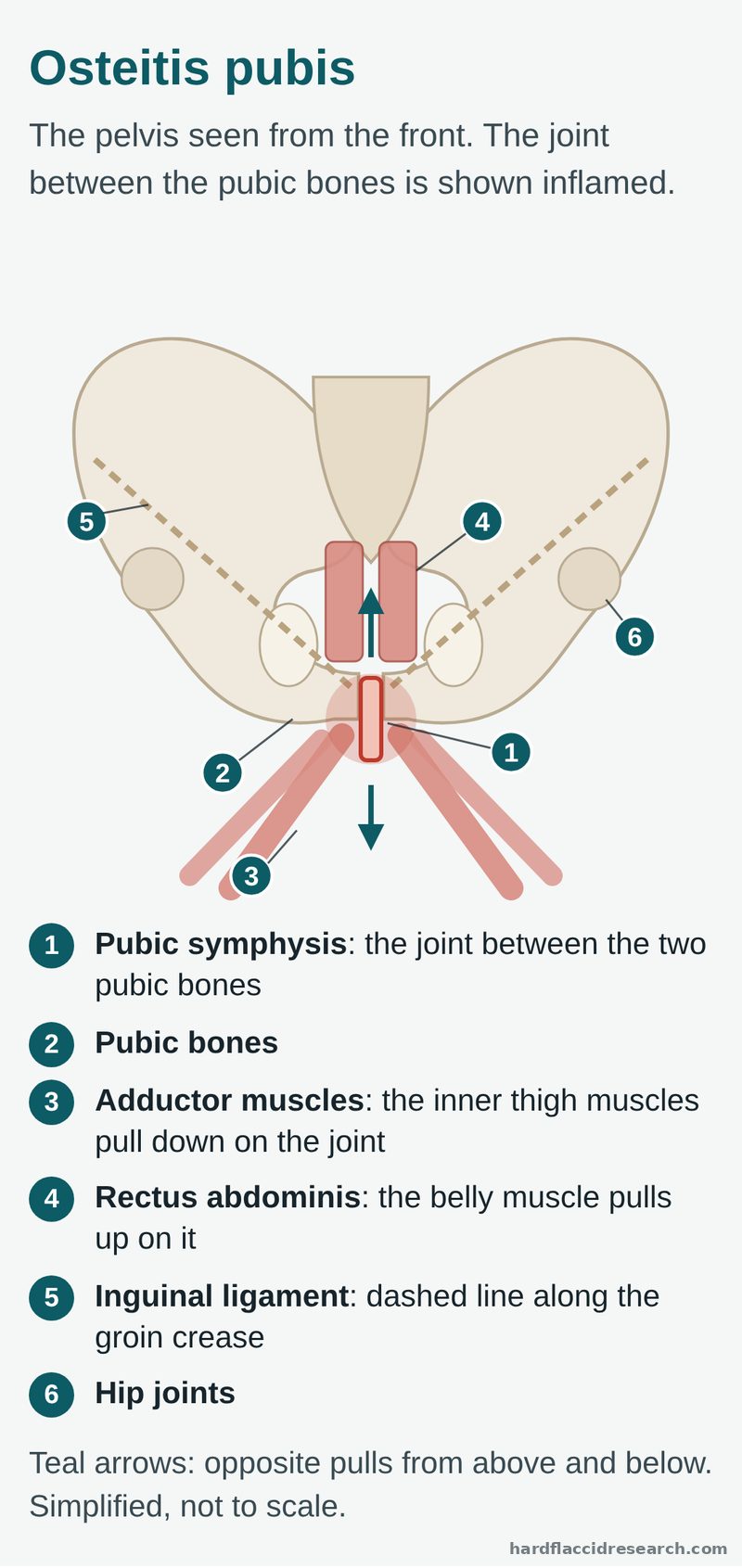 Osteitis pubis