Why a muscle relaxant can sound like a fit for hard flaccid
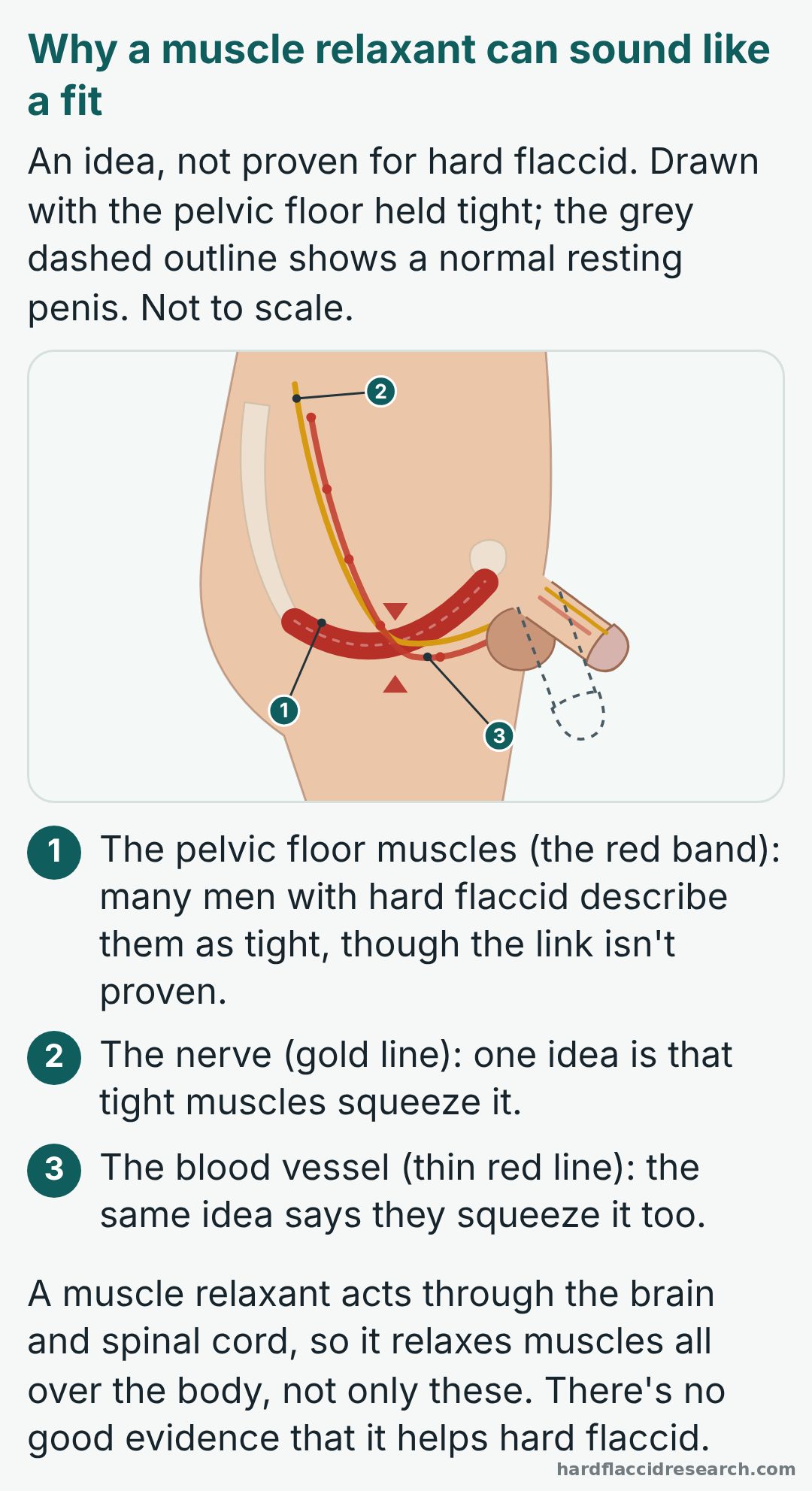
The idea behind muscle relaxants for hard flaccid: a tight pelvic floor may squeeze a nerve and a blood vessel. Not proven.
What this illustration shows
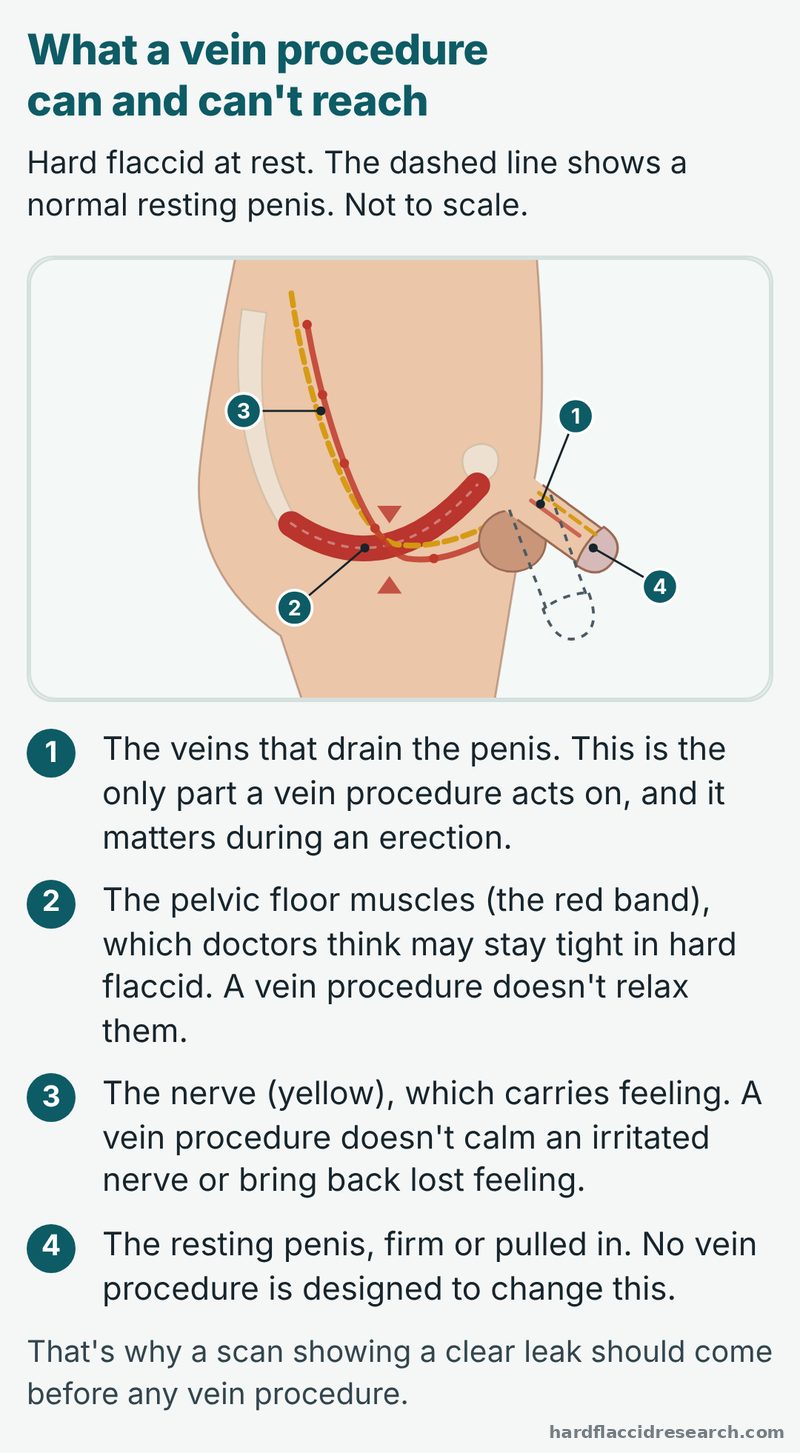
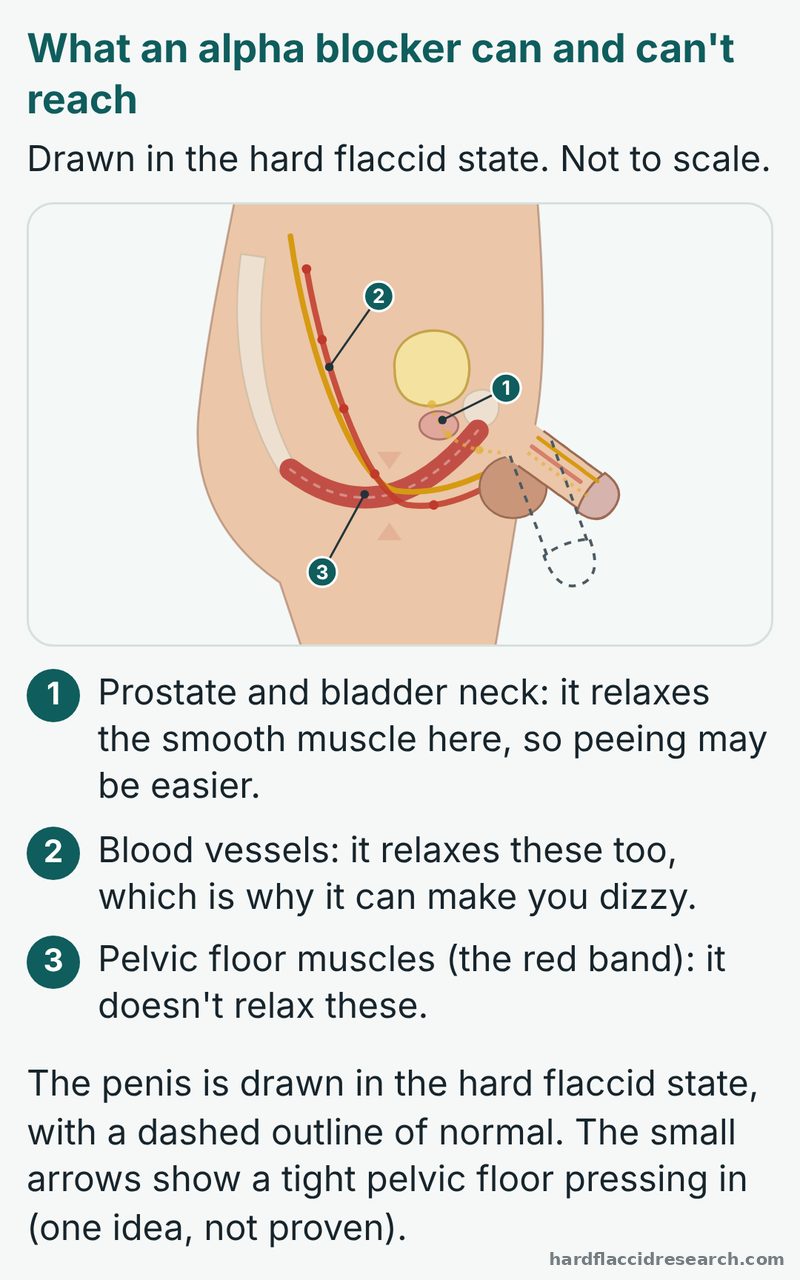
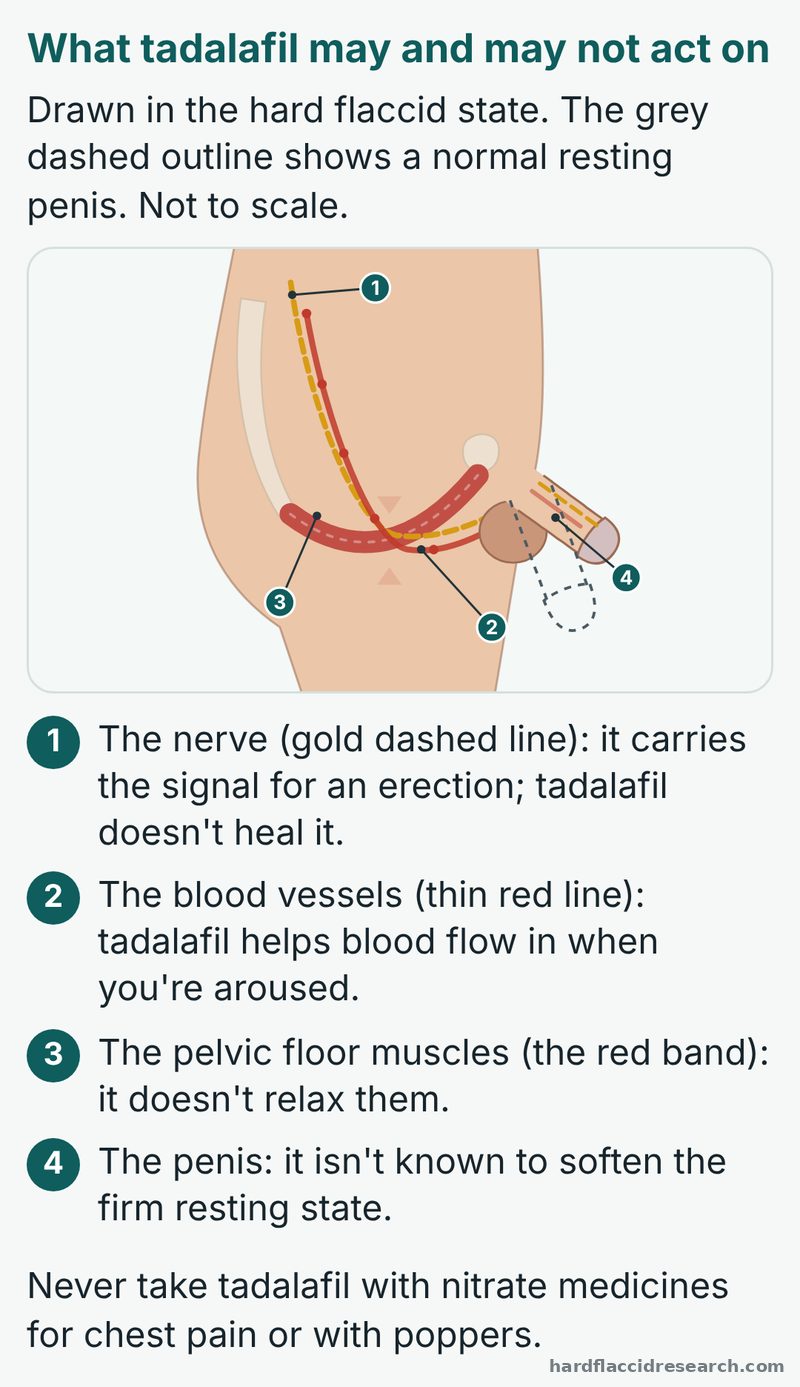
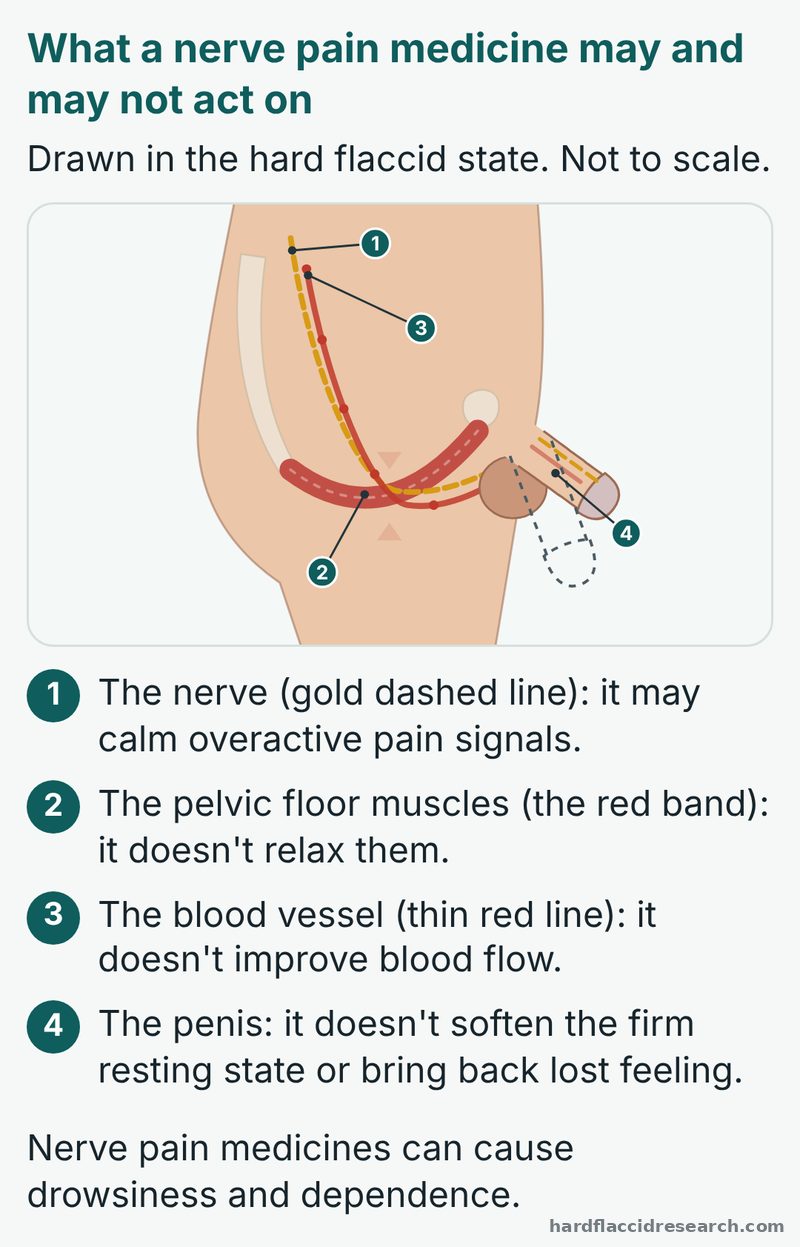
Side-view diagram of the pelvic floor muscles held tight, a nerve, a blood vessel and the penis in the hard flaccid state, with a grey dashed outline of a normal resting penis and three numbered markers: 1 the pelvic floor muscles, which many men with hard flaccid describe as tight, though the link isn't proven; 2 the nerve (a gold line), which one idea says tight muscles squeeze; 3 the blood vessel, which the same idea says they squeeze too. Below: a muscle relaxant acts through the brain and spinal cord, so it relaxes muscles all over the body, not only these, and there's no good evidence that it helps hard flaccid.
A picture to explain, not a diagnosis. The drawing is simplified and not to scale. If something has changed or worries you, see a doctor.
Where it's explained
Using this illustration
This illustration belongs to Hard Flaccid Research. To use it in a publication, a class or a talk, see For press and researchers. Please cite it like this:
Hard Flaccid Research. (2026). Why a muscle relaxant can sound like a fit for hard flaccid [Medical illustration]. https://hardflaccidresearch.com/illustrations/muscle-relaxants-and-the-pelvic-floor