What each test for hard flaccid looks at
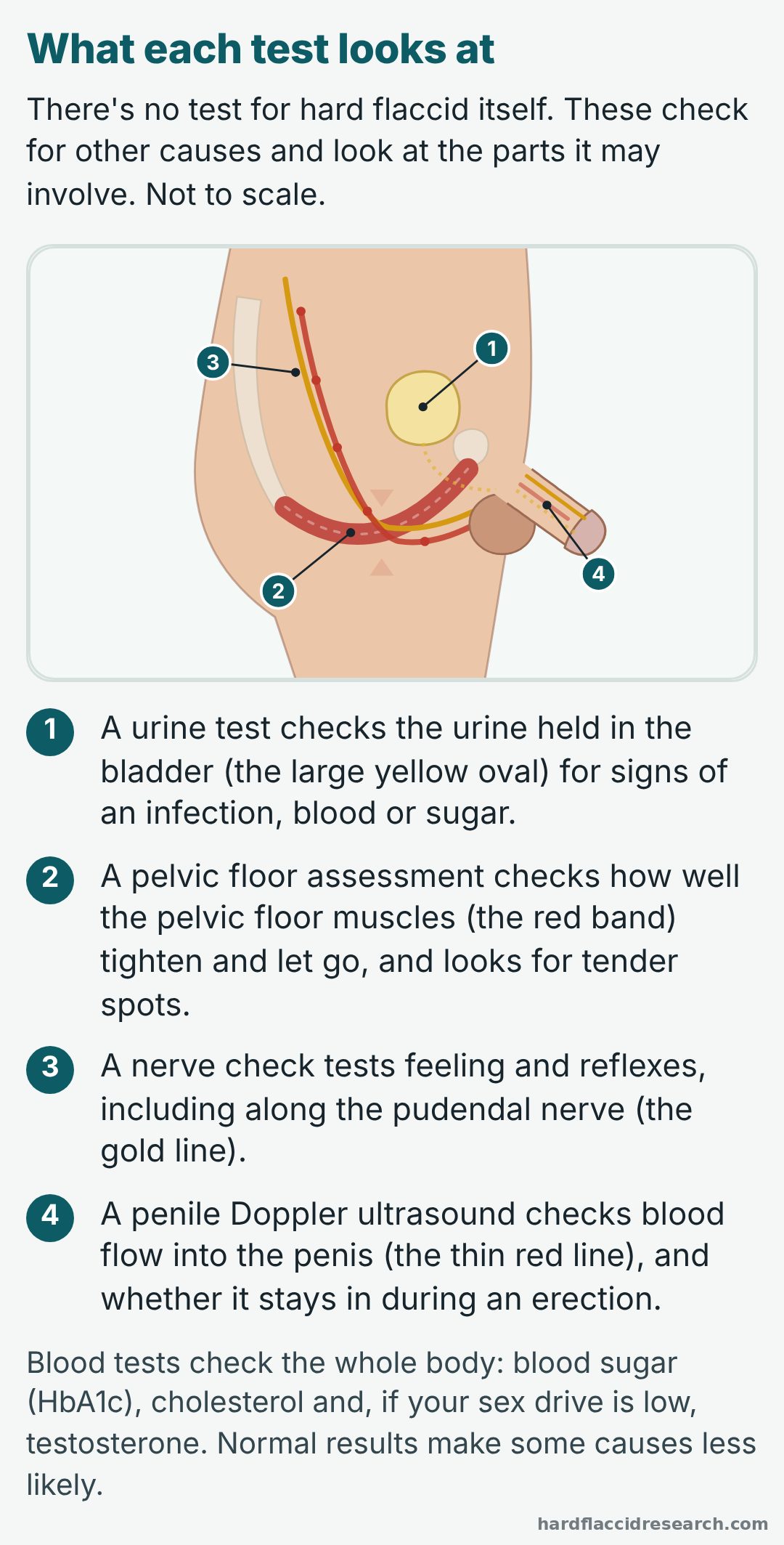
Where each test looks. None of them tests for hard flaccid itself, and in hard flaccid the results are often normal.
What this illustration shows
What each test looks at. There's no test for hard flaccid itself. These check for other causes and look at the parts it may involve. Not to scale. Side-view drawing of the pelvis with the bladder, the pelvic floor muscles, the pudendal nerve, a blood vessel and the penis, and four numbered markers. 1, the bladder: a urine test checks the urine held in the bladder (the large yellow oval) for signs of an infection, blood or sugar. 2, the pelvic floor: a pelvic floor assessment checks how well the pelvic floor muscles (the red band) tighten and let go, and looks for tender spots. 3, the nerve: a nerve check tests feeling and reflexes, including along the pudendal nerve (the gold line). 4, the penis: a penile Doppler ultrasound checks blood flow into the penis (the thin red line), and whether it stays in during an erection. Below: blood tests check the whole body: blood sugar (HbA1c), cholesterol and, if your sex drive is low, testosterone. Normal results make some causes less likely.
A picture to explain, not a diagnosis. The drawing is simplified and not to scale. If something has changed or worries you, see a doctor.
Where it's explained
Using this illustration
This illustration belongs to Hard Flaccid Research. To use it in a publication, a class or a talk, see For press and researchers. Please cite it like this:
Hard Flaccid Research. (2026). What each test for hard flaccid looks at [Medical illustration]. https://hardflaccidresearch.com/illustrations/hard-flaccid-tests-what-each-checks