What shockwave therapy may and may not act on
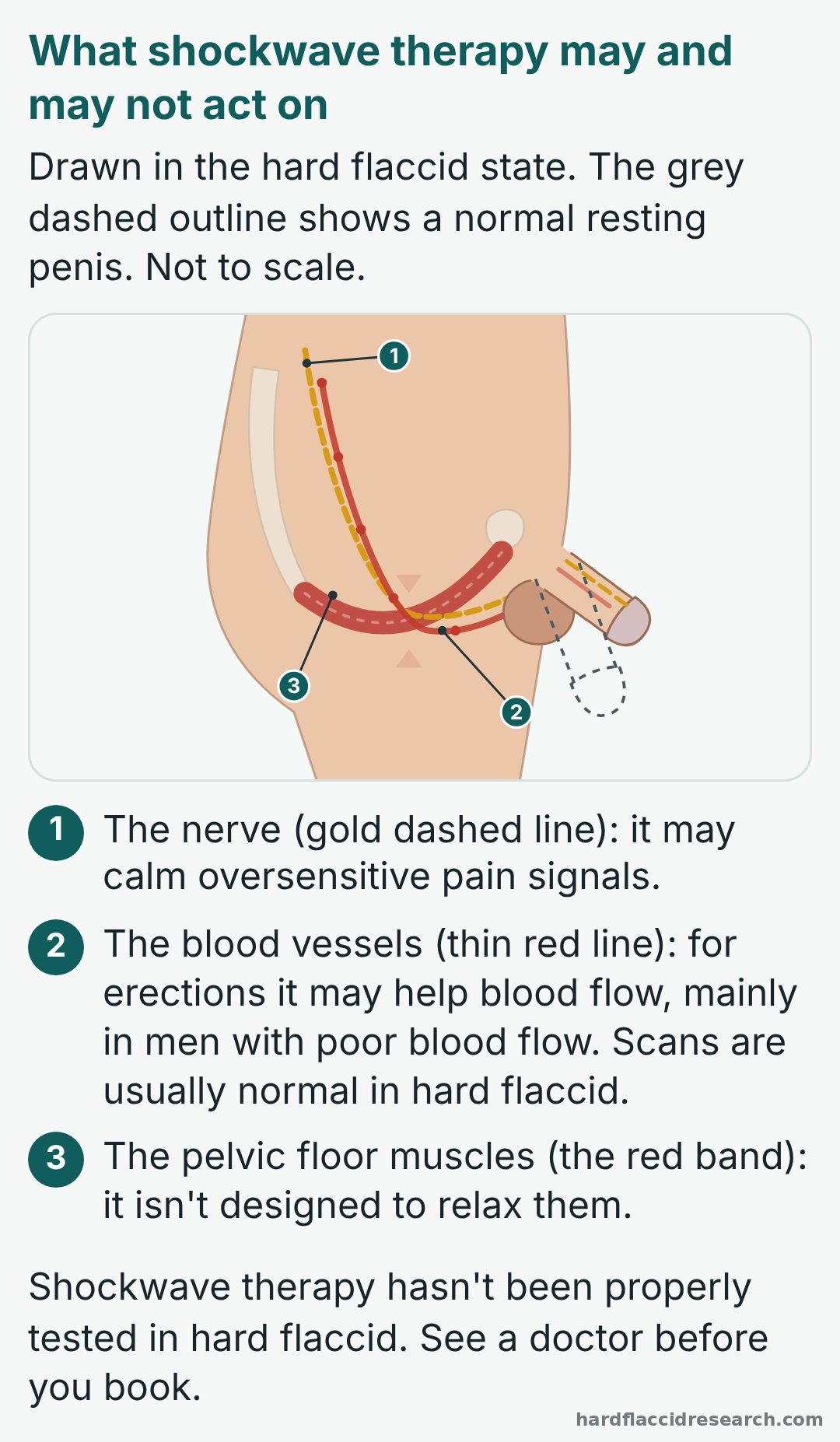
Shockwave therapy may calm pain signals, and for erections it may help mainly men with poor blood flow. It isn't designed to relax the pelvic floor.
What this illustration shows
Side-view diagram of the pelvic floor muscles, a nerve, a blood vessel and the penis in the hard flaccid state, with three numbered markers: 1 the nerve, whose oversensitive pain signals shockwave therapy may calm; 2 the blood vessels of the penis, where it may help blood flow mainly in men with poor blood flow; 3 the pelvic floor muscles, which it is not designed to relax; and a grey dashed outline of a normal resting penis.
A picture to explain, not a diagnosis. The drawing is simplified and not to scale. If something has changed or worries you, see a doctor.
Where it's explained
Using this illustration
This illustration belongs to Hard Flaccid Research. To use it in a publication, a class or a talk, see For press and researchers. Please cite it like this:
Hard Flaccid Research. (2026). What shockwave therapy may and may not act on [Medical illustration]. https://hardflaccidresearch.com/illustrations/shockwave-therapy-what-it-acts-on
More illustrations: What each treatment acts on
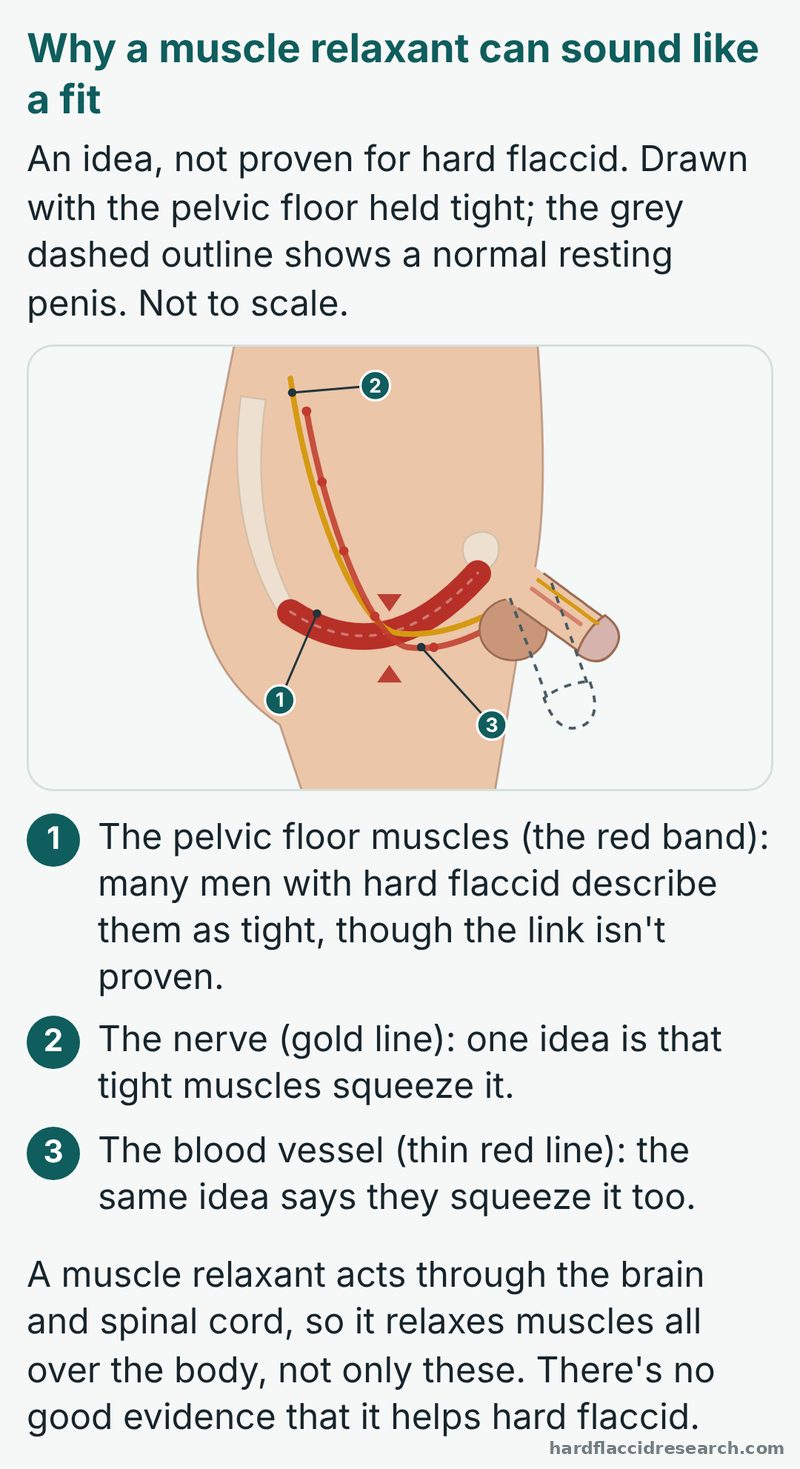 Why a muscle relaxant can sound like a fit for hard flaccid
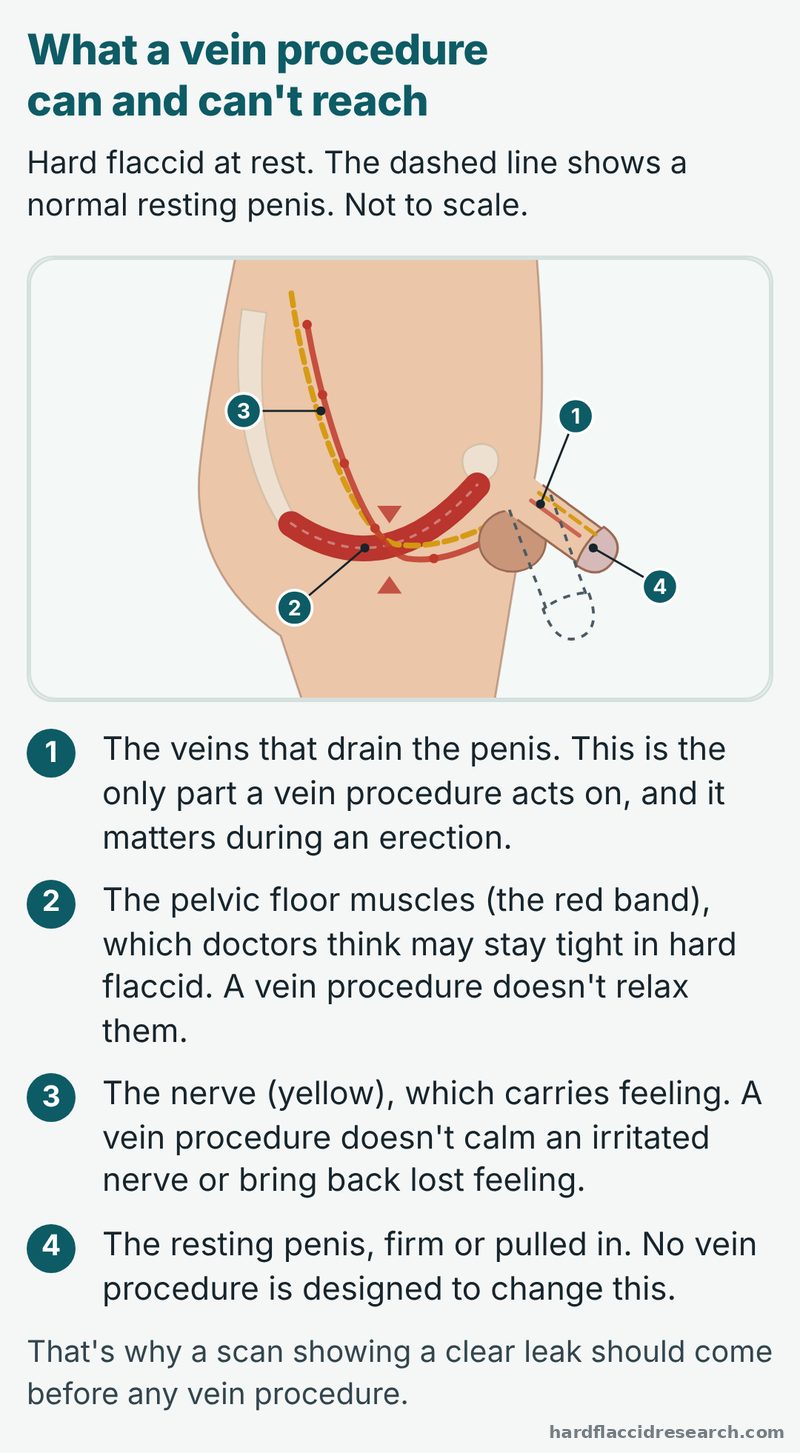 What a vein procedure can and can’t reach
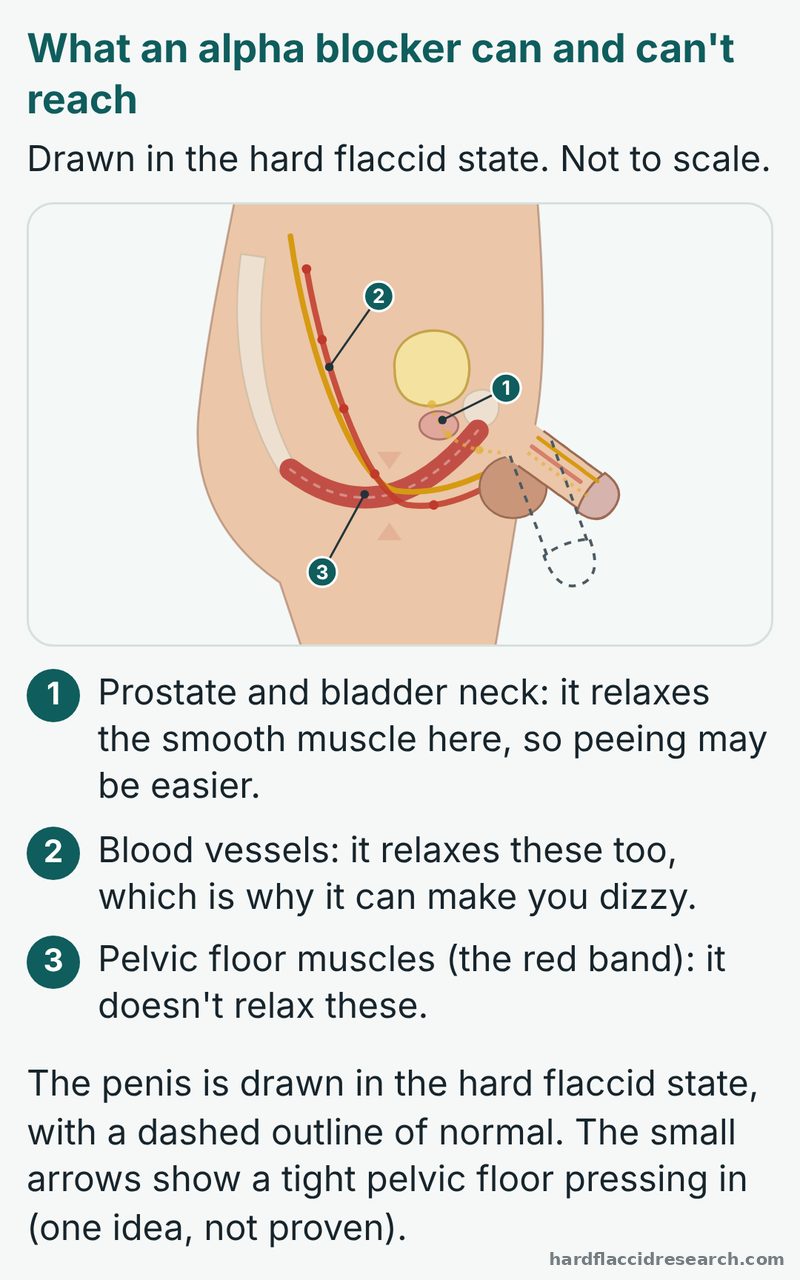 What an alpha blocker can and can’t reach
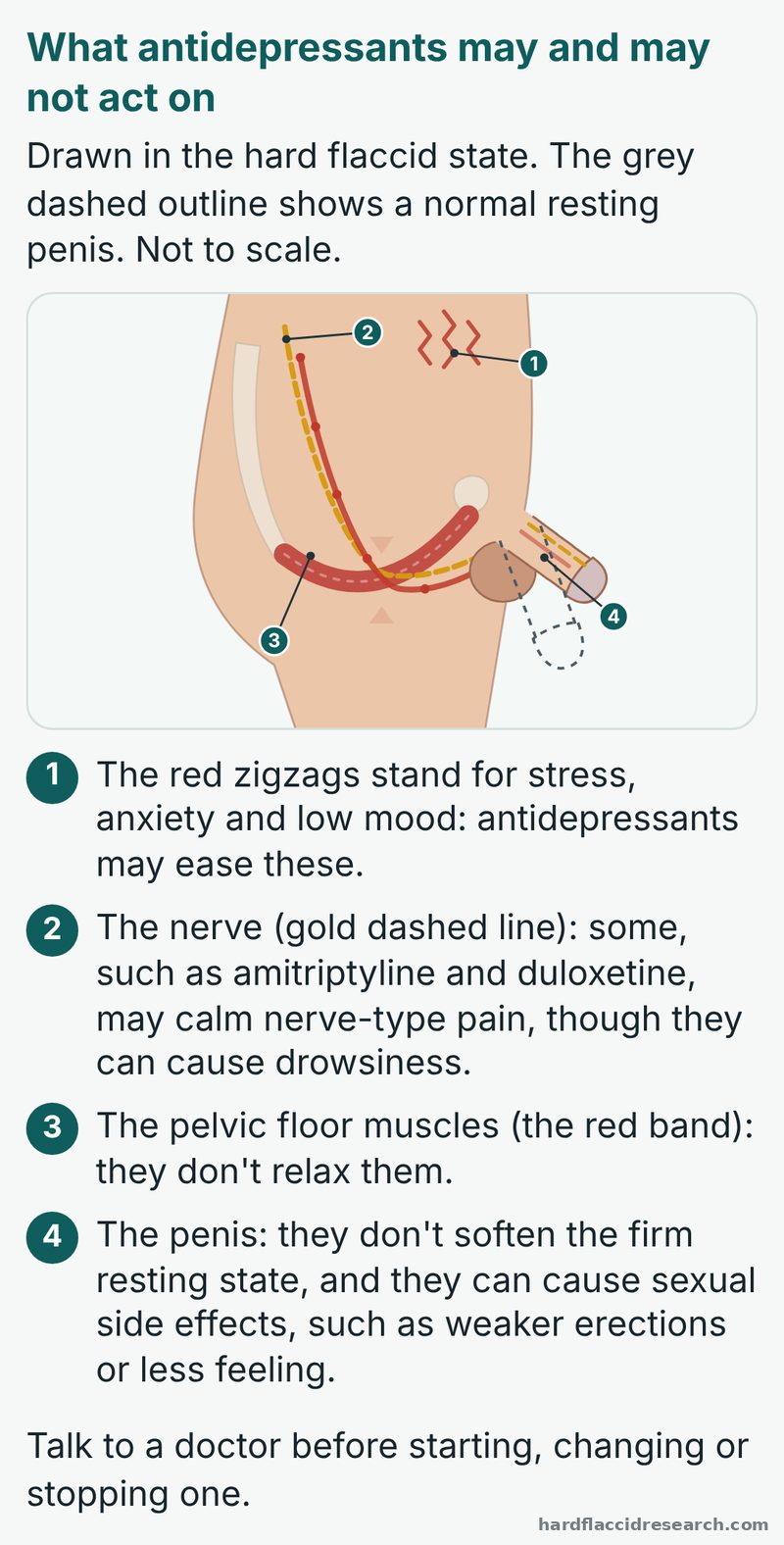 What antidepressants may and may not act on
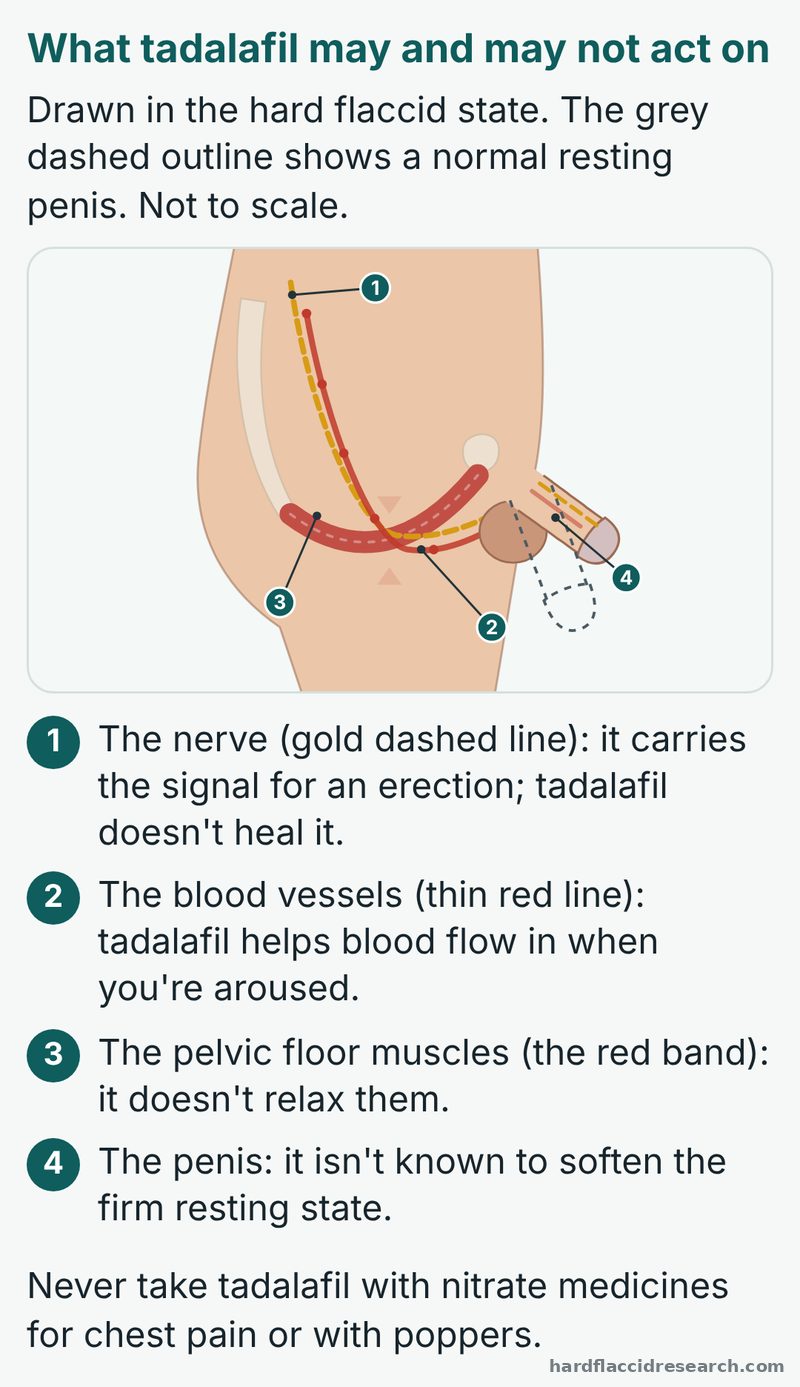 What tadalafil (Cialis) may and may not act on
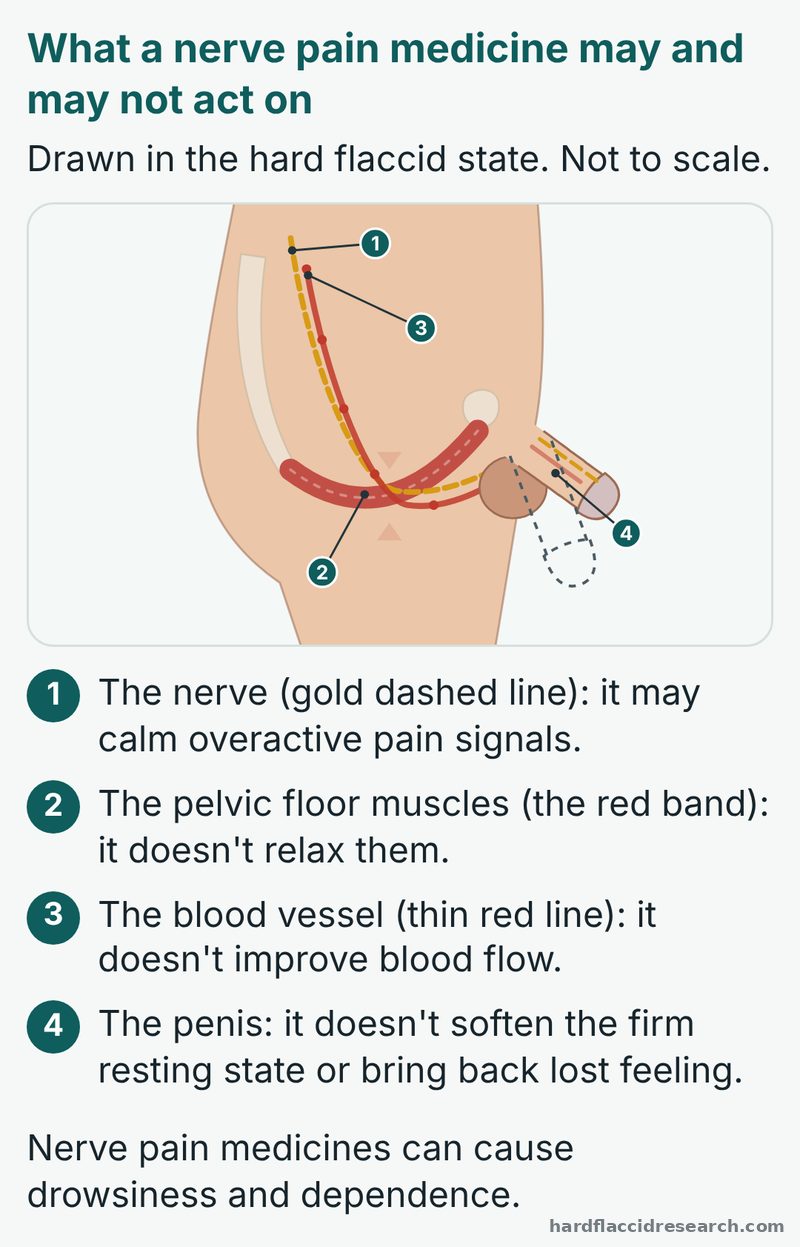 What nerve pain medicines such as gabapentin may and may not act on