Proctalgia Fugax: Causes, Treatment and Fast Relief
In short
- Proctalgia fugax is a sudden, sharp or cramping pain in the back passage that comes without warning, lasts seconds to minutes and then goes away completely.
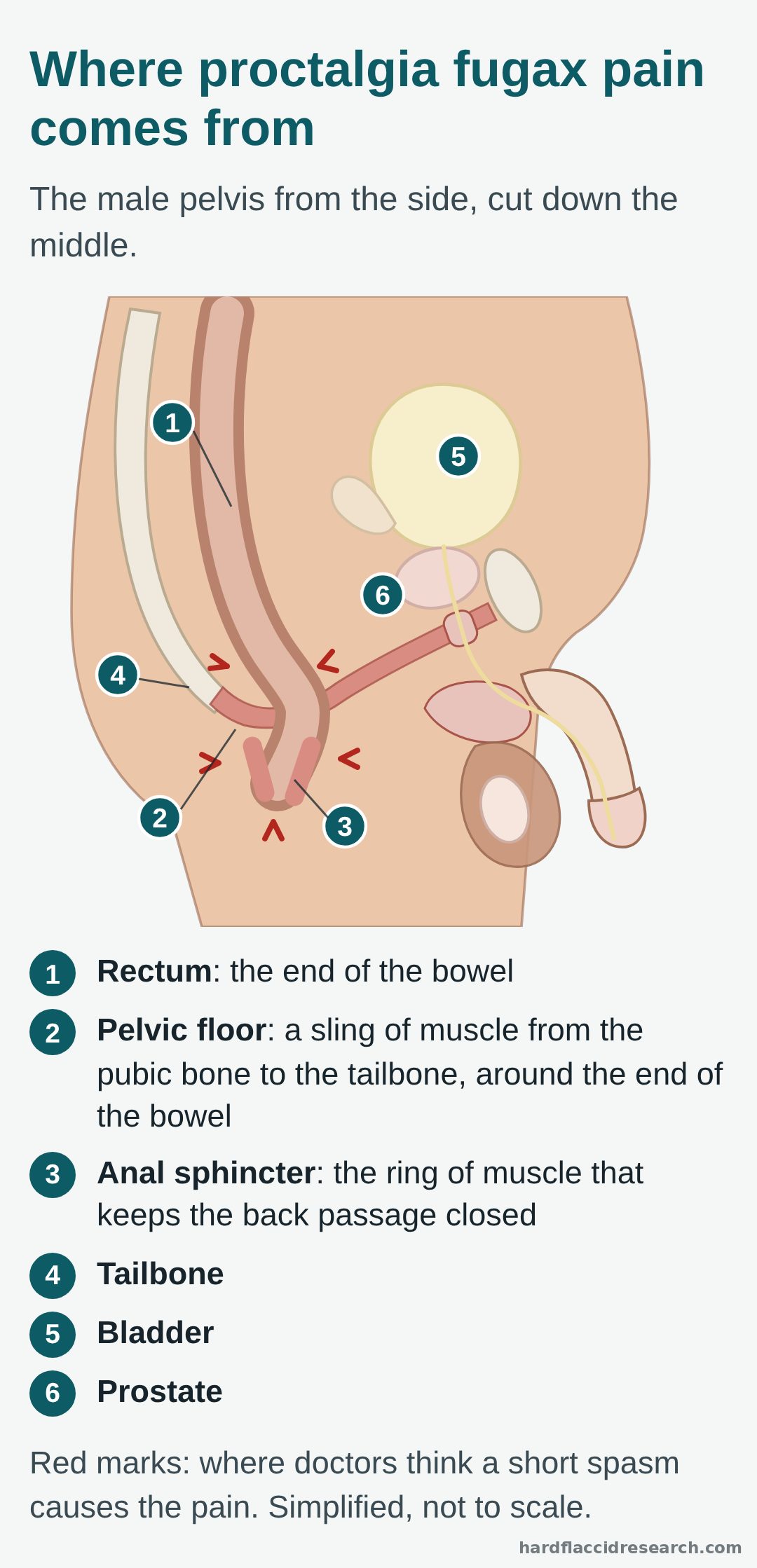
- Doctors think it comes from a brief spasm of the muscles around the anus and pelvic floor.
- It's harmless, and warmth, pressure, slow breathing and relaxing the pelvic floor often ease an attack.
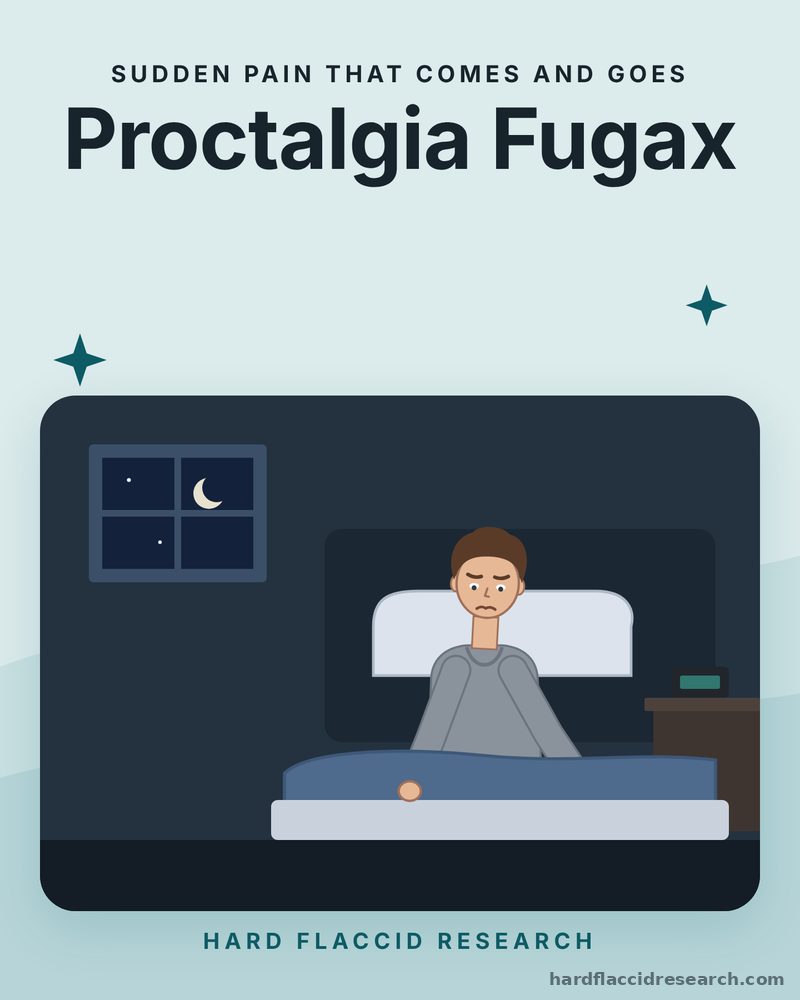
Proctalgia fugax (prok-TAL-jee-uh FEW-gax) is a sudden, sharp or cramping pain in the back passage that comes without warning, lasts from a few seconds to a few minutes, and then goes away completely. The name means fleeting pain in the rectum.
It can be frightening, especially when it wakes you at night, but it isn't dangerous. Doctors think it comes from a brief spasm of the muscles around the end of the bowel. This page explains what it feels like, what may set it off, how to ease an attack and when to see a doctor.
By the numbers: of the 6,026 men who shared their experiences with hard flaccid syndrome, 2,661 described their symptoms. 391 of them described bowel symptoms, and 267 described pelvic, perineal or tailbone pain.
Key facts
- Proctalgia fugax is sudden pain in the rectum or anus that lasts seconds to minutes, with no pain at all between attacks.
- It's thought to come from a short spasm of the anal sphincter and the pelvic floor muscles.
- Attacks often happen at night, and can follow a bowel movement, sex or ejaculation, stress or long sitting.
- It's harmless and doesn't lead to cancer or damage. Many people have it for years without ever telling a doctor.
- Warmth, slow belly breathing, gentle pressure and letting the pelvic floor go may shorten an attack. Frequent attacks can be treated.
What is proctalgia fugax?
Proctalgia fugax is one of a small group of conditions that doctors call functional anorectal pain. That means the pain is real, but tests and an examination don't find a disease or injury that explains it.
Experts who set the standard criteria (the Rome IV criteria) describe it as repeated episodes of pain in the rectum, unrelated to having a bowel movement, that last from seconds up to about half an hour, with no pain in between. A doctor first checks for other causes, such as hemorrhoids, a tear (fissure), an abscess or inflammation.
How is it different from levator ani syndrome?
Both are thought to come from the muscles around the back passage. In proctalgia fugax the pain is short and comes and goes. In levator ani syndrome, the pain is a longer, dull ache or pressure that lasts hours or days, and pressing on the pelvic floor muscle during an exam is tender.
Related: Hard Flaccid Flare-Up? Why It Gets Worse and How to Calm It »
What does a proctalgia fugax attack feel like?
People describe an attack in different ways:
- A sudden, sharp, stabbing or cramping pain deep in the back passage.
- A feeling like a knot or a muscle cramp just inside the anus.
- Pain that builds fast, peaks and then fades, often within a few minutes.
- Pain that wakes you from sleep, or comes on while you're sitting.
- An urge to pass gas or have a bowel movement during the attack.
- Sweating, feeling sick, or feeling faint during a strong attack.
Between attacks, everything feels normal. Attacks can be weeks or months apart, or come in clusters.
What causes proctalgia fugax?
Nobody knows for sure. The main idea is that the internal anal sphincter, the ring of muscle that keeps the back passage closed, and the pelvic floor muscles around it go into a short, strong spasm. Some doctors think irritation of the pudendal nerve, which carries feeling from this area, may play a part.
Common triggers
- A bowel movement, constipation or straining.
- Sex, ejaculation or masturbation.
- Stress and anxiety.
- Sitting for long periods.
- Cold, or getting out of a warm bed.
- A tight pelvic floor.
Many attacks have no clear trigger at all. If you notice one, writing it down can help you and your doctor spot a pattern.
Related: Levator Ani: Anatomy, Pain and Levator Ani Syndrome »
Proctalgia fugax and hard flaccid syndrome
Hard flaccid syndrome is a firm, shrunken penis at rest, often with numbness, weaker erections and pelvic pain. Doctors think a tense pelvic floor may help keep hard flaccid going, and the same muscles are thought to be involved in proctalgia fugax.
Of the 2,661 men who described their symptoms, 23% described pelvic floor tightness, spasm or twitching (601 men), 15% described bowel symptoms (391 men) and 10% described pelvic, perineal or tailbone pain (267 men). In a separate count, 90 men asked why their symptoms are worse around bowel movements.
Sex can be a trigger too. In a February 2023 poll, 78% said their hard flaccid symptoms were worse after masturbation or sex (92 of 118 men). That poll asked about hard flaccid symptoms, not rectal pain, but it shows how often the pelvic floor reacts after sex.
How to stop a proctalgia fugax attack
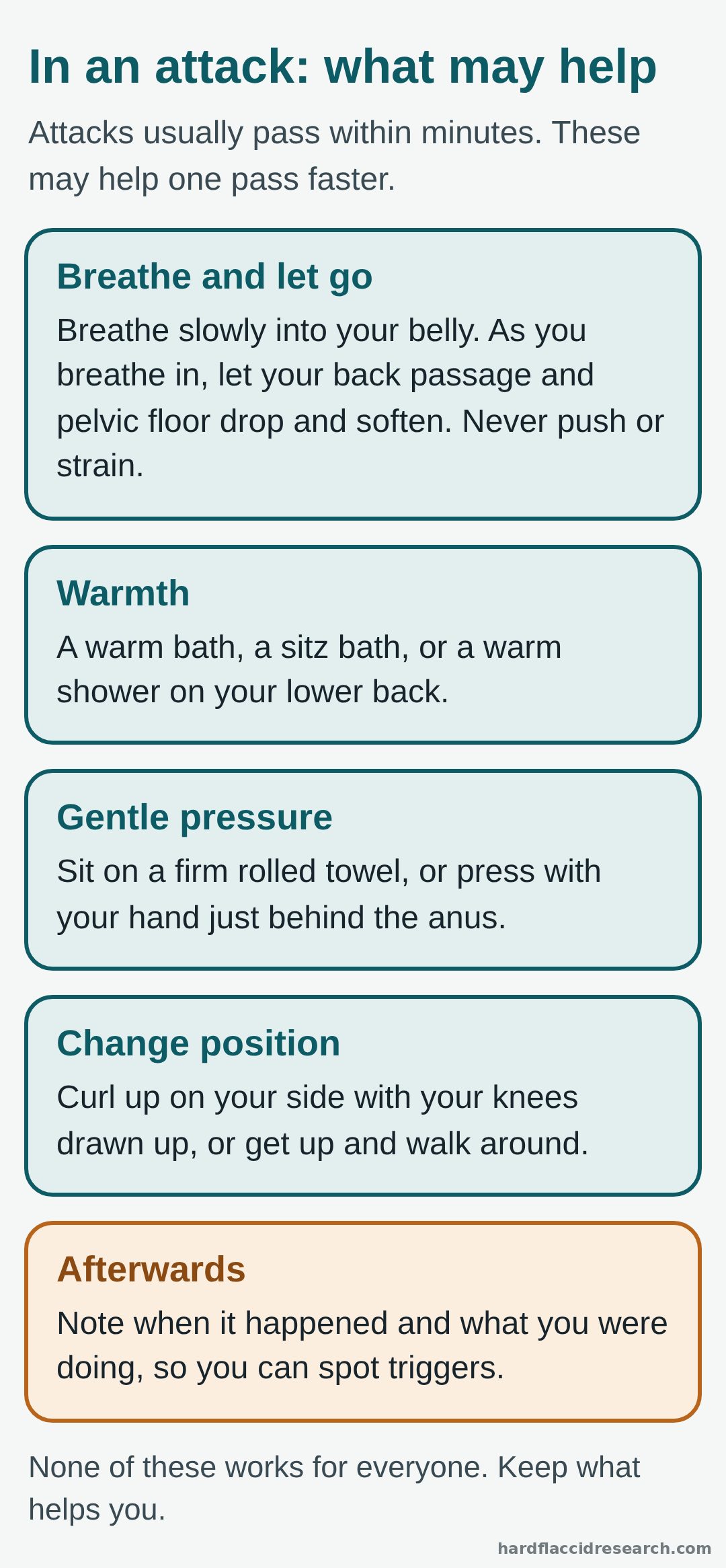
Attacks usually pass on their own within minutes. These steps may help one pass faster or feel less intense:
- Breathe slowly and deeply into your belly. As you breathe in, let your pelvic floor and back passage drop and soften, the same gentle letting go as a reverse Kegel. Never push or strain.
- Get into warm water. A warm bath, a sitz bath or a warm shower aimed at the lower back may help the muscles let go.
- Use gentle pressure. Sit on a firm, rolled towel or a tennis ball under the area between the anus and the tailbone, or press there with your hand.
- Change position. Curl up on your side with your knees drawn up to your chest, or get up and walk around.
- Pass gas or go to the toilet if you feel the urge, without straining.
Some people find one of these works every time. Others need to try a few. Keep a note of what helps you.
Treatment for frequent proctalgia fugax
Most people with rare attacks don't need treatment beyond knowing what it is. If attacks are frequent or severe, talk to a doctor about these options:
Reassurance and a diary
Knowing it's harmless takes away a lot of the fear, and fear can make muscles tense up more. A diary of attacks, their timing and possible triggers helps a doctor choose a treatment.
Pelvic floor physical therapy and biofeedback
A pelvic floor physical therapist can teach you to notice and release tension in the pelvic floor, and may use biofeedback, where a sensor shows your muscle activity on a screen so you learn to relax it. This is used most for frequent attacks and for levator ani syndrome.
Medicines a doctor may suggest
- An inhaler medicine usually used for asthma, salbutamol (albuterol), shortened long attacks in a small trial. It helped mainly when attacks lasted twenty minutes or more.
- Creams that relax the anal sphincter, such as nitroglycerin or diltiazem ointment, are sometimes tried.
- If attacks are linked to anxiety or poor sleep, treating those may help.
Talk to a doctor first: these medicines need a prescription and aren't right for everyone. Nitroglycerin can cause headaches and dizziness, and must never be used with tadalafil, sildenafil or similar medicines, because together they can drop your blood pressure dangerously.
Looking after your bowels and pelvic floor
- Eat enough fiber and drink enough water to keep stools soft, so you don't strain.
- Don't sit on the toilet for long, and don't hold your breath and push.
- Take breaks from sitting, and use a softer seat if long sitting is a trigger.
- Practise belly breathing and letting your pelvic floor go each day, not only during attacks.
Our members' guide, Bladder and Bowel Problems With Hard Flaccid: What Helps, covers toilet habits and relaxing the pelvic floor step by step.
How is proctalgia fugax diagnosed?
It's diagnosed from what you describe and an examination that finds no other cause. Expect questions about how long attacks last, when they happen and what helps, and about your bowel habits.
A doctor may look at the skin around the anus and do a gentle internal exam with a gloved finger, only if you agree. If anything is unclear, or you have warning signs such as bleeding or weight loss, they may suggest a look inside the bowel (a colonoscopy or a shorter flexible sigmoidoscopy) to check for other causes. Our doctor visit kit helps you describe your attacks clearly.
When should I see a doctor?
See a primary care provider if you've never had your symptoms checked, if attacks are getting more frequent or longer, or if the pain lasts more than half an hour or doesn't fully go between attacks.
See a doctor soon if you have:
- Blood in your stools or bleeding from the back passage.
- A change in your bowel habits that lasts more than a few weeks.
- Weight loss you can't explain, or a family history of bowel cancer.
- A lump, swelling or discharge near the anus.
Get urgent care straight away (call 911 or go to the emergency room) if you have:
- Sudden, severe pain in the penis, testicles or pelvis.
- New numbness around your back passage, genitals or inner thighs, or new weakness in your legs.
- New trouble starting or controlling your pee, not being able to pee, or not feeling when your bladder is full.
- Loss of control of your bladder or bowel.
- A fever or chills with pelvic pain or pain when peeing.
Frequently asked questions
Is proctalgia fugax serious?
No. It's painful and can be scary, but it doesn't damage the bowel and isn't a sign of cancer. Still, have any new bowel symptoms checked once, so a doctor can look for other causes.
Why does proctalgia fugax happen at night?
Nobody knows for sure. One idea is that the muscles around the back passage relax and tense in cycles during sleep, and a spasm can happen as you change sleep stages.
Does proctalgia fugax ever go away for good?
For many people, attacks become rare once they know their triggers and learn to relax the pelvic floor. Frequent attacks can be treated with physical therapy, biofeedback or medicines a doctor suggests.
Can ejaculation cause proctalgia fugax?
It can be a trigger for some men. The pelvic floor muscles contract strongly during ejaculation, and a spasm can follow. Relaxing the pelvic floor afterwards, with slow belly breathing, may help.
How long does a proctalgia fugax attack last?
Usually from a few seconds to a few minutes. If pain lasts much longer, or a dull ache remains between attacks, a doctor will look for other causes, such as levator ani syndrome.
Takeaway
Proctalgia fugax is sudden pain in the back passage that comes and goes within minutes. It's thought to be a short spasm of the muscles around the end of the bowel, and it's harmless.
Breathing slowly, letting your pelvic floor go, warmth and gentle pressure can ease an attack. If attacks are frequent, a doctor or pelvic floor physical therapist can help. Take our free self-check if you also notice changes in your penis at rest.
This article is for general information and isn't a substitute for advice from your own doctor. Hard Flaccid Research doesn't diagnose or treat. If you have new or worsening symptoms, see a qualified clinician. In an emergency, call 911.
Free tools that can help
- Self-check: do I have hard flaccid?Compare your symptoms with what 6,026 men report.
- Doctor visit kitA one-page summary to take to your appointment.
- Habit trackerCount your days without porn or masturbation, and get through urges.
- Diaphragm breathing toolBreathe with a moving picture of your diaphragm and pelvic floor.
- Add your experienceTell us what you tried and how it went. No name needed.
- Hard Flaccid Syndrome CensusWhat men answered in 818 polls.
- Symptom trackerLog your symptoms and see what helps you.
- Ask us a questionThe questions men ask most become new articles.
The numbers behind this article
Every number in this article comes from what men with hard flaccid syndrome shared between December 2020 and October 2026, counted once per person, or from their polls. These are self-selected reports, not a clinical study. See hard flaccid syndrome statistics, the Hard Flaccid Syndrome Census and how we count.
15% of men who described their symptoms described bowel symptoms
Share of the 2,661 men who described their symptoms. Each man is counted once.These are self-selected reports, not a clinical study. They don't say how many men had proctalgia fugax.
Source: Hard Flaccid Research, hardflaccidresearch.com
78% said their symptoms were worse after masturbation or sex
How 118 men with hard flaccid syndrome answered a February 2023 poll.In our polls, men choose to answer. This poll asked about hard flaccid symptoms, not rectal pain.
Source: Hard Flaccid Research, hardflaccidresearch.com
90 men asked why symptoms are worse around bowel movements
Men who asked this, counted once each from what men wrote.Source: Hard Flaccid Research, hardflaccidresearch.com
Every number in this article, with its source
| In this article | Source |
|---|---|
| 15% of the men who described their symptoms described bowel symptoms (391 of 2,661) | 391 of 2,661 men, counted |
| 10% of the men who described their symptoms described pelvic, perineal or tailbone pain (267 of 2,661) | 267 of 2,661 men, counted |
| 23% of the men who described their symptoms described pelvic floor tightness, spasm or twitching (601 of 2,661) | 601 of 2,661 men, counted |
| 6,026 men shared their experiences, and 2,661 of them described their symptoms | 2,661 of 6,026 men, counted |
| 90 men asked why their symptoms are worse around bowel movements | 90 men asked whether symptoms are worse around bowel movements, counted from what men wrote, once per person |
| 78% said their symptoms were worse after masturbation or sex (92 of 118 men) | 92 of 118 men, poll, Feb 2023 |
Medical sources
What this article says about medical research, guidelines and urgent care comes from these sources.
- Rao SSC, Bharucha AE, Chiarioni G, et al. Functional anorectal disorders. Gastroenterology. 2016;150(6):1430-1442. https://doi.org/10.1053/j.gastro.2016.02.009
- Proctalgia syndromes: update in diagnosis and management. Curr Gastroenterol Rep. 2020;22(7):35. https://doi.org/10.1007/s11894-020-00768-0
- Knowles CH, Cohen RC. Chronic anal pain: a review of causes, diagnosis, and treatment. Cleve Clin J Med. 2022;89(6):336-343. https://doi.org/10.3949/ccjm.89a.21102
- Eckardt VF, Dodt O, Kanzler G, Bernhard G. Treatment of proctalgia fugax with salbutamol inhalation. Am J Gastroenterol. 1996;91(4):686-689. https://pubmed.ncbi.nlm.nih.gov/8677929/
- Lai HH, Pontari MA, Argoff CE, et al. Male chronic pelvic pain: AUA guideline. J Urol. 2025. https://www.auanet.org/guidelines-and-quality/guidelines/male-chronic-pelvic-pain
How we made this article
We started from the question many men asked. Every number was checked against our data. Our editorial team edited it and Dr. Julian Reyes reviewed it medically. Read our editorial policy.
Read next
See more of us on Google
Add Hard Flaccid Research as a preferred source, and Google shows you our pages more often when you search.
Add as a preferred sourceDon't see your question? Ask us. We answer the most-asked ones in new articles.
Cite and share this article
You're welcome to quote this article. Please name Hard Flaccid Research and link to this page, so others can find the full answer and the data behind it. To cite this page, use its link.
Citation
Hard Flaccid Research. (2026). Proctalgia Fugax: Causes, Treatment and Fast Relief. Written by the Editorial Team, medically reviewed by Dr. Julian Reyes. https://hardflaccidresearch.com/articles/proctalgia-fugax
Credit link for your article
Source: <a href="https://hardflaccidresearch.com/articles/proctalgia-fugax">Hard Flaccid Research</a>
Wikipedia reference
<ref>{{cite web |url=https://hardflaccidresearch.com/articles/proctalgia-fugax |title=Proctalgia Fugax: Causes, Treatment and Fast Relief |website=Hard Flaccid Research |date=2026 |access-date=22 November 2026}}</ref>
How the data was collected: our methodology. Journalists and researchers: key numbers, data and contact.