Perineum Pain in Men: Causes, Relief and When to Worry
In short
- Perineum pain in men is pain, pressure or aching in the area between the scrotum and the anus.
- Common causes include chronic prostatitis or chronic pelvic pain syndrome, tight pelvic floor muscles, irritation of the pudendal nerve, long hours of sitting or cycling, and injury.
- Less often, an infection or abscess is the cause.
- Most causes can be treated, often with pelvic floor physical therapy and changes to sitting.
Perineum pain in men is pain, pressure, aching or burning in the perineum, the area between the scrotum and the anus. Some men describe it as sitting on a golf ball, a deep ache behind the scrotum, or a pressure that's worse after sitting, cycling, ejaculation or a bowel movement.
It's common and can be very uncomfortable, but it's rarely dangerous. The most frequent causes are chronic prostatitis or chronic pelvic pain syndrome, tight pelvic floor muscles and irritation of the pudendal nerve. Long hours of sitting or cycling and injuries can also cause it. Most causes can be treated. This page explains the causes, what helps and when perineal pain needs urgent care.
By the numbers: of the 6,026 men who shared their experiences with hard flaccid syndrome, 2,661 described their symptoms, and 267 of them described pelvic, perineal or tailbone pain.
Key facts
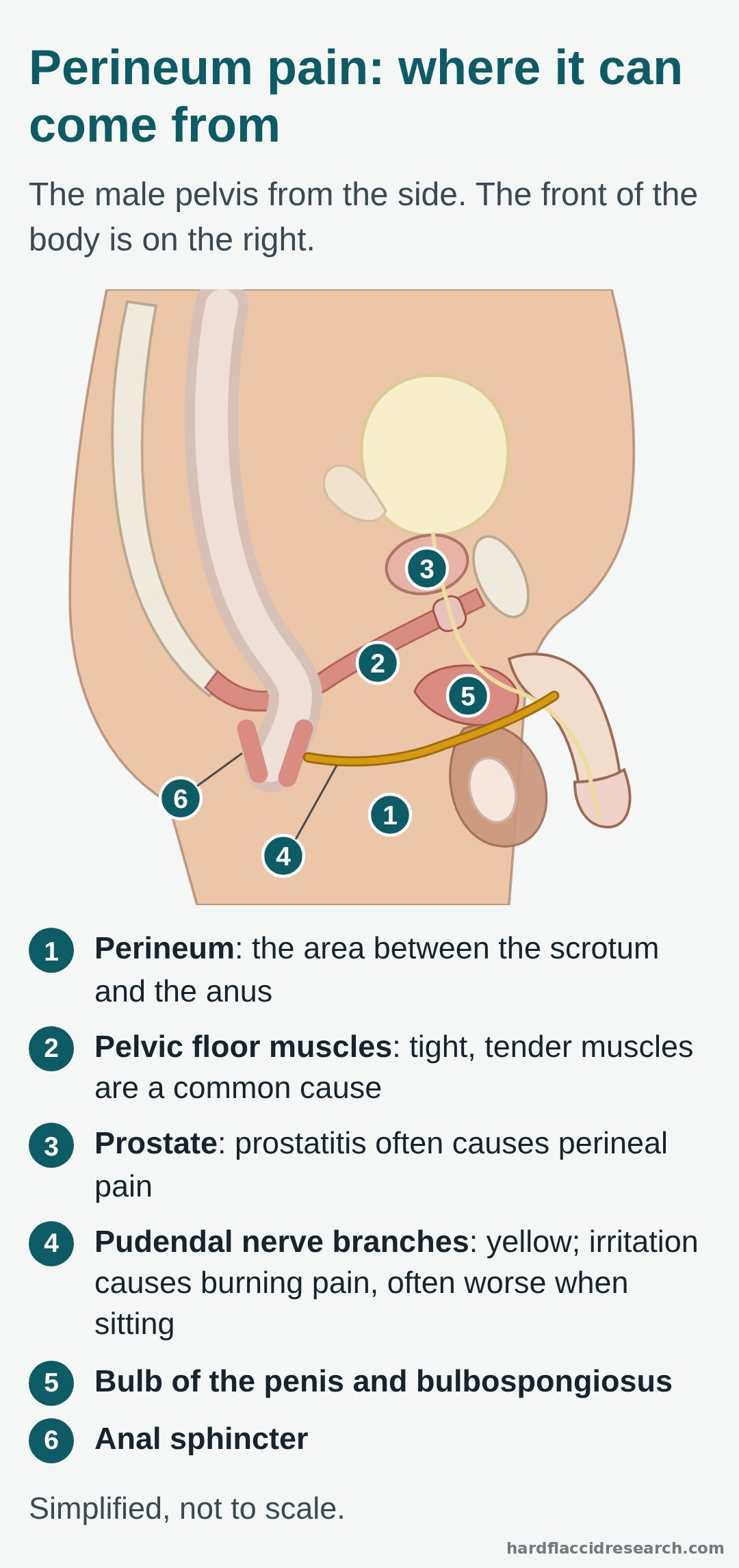
- The perineum is the area between the scrotum and the anus. Under the skin are pelvic floor muscles, the root of the penis, nerves and, deeper, the prostate.
- Chronic prostatitis or chronic pelvic pain syndrome is one of the most common causes of long-lasting perineal pain in men. Most cases don't involve an infection.
- Tight, tender pelvic floor muscles often cause or add to the pain.
- Irritation of the pudendal nerve can cause burning or aching pain that's worse when sitting.
- Pressure from bicycle seats can cause perineal pain and numbness.
- A hot, swollen, very painful lump near the anus can be an abscess and needs prompt care.
- Pelvic floor physical therapy, changes to sitting and treating the cause help most men.
What does perineum pain feel like?
- A deep ache or pressure between the scrotum and the anus.
- A feeling of sitting on a ball or a lump.
- Burning, stabbing or electric pain.
- Pain that spreads to the testicles, the tip of the penis, the rectum or the lower belly.
- Pain that's worse when sitting and better when standing or lying down.
- Pain during or after ejaculation, peeing or a bowel movement.
- Numbness or pins and needles in the perineum or penis.
Related: Coccygeus Muscle: Where It Is, What It Does and Pain »
What causes perineum pain in men?
Chronic prostatitis and chronic pelvic pain syndrome
Long-lasting pain in the perineum, often with pain in the testicles, penis or lower belly, urinary symptoms or pain with ejaculation, is the classic pattern of chronic prostatitis or chronic pelvic pain syndrome. Most men with it don't have an infection. US urology guidelines recommend treatment aimed at each man's main symptoms.
Tight pelvic floor muscles
The muscles under the perineum can become tight and tender, especially with stress, long sitting, straining or pain elsewhere in the pelvis. Tight muscles can cause aching, pressure and pain that spreads, and they often play a part in chronic pelvic pain syndrome.
Pudendal nerve irritation
The pudendal nerve carries feeling from the perineum, the penis and the anus. When it's irritated or squeezed, it can cause burning, stabbing or aching pain in these areas that's usually worse when sitting and eases when standing, lying down or sitting on a toilet seat. Doctors use a set of criteria, called the Nantes criteria, to help recognize pudendal neuralgia from nerve entrapment.
Cycling and sitting
A bicycle saddle presses on the perineum, the nerves and the arteries that supply the penis. A review of the research found that this pressure can cause perineal numbness and pain, and may contribute to erection problems in some cyclists. Long hours on hard chairs can do the same on a smaller scale.
Acute prostatitis
A bacterial infection of the prostate causes perineal pain with fever, chills, burning when peeing and sometimes trouble peeing. It needs prompt antibiotics.
Injury
A fall astride a bar, a blow between the legs or a sports injury can bruise the perineum and the structures under it, including the urethra.
Abscess and anal problems
An abscess near the anus causes a hot, swollen, very painful lump, often with fever. Anal fissures and hemorrhoids can also cause pain that's felt near the perineum.
What helps perineum pain?
Relax the pelvic floor
- Breathe slowly into your belly, letting the perineum drop and soften as you breathe in.
- Use warmth, such as a warm bath, to ease muscle tension.
- Avoid clenching and holding tension in the buttocks and pelvic floor.
Pelvic floor physical therapy
A pelvic floor physical therapist can find and release tight, tender muscles and teach relaxation. US urology guidelines say doctors may offer this to men with chronic pelvic pain who have tight, tender pelvic floor muscles, and a small trial found physical therapy aimed at these muscles helped more men than general massage.
Change how you sit
- Use a cushion with a cut-out under the perineum.
- Take breaks from sitting at least every hour or so.
- If you cycle, try a saddle with a cut-out or no nose, adjust the saddle so it's level, and stand on the pedals now and then during long rides.
Treat the cause
- Antibiotics, if there's a bacterial infection.
- Medicines for nerve pain or muscle tension, from your doctor.
- Nerve blocks or other treatments for pudendal neuralgia, from a pain specialist.
- Stress management and talk therapy, which help many men with chronic pelvic pain.
Related: Perineum Pain With Hard Flaccid: Why It Hurts, What Helps »
Perineum pain and hard flaccid syndrome
Hard flaccid syndrome is a firm, shrunken penis at rest, often with numbness, weaker erections and pelvic pain. Perineal pain and tension are common with hard flaccid syndrome, and doctors think a tense pelvic floor may help keep it going. This isn't proven.
Of the 2,661 men who described their symptoms, 34% described numbness or reduced sensation (914 men), 23% described pelvic floor tightness, spasm or twitching (601 men) and 10% described pelvic, perineal or tailbone pain (267 men). In a separate count, 100 men asked whether it's a nerve problem (pudendal nerve).
Our members' guide, Pelvic Floor PT for Hard Flaccid: How to Find the Right One, helps you choose a therapist who treats men's pelvic pain.
How is perineum pain diagnosed?
A primary care provider or a urologist (a doctor for urinary and sexual health) will ask where the pain is, what makes it worse and about your urinary, bowel and sexual symptoms. They may suggest:
- A urine test and tests for sexually transmitted infections.
- A check of the prostate and pelvic floor muscles with a gloved finger through the back passage. You can ask for a chaperone or stop at any time.
- A symptom questionnaire for chronic prostatitis.
- A referral to a pelvic floor physical therapist, a pain specialist or a neurologist.
- Scans, if an abscess, a cyst or another problem is possible.
Our doctor visit kit helps you describe the pain and what you've noticed.
When should I see a doctor?
See a primary care provider or a urologist if perineum pain lasts more than a few weeks, keeps coming back, makes sitting hard, or comes with urinary, bowel or sexual symptoms, or numbness.
Get urgent care straight away (call 911 or go to the emergency room) if you have:
- A fever or chills with perineal pain, pain when peeing or trouble peeing.
- A hot, swollen, very painful lump near the anus or in the perineum.
- Not being able to pee at all, or a painful, swollen bladder.
- Blood from the penis, or severe pain and bruising after an injury between the legs.
- New numbness around your back passage, genitals or inner thighs, or new weakness in your legs.
- New trouble controlling your bladder or bowel.
Frequently asked questions
Why does my perineum hurt when I sit?
Sitting presses on the perineum, the pelvic floor and the pudendal nerve. If any of these are irritated, sitting makes it worse.
Can cycling cause perineum pain?
Yes. Saddle pressure can cause pain and numbness in the perineum. A better saddle, a level seat and regular breaks help.
Is perineum pain a sign of prostate cancer?
It's rarely the first sign. Perineal pain much more often comes from prostatitis, the pelvic floor or a nerve.
Can stress cause perineum pain?
Stress can tighten the pelvic floor and make pain feel stronger. Relaxation and stress management often help.
Can ejaculation make perineum pain worse?
Yes. The pelvic floor contracts hard during ejaculation, and men with tight muscles or prostatitis often feel more pain afterwards.
Does a heating pad help perineum pain?
Warmth can ease muscle tension and helps many men. Avoid heat if there's swelling or you might have an infection.
Is perineum pain common in young men?
Yes. Chronic prostatitis and chronic pelvic pain syndrome often affect younger and middle-aged men, not just older men.
Takeaway
Perineum pain in men usually comes from chronic prostatitis or chronic pelvic pain syndrome, a tight pelvic floor, the pudendal nerve, or pressure from sitting or cycling.
Relaxation, pelvic floor physical therapy and better sitting help most men, while fever or a hot, swollen lump needs prompt care. Take our free self-check if you also notice changes in your penis at rest.
This article is for general information and isn't a substitute for advice from your own doctor. Hard Flaccid Research doesn't diagnose or treat. If you have new or worsening symptoms, see a qualified clinician. In an emergency, call 911.
Free tools that can help
- Self-check: do I have hard flaccid?Compare your symptoms with what 6,026 men report.
- Doctor visit kitA one-page summary to take to your appointment.
- Habit trackerCount your days without porn or masturbation, and get through urges.
- Diaphragm breathing toolBreathe with a moving picture of your diaphragm and pelvic floor.
- Add your experienceTell us what you tried and how it went. No name needed.
- Hard Flaccid Syndrome CensusWhat men answered in 818 polls.
- Symptom trackerLog your symptoms and see what helps you.
- Ask us a questionThe questions men ask most become new articles.
The numbers behind this article
Every number in this article comes from what men with hard flaccid syndrome shared between December 2020 and October 2026, counted once per person, or from their polls. These are self-selected reports, not a clinical study. See hard flaccid syndrome statistics, the Hard Flaccid Syndrome Census and how we count.
10% of men who described their symptoms described pelvic, perineal or tailbone pain
Share of the 2,661 men who described their symptoms. Each man is counted once.These are self-selected reports, not a clinical study.
Source: Hard Flaccid Research, hardflaccidresearch.com
Every number in this article, with its source
| In this article | Source |
|---|---|
| 10% of the men who described their symptoms described pelvic, perineal or tailbone pain (267 of 2,661) | 267 of 2,661 men, counted |
| 23% of the men who described their symptoms described pelvic floor tightness, spasm or twitching (601 of 2,661) | 601 of 2,661 men, counted |
| 34% of the men who described their symptoms described numbness or reduced sensation (914 of 2,661) | 914 of 2,661 men, counted |
| 6,026 men shared their experiences, and 2,661 of them described their symptoms | 2,661 of 6,026 men, counted |
| 100 men asked whether it's a nerve problem (pudendal nerve) | 100 men asked whether it's a nerve problem (pudendal nerve), counted from what men wrote, once per person |
Medical sources
What this article says about medical research, guidelines and urgent care comes from these sources.
- Lai HH, Pontari MA, Argoff CE, et al. Male chronic pelvic pain: AUA guideline. J Urol. 2025. https://www.auanet.org/guidelines-and-quality/guidelines/male-chronic-pelvic-pain
- Pudendal Neuralgia. In: StatPearls. Treasure Island (FL): StatPearls Publishing. https://www.ncbi.nlm.nih.gov/books/NBK562246/
- Bicycle riding and erectile dysfunction: a review. J Sex Med. 2010;7(7):2346-2358. https://doi.org/10.1111/j.1743-6109.2009.01664.x
- Anatomy, Abdomen and Pelvis, Perineal Body. In: StatPearls. Treasure Island (FL): StatPearls Publishing. https://www.ncbi.nlm.nih.gov/books/NBK537345/
- Labat JJ, Riant T, Robert R, Amarenco G, Lefaucheur JP, Rigaud J. Diagnostic criteria for pudendal neuralgia by pudendal nerve entrapment (Nantes criteria). Neurourol Urodyn. 2008;27:306-310. https://pubmed.ncbi.nlm.nih.gov/17828787/
- FitzGerald MP, Anderson RU, Potts J, et al. Randomized multicenter feasibility trial of myofascial physical therapy for the treatment of urological chronic pelvic pain syndromes. J Urol. 2009;182:570-580. https://doi.org/10.1016/j.juro.2009.04.022
How we made this article
We started from the question many men asked. Every number was checked against our data. Our editorial team edited it and Dr. Julian Reyes reviewed it medically. Read our editorial policy.
Read next
See more of us on Google
Add Hard Flaccid Research as a preferred source, and Google shows you our pages more often when you search.
Add as a preferred sourceDon't see your question? Ask us. We answer the most-asked ones in new articles.
Cite and share this article
You're welcome to quote this article. Please name Hard Flaccid Research and link to this page, so others can find the full answer and the data behind it. To cite this page, use its link.
Citation
Hard Flaccid Research. (2026). Perineum Pain in Men: Causes, Relief and When to Worry. Written by the Editorial Team, medically reviewed by Dr. Julian Reyes. https://hardflaccidresearch.com/articles/perineum-pain-male
Credit link for your article
Source: <a href="https://hardflaccidresearch.com/articles/perineum-pain-male">Hard Flaccid Research</a>
Wikipedia reference
<ref>{{cite web |url=https://hardflaccidresearch.com/articles/perineum-pain-male |title=Perineum Pain in Men: Causes, Relief and When to Worry |website=Hard Flaccid Research |date=2026 |access-date=22 November 2026}}</ref>
How the data was collected: our methodology. Journalists and researchers: key numbers, data and contact.